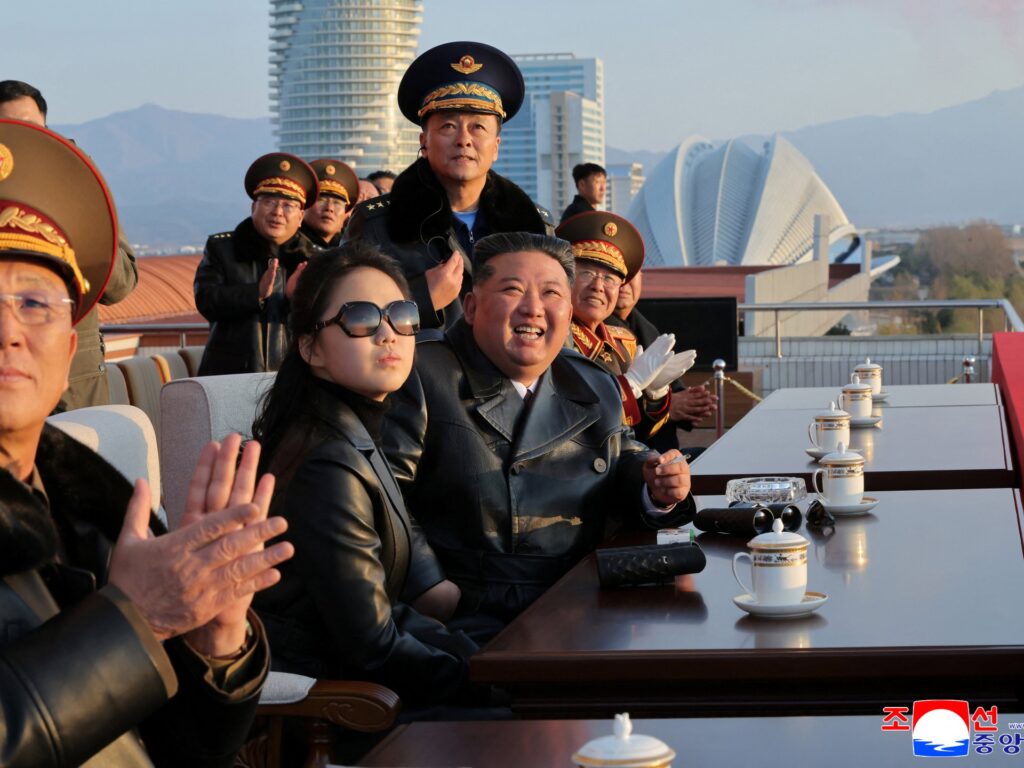
In a significant development that has caught the attention of geopolitical analysts worldwide, North Korea’s Supreme Leader Kim Jong Un is reportedly positioning his young daughter as his successor. This strategic move marks a notable departure from the traditional norms observed in the secretive regime, where leadership has historically been passed down through male heirs.
Kim Jong Un’s daughter, whose identity and personal history remain shrouded in mystery, made her first public appearance in 2022. This rare glimpse has sparked widespread speculation about her future role within the North Korean political hierarchy. Experts suggest that this early introduction to the public eye serves as groundwork for her eventual succession, signaling a new chapter in the Kim dynasty.
The daughter’s emergence on the political stage comes at a time when North Korea is navigating complex internal and external challenges, including economic sanctions, diplomatic isolation, and ongoing tensions with South Korea and the international community. Placing the daughter as his heir apparent could be a calculated effort by Kim Jong Un to ensure continuity and stability within the regime.
Seoul’s intelligence agencies have been closely monitoring developments in Pyongyang, noting subtle shifts in propaganda and state messaging that increasingly feature the young successor. This includes her presence at key events and symbolic portrayals that underscore her importance in the future leadership framework.
While details about her age, education, and political grooming are scarce, insiders speculate that she is being systematically prepared for leadership roles, mirroring the way her grandfather and father were groomed before her. This preparation might involve deep immersion in the party’s ideology, military affairs, and governance strategies.
The potential succession of a female leader in North Korea is unprecedented, and it raises questions about the regime’s adaptability and Kim Jong Un’s vision for the country’s future. Analysts are divided on whether her leadership would signify progressive change or a continuation of the status quo under a new figurehead.
International reactions have been mixed, with some viewing this as a sign of potential modernization within the secretive state, while others remain skeptical, interpreting it as a move to consolidate the Kim family’s grip on power through dynastic succession.
This development also opens discussions about the role of women in North Korea’s political landscape, which has traditionally sidelined female figures in top leadership positions. Should Kim’s daughter ascend to power, it could alter perceptions and policies regarding gender roles within the regime.
In conclusion, Kim Jong Un’s apparent endorsement of his daughter as his successor represents a historic shift in North Korean leadership dynamics. While many aspects of this transition remain unclear, the move undoubtedly reflects Kim’s intent to preserve his family’s legacy and maintain the regime’s control over the country’s future.
Observers will continue to watch closely as more information unfolds, seeking to understand the implications for regional stability, diplomatic relations, and the internal political fabric of North Korea.