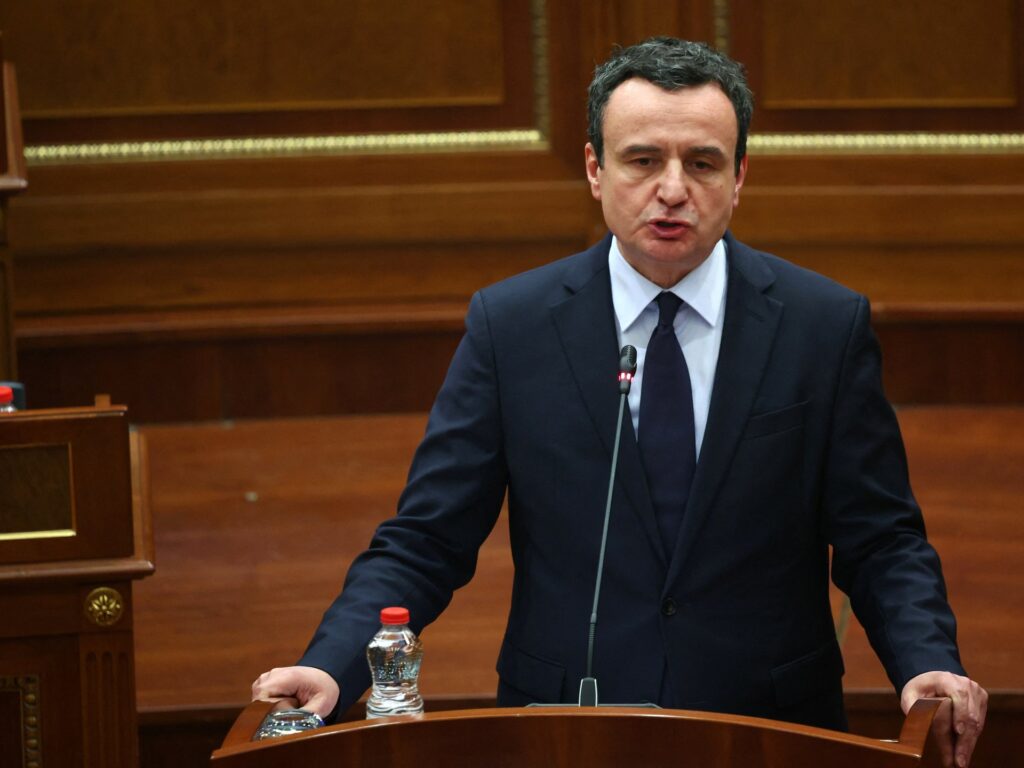
The Kosovo parliament has officially endorsed a new government led by Albin Kurti, marking the resolution of a prolonged political deadlock in the country. This development paves the way for renewed domestic governance and a clearer path forward for Kosovo’s political and economic agenda.
Albin Kurti, a prominent political figure known for his reformist stance, has now been entrusted with the leadership of the government. Securing parliamentary approval was a significant hurdle, and its successful completion reflects a measure of political consensus and stability returning to Kosovo’s governance landscape.
The new government under Kurti’s leadership has set forth ambitious priorities aimed at invigorating Kosovo’s socio-economic sectors. Chief among these priorities is the procurement of international loans to bolster the nation’s financial stability and support development projects. These loans are expected to provide a critical infusion of capital necessary for the government to execute its planned reforms effectively.
Reforming the health system stands as another major focus area. The Kurti government aims to enhance the quality and accessibility of healthcare services for all citizens, addressing long-standing issues within the sector. Improving healthcare infrastructure, increasing funding, and implementing new policies to better serve the population are key components of this plan.
In addition, the education system is slated for comprehensive reform. Recognizing the importance of education in national development, the government intends to overhaul curriculum standards, improve teacher training programs, and increase investments in educational facilities. These reforms are aimed at fostering better learning outcomes and equipping future generations with the skills necessary to thrive in a competitive global environment.
The end of the political stalemate has been widely welcomed by the Kosovo population and international observers, who view it as a positive step toward greater political stability and sustained development. The stabilization of the government allows for a unified approach in tackling Kosovo’s challenges and advancing its strategic goals.
International partners are expected to play a supportive role in this new phase of Kosovo’s governance. The incoming government’s openness to collaboration and commitment to reform present opportunities for enhanced diplomatic and economic relationships, particularly with European and global institutions.
Overall, the parliamentary backing of Albin Kurti’s government signals a hopeful start for Kosovo, with concerted efforts underway to improve governance, stimulate financial growth, and enhance the quality of life for its citizens. As the government embarks on these priorities, the coming months will be critical in determining the effectiveness of the reforms and the sustainability of Kosovo’s renewed political momentum.