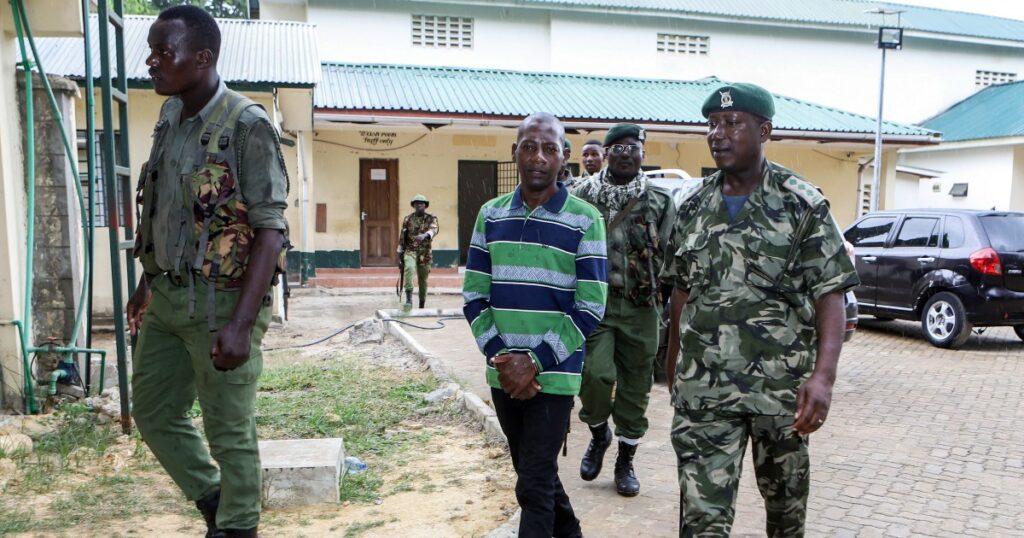
Paul Mackenzie, the notorious cult leader in Kenya, has been formally charged with organised criminal activity, radicalisation, and facilitating terrorism in connection with the deaths of 52 more individuals. This development marks a significant escalation in the legal actions against Mackenzie, who has been a central figure in multiple investigations concerning violent incidents linked to his cult activities.
The charges stem from a series of events that have drawn widespread national and international attention due to their violent nature and the loss of life involved. Authorities have meticulously gathered evidence linking Mackenzie to these incidents, which spotlight the dangerous extent of the cult’s influence and operations.
Kenyan law enforcement agencies have expressed their commitment to prosecuting Mackenzie to the fullest extent of the law, aiming to bring justice to the victims and their families. The charges reflect ongoing efforts to dismantle the cult’s network and prevent further radicalisation and violence.
Paul Mackenzie has been under scrutiny for years, with previous charges related to similar criminal activities. The new accusations add to the mounting legal challenges facing him and highlight the persistent threat posed by cult-related violence in the region.
Officials have warned that the trial could expose more details about the inner workings of the cult, potentially leading to further arrests and disruption of the group’s command structure. The case underscores the importance of addressing extremism and organised crime to safeguard public safety.
This high-profile case continues to draw media and public attention, reflecting broader concerns about radicalisation and terrorism in Kenya. The government’s decisive action signals a strong stance against such criminal enterprises and a dedication to restoring peace and security in affected communities.
As the legal proceedings move forward, the Kenyan judiciary is preparing for a complex and lengthy trial process. The outcomes of this case could set precedents for handling similar incidents in the future, reinforcing the rule of law and human rights protections.
The community and victims’ families await justice, hoping the court’s decisions will contribute to healing and prevention efforts. The case of Paul Mackenzie illustrates the challenges faced by nations confronting the rising tide of organised violent extremism and the necessity for robust legal and social responses.