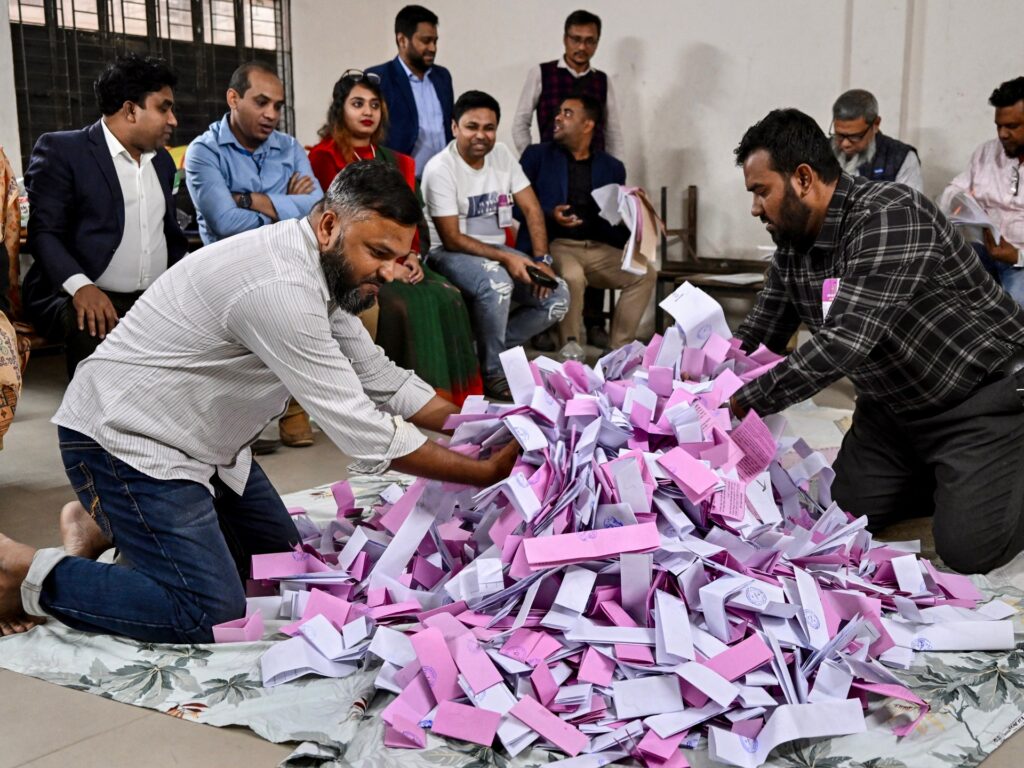
The nation of Bangladesh is currently witnessing a pivotal moment as vote counting unfolds live in the closely contested race primarily between the Bangladesh Nationalist Party (BNP) and Jamaat-e-Islami. This election is widely regarded as a landmark event marking the country’s full return to democratic governance following a significant 2024 student-led uprising that reignited calls for democratic reforms and political accountability.
Since the uprising, Bangladesh’s political landscape has undergone transformative changes. The student movement of 2024 galvanized widespread public demand for free and fair elections, transparency, and an end to authoritarian practices that had limited political freedoms over recent years. This backdrop has turned the current elections into more than just a routine democratic exercise—it symbolizes the people’s collective voice reclaiming their right to determine the country’s future.
Vote counting, underway across the nation, is closely monitored by both domestic observers and international agencies keen to ensure the integrity of the process. The competition is mainly between the BNP, a major political bloc with a strong nationalist platform, and Jamaat-e-Islami, an Islamist party with significant grassroots support.
The electoral contest is intense with both parties vying for key parliamentary seats that will decide the formation of the next government. Analysts predict that the outcome will shape policy directions on economic development, social justice, and the rule of law.
Public interest remains high, with many citizens watching live updates to gauge the political shift. The peaceful conduct of the elections and the transparency of the vote count are seen as critical indicators of Bangladesh’s democratic maturity.
The 2024 student-led uprising played a foundational role in catalyzing this election. Youth leaders and student organizations became central in mobilizing voters and advocating for reforms, signaling a new era where younger generations influence national politics more directly.
International observers have noted that the electoral process, despite challenges, has been marked by increased voter participation and heightened democratic engagement compared to previous elections.
As the vote counting progresses, political parties and supporters remain vigilant, awaiting the final results that could confirm the return to a fully functioning parliamentary democracy.
This election is not just a political contest; it is a historic moment that underscores Bangladesh’s resilience and commitment to democracy after years of political unrest.
Future governance in Bangladesh will hinge on how the victorious party addresses pressing issues such as economic recovery, job creation, and social cohesion in a diverse society.
The international community has welcomed the conduct of the vote count and expressed hope for a peaceful transition of power reflective of democratic ideals.
As the nights of counting continue, Bangladesh’s citizens and global watchers alike remain hopeful that this landmark election will pave the way for a stable, democratic, and prosperous future.