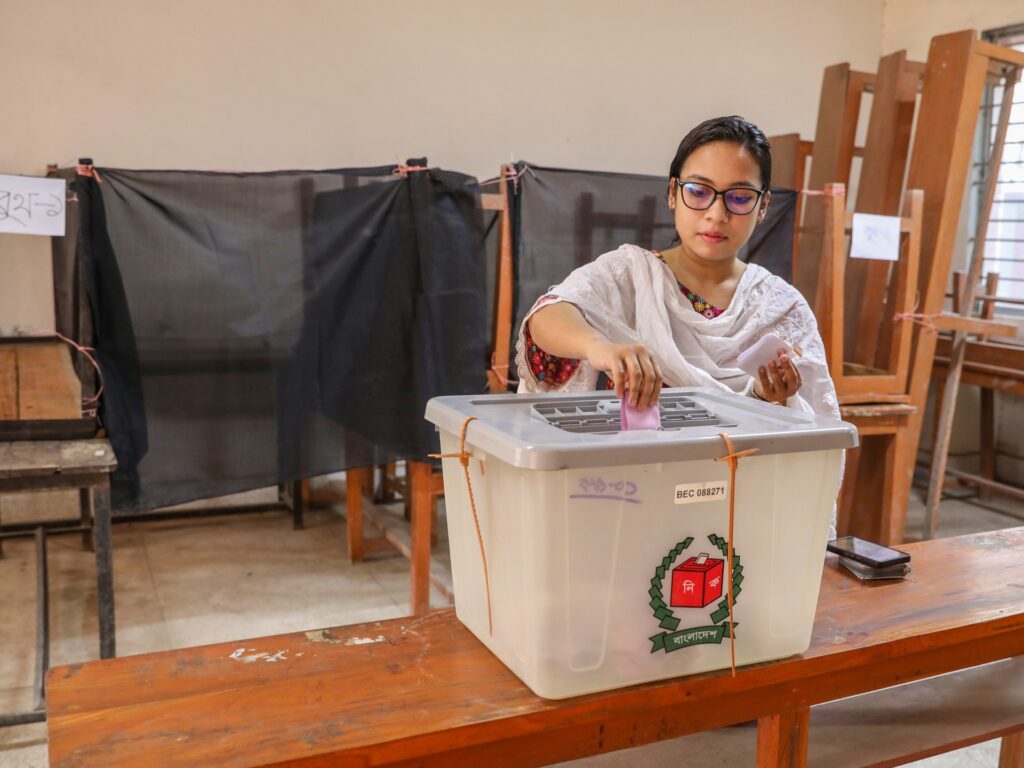
As Bangladesh gears up for its highly anticipated 2026 general elections, the political atmosphere has reached a fever pitch with key figures casting their votes. Among the prominent voters today were Shafiqur Rahman and Tarique Rahman, notable leaders strongly influencing the country’s political landscape.
The election is primarily a direct contest between Tarique Rahman’s Bangladesh Nationalist Party (BNP) and a formidable coalition led by Jamaat-e-Islami, which comprises 11 political parties united under a common banner. This alliance aims to challenge the BNP’s dominance in the race for parliamentary seats.
Tarique Rahman, a prominent figure often seen as a frontrunner, has garnered significant support from his party’s base and ideological allies. His vote today symbolizes not just a personal act of civic duty but a strategic move designed to inspire and mobilize BNP supporters nationwide.
Shafiqur Rahman, another influential leader, also cast his vote, signaling strong confidence in BNP’s strategy and campaign. Their participation highlights the intensifying political mobilization and engagement among party elites and the electorate alike.
The Jamaat-e-Islami-led coalition, representing a union of 11 parties, presents a diverse but unified front. This coalition is central to the election dynamics, seeking to present a viable alternative to the BNP and striving to secure control by appealing to a broad spectrum of voters.
Election day witnessed heightened activity and security measures across polling stations. Voters lined up in large numbers, eager to exercise their democratic rights. The government and election commission took rigorous steps to ensure transparency and fairness throughout the process.
Political analysts observe that this election is critical not only for Bangladesh’s immediate political direction but also for its long-term democratic stability. The rivalry between the BNP and Jamaat-e-Islami coalition reflects deeper ideological divisions and the quest for influence in Bangladesh’s multi-party democratic system.
International observers have also shown interest in the conduct of the elections, emphasizing the importance of free and fair voting to uphold Bangladesh’s reputation on the global stage.
In summary, the live update that leaders like Shafiqur and Tarique Rahman are actively participating by casting their votes underscores the election’s significance. It is a pivotal chapter in Bangladesh’s political narrative, marked by intense competition, strategic alliances, and a population eager to shape the country’s future through democratic means.
As results begin to emerge, the political landscape of Bangladesh may undergo significant changes, making the 2026 elections a landmark event in the nation’s democratic journey.