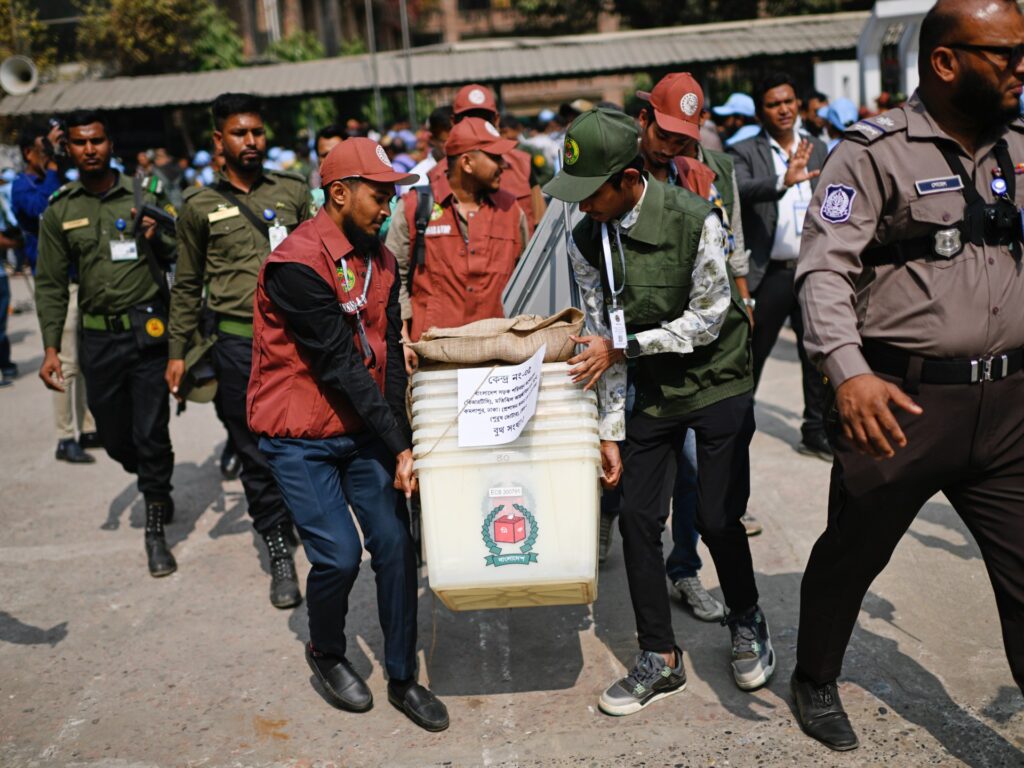
As Bangladesh embarks on its crucial 2026 general elections, polls have officially opened amid a fortress of heavy security measures across the nation. This election is marked by the intense political contest primarily between the frontrunner Tarique Rahman’s Bangladesh Nationalist Party (BNP) and a formidable Jamaat-e-Islami-led coalition comprising 11 different parties.
The political climate is charged, reflecting the high stakes involved as the nation moves towards a new chapter in its democratic journey. Tarique Rahman, a prominent figure in Bangladeshi politics, leads the BNP with a strong following, representing a significant segment of the electorate seeking change. The opposition coalition, spearheaded by Jamaat-e-Islami, brings together a diverse group of parties united in their effort to challenge the BNP’s dominance.
Security forces have been deployed in unprecedented numbers to ensure the peaceful conduct of voting, with checkpoints, roadblocks, and patrols observed widely in both urban and rural areas. These measures aim to prevent election-related violence and intimidation, which have historically marred previous elections in the country.
Voters have expressed a mix of hope and apprehension as they queue up in polling stations nationwide. Many see this election as a pivotal moment to influence the direction of Bangladesh’s future policies on governance, economic development, and social issues.
The Election Commission has ensured transparency by deploying electronic voter identification and increasing observer presence, both domestic and international, to monitor the proceedings. Early reports from various districts indicate a steady voter turnout, although some areas have reported minor logistical challenges.
Experts note that the BNP’s chances rely heavily on consolidating its base and making inroads into swing districts, while the Jamaat-e-Islami coalition aims to capitalize on fragmented opposition votes and consolidate conservative and religious electorate blocs.
This election is also significant due to its timing amid regional and global economic fluctuations, where Bangladesh’s strategic economic policies and foreign relations might see consequential shifts depending on the electoral outcome.
International observers have welcomed the high degree of security and voter participation as positive signs but remain cautious about post-election stability given the polarized political landscape.
The counting of votes is scheduled to begin immediately after the polls close, with results expected to be announced within a few days. Stakeholders from both sides have called for calm and patience as the democratic process unfolds.
The 2026 election thus stands as a critical juncture for Bangladesh, reflecting not only a contest between political parties but also the enduring resilience of its democracy in the face of challenges. Citizens and the global community watch closely, hopeful for a peaceful and legitimate electoral outcome that will chart a course for national unity and progress.