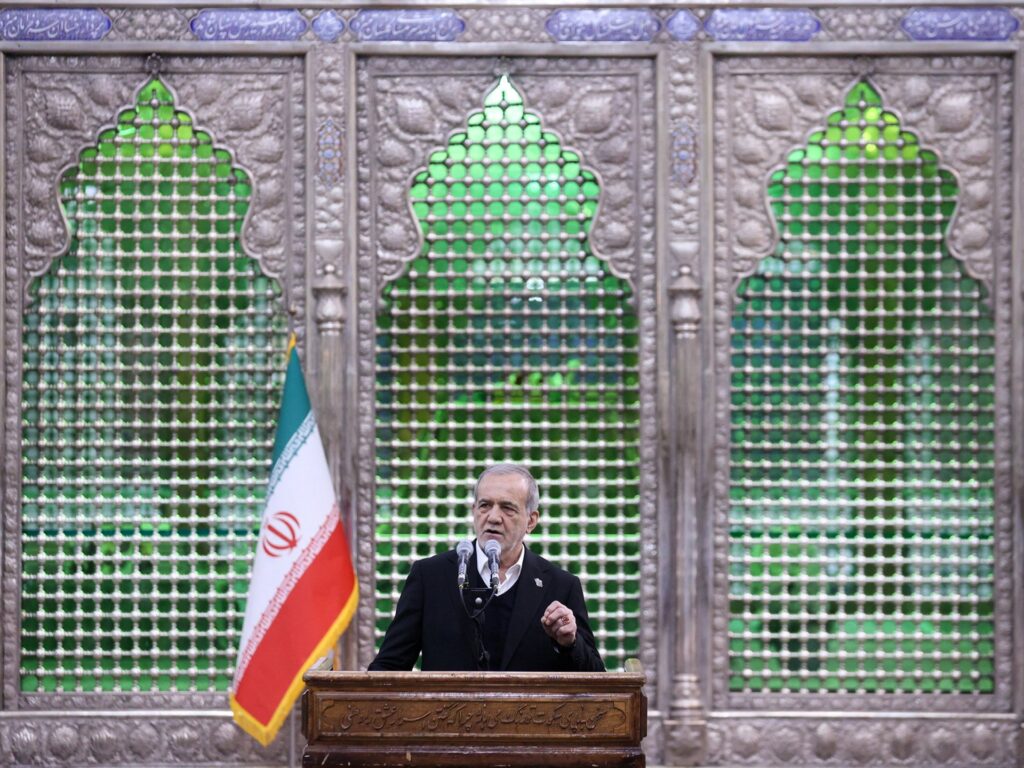
As Iran commemorated the anniversary of the 1979 Islamic Revolution, a pivotal moment that reshaped the country’s history and political landscape, voices from different sectors of Iranian society called for unity and reflection. Pezeshkian, a prominent political figure, emphasized the need for national solidarity during this significant period of remembrance. His call for unity aims to bridge divisions and encourage a collective vision for the country’s future in the spirit of the revolutionary ideals.
The anniversary marks 45 years since the overthrow of the Pahlavi monarchy and the establishment of the Islamic Republic, a regime change that set Iran on a new path politically, socially, and economically. Festivities and official ceremonies took place across the nation, featuring speeches, rallies, and cultural events that highlight the achievements and challenges of the Islamic Republic.
In a notable address, Iran’s president articulated the nation’s stance on its controversial nuclear program, reaffirming that Iran does not aspire to develop a nuclear weapon. This declaration is part of ongoing diplomatic efforts to reassure the international community and neighboring countries about Iran’s intentions, especially in light of longstanding concerns and sanctions related to its nuclear activities.
The president also took a moment to acknowledge and apologize for the shortcomings and difficulties that his government has faced. This unprecedented admission resonates with many citizens who have experienced economic hardships, social restrictions, and political tensions. By recognizing these issues publicly, the president is attempting to foster a dialogue grounded in transparency and accountability.
This year’s anniversary thus combines a celebration of revolutionary fervor with a candid reflection on Iran’s contemporary realities. The call for unity by Pezeshkian aligns with the president’s message of addressing internal challenges while upholding the revolutionary spirit.
Observers note that this combination of national solidarity, openness about government challenges, and reassurance regarding nuclear ambitions might serve as a strategy to strengthen internal cohesion amidst external pressures. Iran continues to navigate complex international relationships while confronted by domestic demands for reform and improvement.
The 1979 Revolution remains a defining moment in Iran’s identity and policy direction. As Iran marks this date, the themes of unity, responsibility, and honesty are expected to shape political discourse and public expectations moving forward. Pezeshkian’s call and the president’s statements mark a significant moment of both retrospection and forward-looking dialogue in Iranian politics.