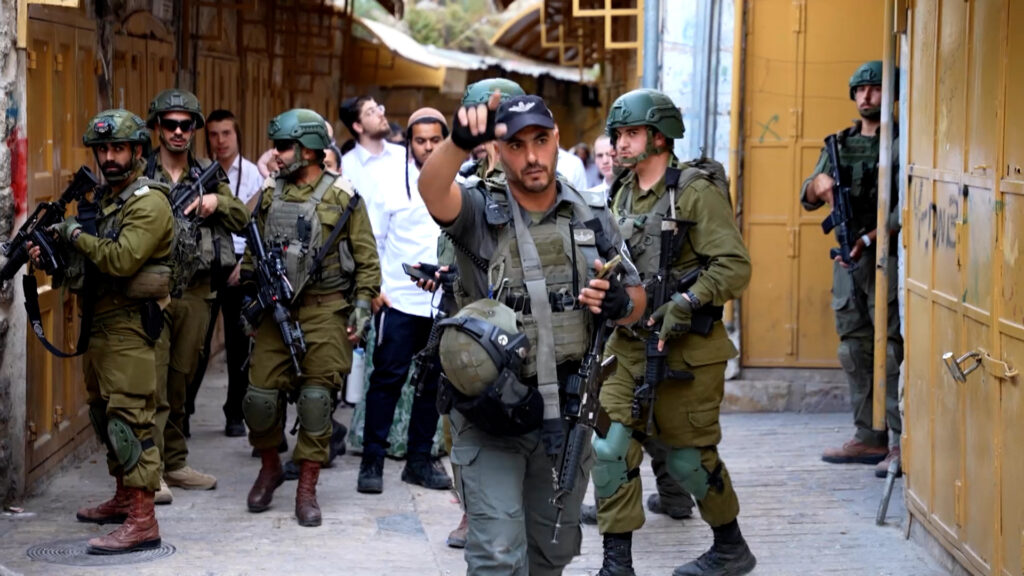
The city of Hebron in the West Bank is currently under an Israeli-imposed lockdown as part of broader annexation plans affecting the region. Israel’s occupation forces have divided Hebron into different zones of control, significantly altering the city’s dynamics and daily life for its Palestinian residents. This strategy has included the establishment of numerous Israeli settlements within the city, which are heavily guarded by Israeli military forces.
Hebron, one of the largest cities in the West Bank, has long been a focal point of Israeli-Palestinian tensions due to its religious significance and location. The recent lockdown measures have restricted freedom of movement for Palestinians, curbing access to workplaces, schools, hospitals, and religious sites.
The segmentation of Hebron into Israeli-controlled and Palestinian-controlled zones has intensified the fragmentation of the urban landscape. Israeli settlers living in the city are often segregated from Palestinian neighborhoods by physical barriers, including checkpoints and fences, further entrenching divisions.
The influx of Israeli settlers in Hebron, supported by the military and government policies, has exacerbated conflicts and increased the presence of armed forces. This has led to frequent clashes and heightened insecurity for the Palestinian population.
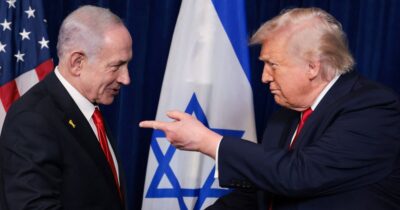
The Israeli government’s broader annexation plans for the West Bank aim to formalize control over large swathes of the territory, which the Palestinians and much of the international community consider occupied land. Annexation efforts have drawn widespread criticism and sparked protests across the region.
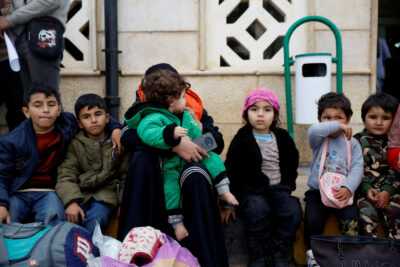
Amid these developments, the daily lives of Palestinian residents have become increasingly constrained by restrictions, curfews, and military operations. Economic hardship has intensified due to movement limitations and the disruption of local businesses.
Human rights organizations have raised concerns about the impact of the lockdown and annexation policies on Palestinian rights and living conditions. They highlight issues such as restricted access to essential services, forced displacement, and the undermining of Palestinian self-determination.
The situation in Hebron illustrates the complex and deeply entrenched challenges facing the Israeli-Palestinian conflict. It underscores the urgent need for a resolution that respects the rights and aspirations of both peoples.
As international attention focuses on the West Bank, the future of Hebron remains uncertain, caught between competing nationalisms and ongoing conflict. The city’s experience serves as a microcosm of the broader struggles concerning sovereignty, security, and human dignity in the region.