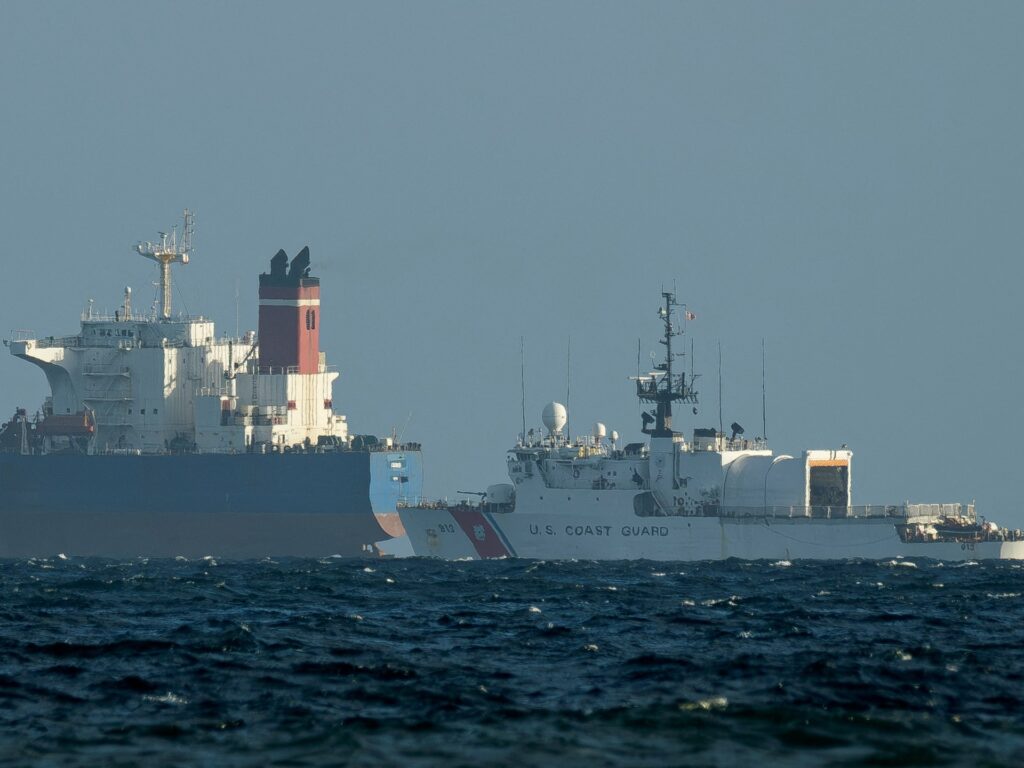
In a significant expansion of its enforcement efforts, the United States has seized an oil tanker linked to Venezuela in the Indian Ocean, signaling a firm commitment to maintain the blockade ordered during the Trump administration. This move underscores the broader geopolitical tensions involving the United States and Venezuela, particularly around the contentious issue of oil exports from the South American nation.
According to Pentagon officials, the US is determined to uphold the sanctions and blockade against Venezuela, regardless of the tanker’s location—even if it is “halfway around the world.” This statement highlights the strategic reach and resolve of the US in curbing Venezuela’s oil trade amid ongoing political and economic strife within the country.
The seized tanker was reportedly transporting Venezuelan oil, a commodity heavily targeted by US sanctions aimed at pressuring Venezuelan President Nicolás Maduro’s regime. The US has accused the Maduro government of corruption and human rights abuses, seeking to limit its ability to generate revenue through oil exports.
The operation in the Indian Ocean marks an escalation in US enforcement measures far beyond Venezuelan territorial waters, showcasing the global dimension of the blockade. This also raises complex questions about international maritime law and the limits of US jurisdiction over foreign vessels operating in international waters.
Venezuela, which sits on one of the largest proven oil reserves in the world, has faced severe economic challenges due to sanctions and internal political turmoil. The US blockade, initiated under President Trump, has severely curtailed Venezuela’s oil export capabilities, exerting immense pressure on the Maduro government.
Critics of the blockade argue that it exacerbates the humanitarian crisis in Venezuela, limiting access to essential resources and deepening suffering among the Venezuelan population. Supporters, however, claim it is a necessary measure to isolate and weaken a regime accused of undermining democracy and violating human rights.
The Pentagon’s readiness to enforce the blockade globally indicates an intensified effort to monitor and control Venezuelan oil shipments. This could include increased naval patrols, surveillance, and interdiction operations in major shipping routes far from Venezuelan shores.
Internationally, the seizure has elicited varied responses. Countries with close ties to Venezuela have condemned the US action, labeling it as an illegal interference with sovereign shipping and an escalation of geopolitical tensions. Meanwhile, US allies generally support the blockade as part of a broader strategy to promote democracy and stability in the region.
This event also highlights the strategic significance of the Indian Ocean as a vital corridor for global energy supplies and international trade. The US presence in this region, linked to Venezuelan oil interdiction, reveals the interconnected nature of global maritime security concerns.
As the situation unfolds, the seizure is likely to impact diplomatic relations between the concerned nations and shape future US policies regarding Venezuela and global sanctions enforcement.
In summary, the US’s seizure of a Venezuela-linked oil tanker in the Indian Ocean marks a pivotal moment in the enforcement of sanctions against Venezuela. It demonstrates American resolve to curtail Maduro’s oil revenues, even in far-flung international waters, and reflects the broader geopolitical struggle over Venezuela’s future amid ongoing domestic and international challenges.