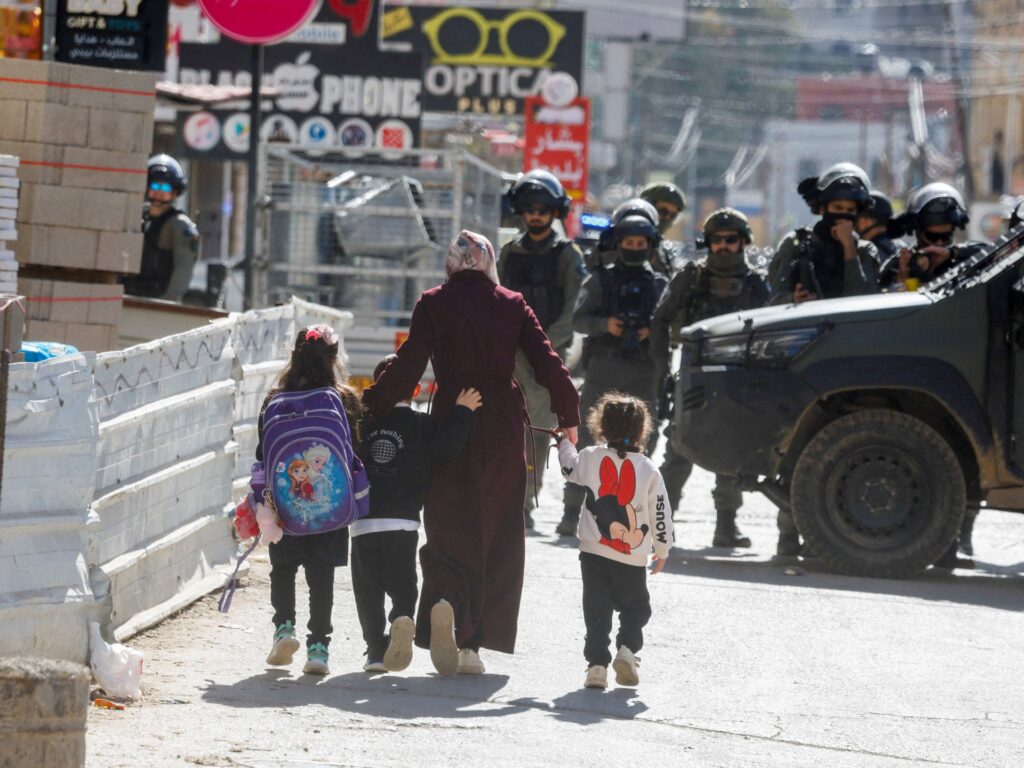
Former President Donald Trump has expressed opposition to Israel’s plans for annexation of parts of the West Bank, according to a senior official. This stance comes amid increasing international concern and vocal opposition regarding the controversial move.
The announcement sheds light on Trump’s position as focused on maintaining stability in the Palestinian territories. The official stated that Trump views the stability of the region as essential and aligns with the “goal to achieve peace in the region.”
Israel’s proposed annexation of portions of the West Bank has sparked widespread debate and condemnation from multiple countries and international organizations. Critics warn that annexing land claimed by Palestinians could derail peace efforts and exacerbate tensions in an already volatile area.
Trump’s opposition marks a notable deviation from hardline policies sometimes attributed to his administration concerning Israel and the Israeli-Palestinian conflict. Throughout his presidency, Trump took several steps broadly seen as supportive of Israel, such as recognizing Jerusalem as the capital and moving the U.S. Embassy there.
The recent objections toward annexation underscore concerns that such unilateral actions could undermine negotiations aimed at a two-state solution. Many experts believe that preserving stability in Palestinian territories is crucial to any lasting peace agreement.
The reaction to Trump’s stance has been mixed, with some praising the call for peace and stability, while others remain skeptical of political maneuvers amid shifting alliances in the Middle East.
International bodies like the United Nations have repeatedly urged restraint and dialogue instead of annexation, emphasizing the importance of peaceful resolution through diplomacy.
Palestinian leaders have consistently resisted annexation, viewing it as an illegal attempt to extend Israeli sovereignty over occupied lands.
As tensions rise, the global community continues to watch closely, hoping for renewed efforts to restart meaningful peace talks and prevent further escalation.
This development highlights the delicate balance of interests and the complexities surrounding the Israeli-Palestinian conflict.
Efforts to find a peaceful resolution remain challenged by differing political agendas, historical grievances, and deep-seated mistrust on all sides.
The road to peace in the Middle East remains uncertain, but voices emphasizing stability and dialogue provide a glimmer of hope.
Trump’s position potentially reopens discussions about the best path forward to achieve lasting peace and security in the region.
The coming weeks could prove pivotal as stakeholders assess responses and consider future steps concerning the West Bank and the broader Israeli-Palestinian conflict.