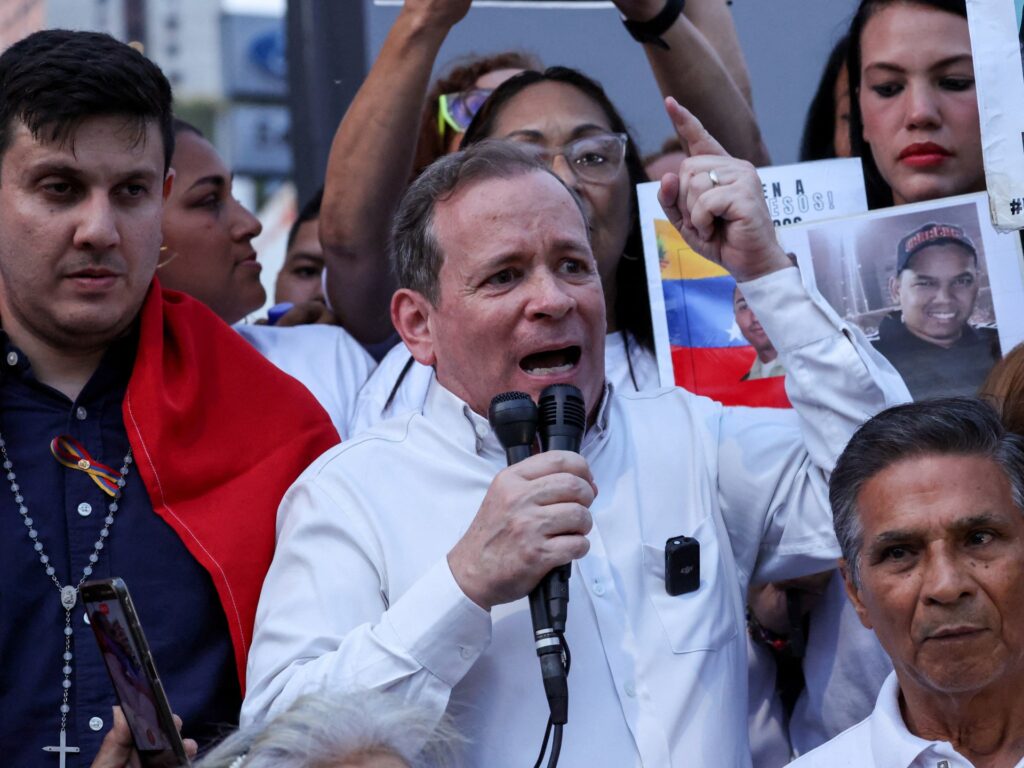
In a startling development in Venezuelan politics, Juan Pablo Guanipa, a prominent opposition figure, has been rearrested shortly after his recent release from detention. The country’s public prosecutor has confirmed that Guanipa has now been placed under house arrest, raising concerns among his supporters and international observers alike.
Juan Pablo Guanipa, known for his vocal criticism of the Venezuelan government, was initially released under circumstances that sparked hope among opposition parties. However, the swift move to reimpose restrictions against him has reignited tensions in the already volatile political environment.
Guanipa’s son and several allies have publicly condemned the government’s actions, describing the rearrest as a form of ‘kidnapping.’ They argue that this detention strategy is being used to silence political dissent and intimidate opposition leaders.
The reimposition of house arrest on Guanipa comes at a time of increasing political unrest in Venezuela, where opposition figures frequently face legal challenges and detentions. Human rights organizations have repeatedly criticized the Venezuelan government for what they see as a systematic crackdown on dissent.
This latest incident underscores the precarious situation for political opposition in Venezuela, highlighting ongoing concerns about the rule of law and political freedoms in the country. The international community has called for respect for human rights and the immediate release of political prisoners.
Opposition leaders expressed their outrage at what they describe as a politically motivated detention, vowing to continue their efforts to challenge the government and advocate for democratic reforms in Venezuela.
As events unfold, the situation remains tense, with the Venezuelan government facing increasing scrutiny over its treatment of political opponents. The arrest and subsequent house arrest of Juan Pablo Guanipa serve as a stark reminder of the risks faced by those who challenge the current regime.
Observers will be watching closely to see how the government handles this case moving forward, as it could have significant implications for Venezuela’s political landscape and its relations with the global community.