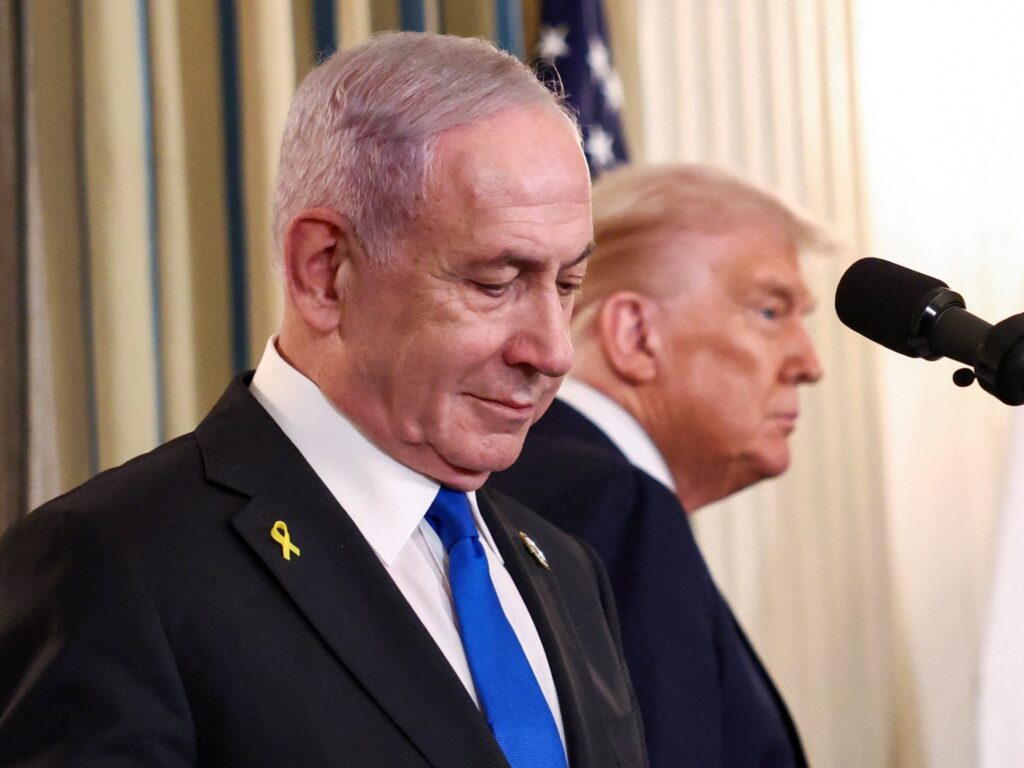
Israeli Prime Minister Benjamin Netanyahu is scheduled to meet with former U.S. President Donald Trump in the United States to discuss pressing issues related to Iran, with a strong focus on Tehran’s ballistic missile program. Netanyahu’s visit underscores the ongoing concerns Israel has regarding Iran’s military capabilities and the implications for regional security.
The Israeli Prime Minister is particularly intent on urging the U.S. to address the ballistic missile component in any ongoing or future negotiations with Iran. According to Netanyahu, these missiles are a “red line” for Tehran, highlighting the critical nature of this issue.
Israel views Iran’s ballistic missile arsenal as a direct threat, given its ability to strike targets across the Middle East, including Israel itself. This concern has been a longstanding point of contention, especially in the context of diplomatic efforts to limit Iran’s nuclear program.
Netanyahu’s push for U.S.-Iran talks to incorporate restrictions on ballistic missiles seeks to close a gap he believes has been overlooked in past agreements. While previous negotiations have mainly focused on nuclear development limits, Netanyahu is emphasizing the need to also address delivery mechanisms that could enable nuclear warheads.
This meeting comes at a time of heightened tensions in the region, with frequent Israeli reports of Iranian activities in Syria and other neighboring countries. Netanyahu’s administration has been vocal about its refusal to allow Iran to establish a permanent military foothold near its borders.
Former President Trump, known for his administration’s hardline stance on Iran, could find common ground with Netanyahu on the missile issue. During his presidency, Trump withdrew the U.S. from the Iran nuclear deal, citing its inadequacy in curbing Tehran’s missile development and regional interventions.
The discussions between Netanyahu and Trump are expected to influence how the U.S. might approach Iran policy moving forward. Both leaders share a history of a close alliance and mutual skepticism about Iran’s intentions.
Experts suggest Netanyahu’s visit is also aimed at rallying support for stronger sanctions and international pressure on Iran to halt all activities linked to ballistic missile advancements.
The Israeli Prime Minister’s red line emphasizes the urgency from Israel’s perspective to prevent any escalation that could destabilize the Middle East further. As negotiations continue, the missile issue is likely to be a pivotal topic in shaping future diplomatic efforts.
In summary, the Netanyahu-Trump meeting will spotlight Iran’s ballistic missile program as a key challenge in U.S.-Iran relations, reflecting Israel’s security priorities and the broader geopolitical dynamics of the region.