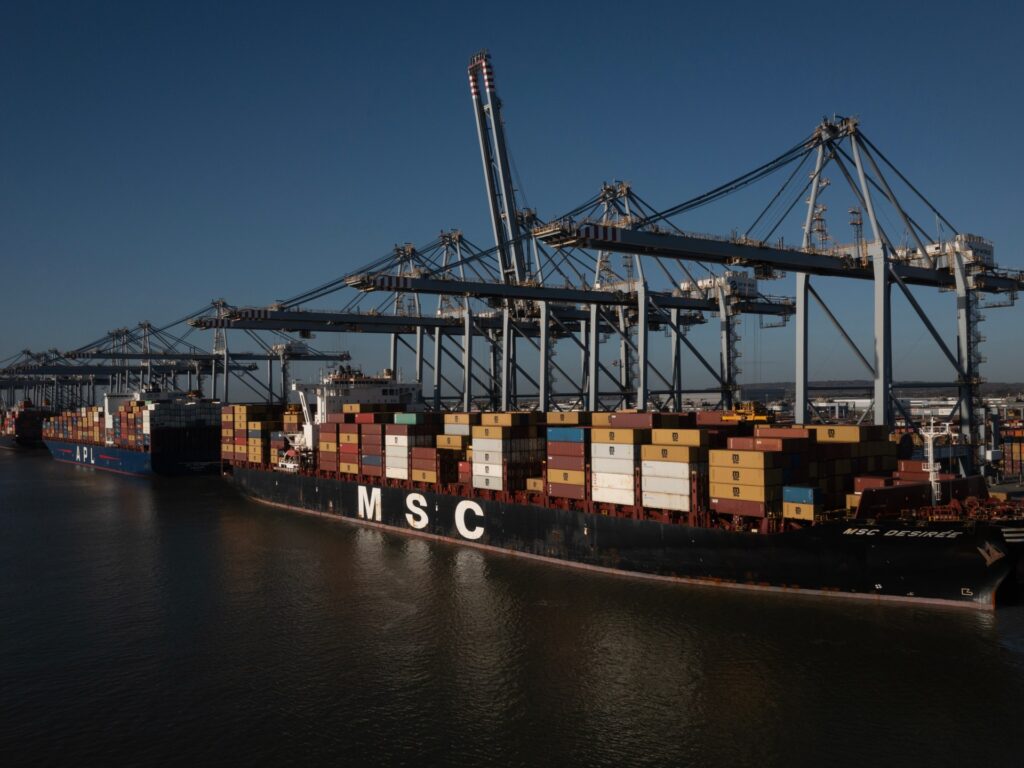
The Mediterranean Shipping Company (MSC), one of the world’s leading shipping giants, has been found facilitating trade from Israeli settlements located in the occupied West Bank. This development has surfaced through the analysis of commercial documents that highlight hundreds of shipments originating from these settlements.
These settlements are considered illegal under international law, a stance that is upheld by the European Union (EU) and numerous other international bodies. The shipments facilitated by MSC involve various goods produced within the settlements, thereby linking the company to the ongoing disputes surrounding the Israeli occupation of Palestinian territories.
The leaked commercial documents provide detailed insights into the scale and frequency of these shipments. They reveal that MSC has not only been transporting goods but has also played a significant role in supporting the economic infrastructure of the settlements. This has raised serious ethical and legal questions about the company’s operations, particularly in relation to EU policies on trade and settlements.
The EU has strict guidelines prohibiting trade with Israeli settlements, reflecting its position on the status of the West Bank. However, the involvement of MSC suggests gaps in enforcement and compliance. This situation presents a considerable challenge for regulators aiming to ensure that international trade does not indirectly legitimize or support settlement activities.
Human rights organizations and political activists have long criticized companies that engage in commercial activities with the settlements, arguing that such engagements contribute to the perpetuation of the occupation and the undermining of Palestinian rights. The case of MSC is likely to intensify calls for greater corporate accountability and transparency in global supply chains.
Furthermore, the report raises broader questions about the responsibilities of multinational corporations operating in conflict zones. It underscores the need for robust due diligence processes to prevent complicity in human rights violations.
MSC, for its part, has not yet issued a comprehensive public response to the revelations. The company operates a vast network covering numerous international trade routes, making its role in this issue particularly impactful.
The findings come at a critical juncture as international attention remains focused on the Israeli-Palestinian conflict. They serve as a reminder of the complex interplay between commerce, law, and geopolitics in contested regions.
European lawmakers and trade officials are expected to scrutinize MSC’s activities closely, possibly resulting in calls for stricter regulatory measures or sanctions.
This case highlights the ongoing challenges of enforcing international law in regions marked by occupation and disputes, as well as the crucial role that businesses play in either exacerbating or mitigating such conflicts.
As investigations continue, stakeholders including governments, advocacy groups, and the shipping industry will likely engage in dialogue aimed at addressing these concerns and preventing future complicity in contested trade activities.
The MSC shipping case underscores how global commerce can become entangled in geopolitical conflicts, raising important questions about ethical business practices and international accountability.