Jimmy Lai, a prominent pro-democracy advocate in Hong Kong, was recently sentenced to 20 years in prison, marking one of the harshest punishments for activists involved in the region’s democratic movement. At the age of 78, Lai’s sentencing underscores the ongoing crackdown on dissent in Hong Kong. This development has renewed attention to the plight of other key pro-democracy figures who have faced various forms of judicial and political pressure.
Lai, founder of the now-defunct Apple Daily newspaper, was charged under the Hong Kong national security law, which Beijing imposed in 2020. The law targets activities deemed as secession, subversion, terrorism, and collusion with foreign forces, often used to stifle opposition voices.
Other notable pro-democracy protesters have also faced severe consequences. Joshua Wong, a leading figure in the Umbrella Movement of 2014, served multiple prison sentences for his activism, including charges related to unauthorized assembly and rioting. His relentless advocacy continues despite restrictions and legal risks.
Agnes Chow, another key activist and close ally of Joshua Wong, was imprisoned on charges linked to protests. Even after her release, she remains under close surveillance and faces ongoing legal challenges.
Nathan Law, a former legislator and prominent activist, fled Hong Kong amid fears of arrest under the national security law. He now continues his advocacy work from abroad, particularly in the UK, highlighting the plight of Hong Kong’s democracy movement on international platforms.
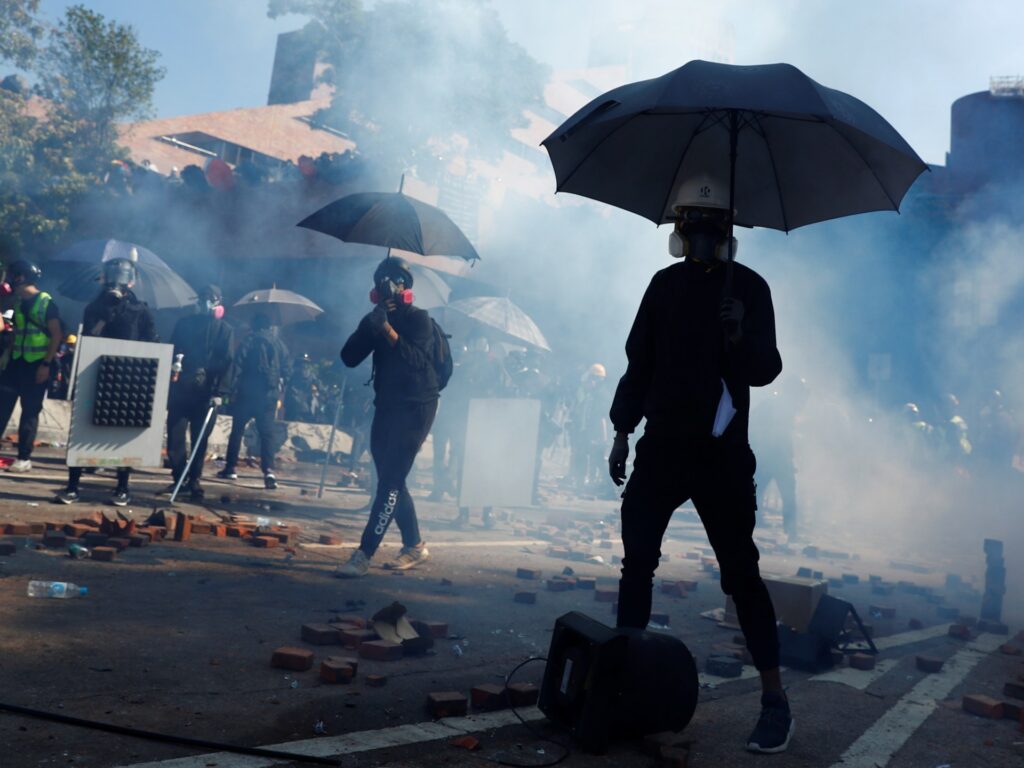
The 2019 protests, sparked by a controversial extradition bill, led to widespread arrests and protracted legal battles for numerous activists. Many were charged with illegal assembly, rioting, and other offenses under increasingly stringent laws.
Carrie Lam, Hong Kong’s former Chief Executive, presided over a period characterized by the suppression of dissent and the introduction of the national security law. This legislation has drastically altered the political landscape, effectively silencing many opposition voices.
Apart from prominent figures, countless unnamed protesters have also faced harsh penalties, including lengthy prison sentences and heavy fines. These measures have created a chilling effect on the pro-democracy movement.
International reactions to these developments have included sanctions and statements condemning the erosion of Hong Kong’s autonomy and freedoms. Yet, the local environment for activists remains perilous.
Jimmy Lai’s sentence serves as a stark reminder of the consequences faced by those who challenge Beijing’s authority in Hong Kong. The city’s pro-democracy movement, once vibrant and vocal, now finds itself under siege, with many leaders either imprisoned, exiled, or silenced.
As the global community watches, the stories of Lai and other activists illustrate the resilience and risks inherent in the fight for democracy in Hong Kong. The future of the movement remains uncertain, overshadowed by legal reprisals and political repression.