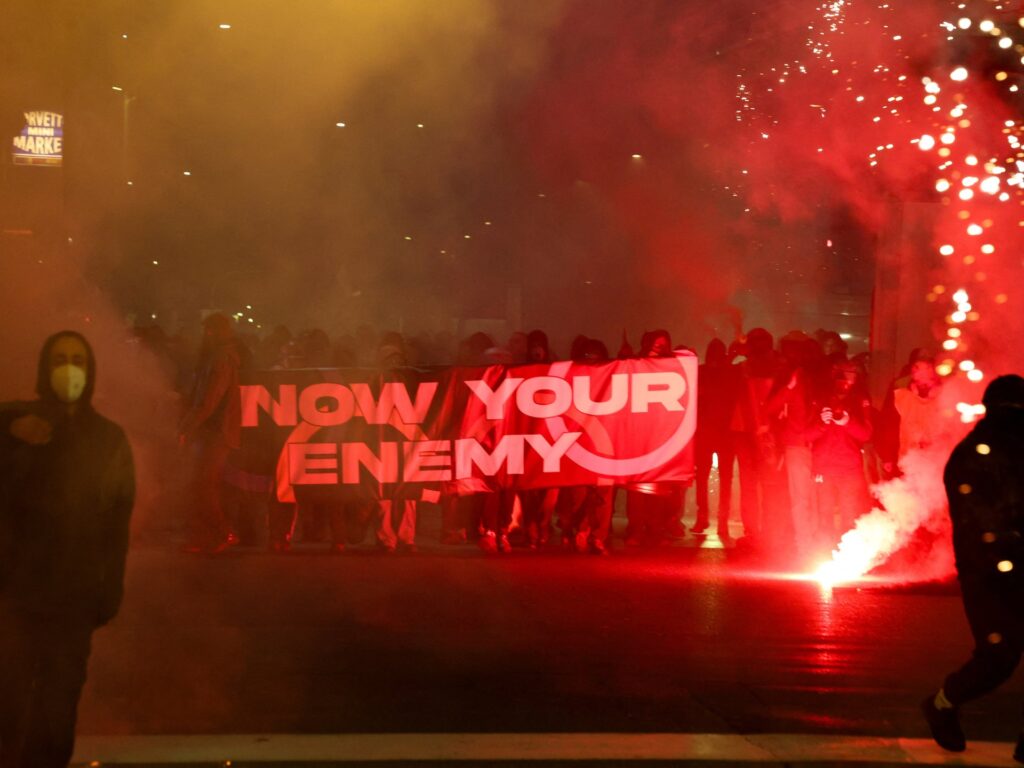
In a recent development in Milan, Italy, Prime Minister Giorgia Meloni has publicly condemned protesters opposing the upcoming Olympic Games. The protests have been marked by demonstrations against the hosting of the Olympics, which the government has been actively promoting as a significant event for the country.
Prime Minister Meloni labeled the protesters as ‘enemies of Italy and Italians,’ a strong statement reflecting her administration’s stance on the issue. She emphasized the importance of the Olympics in showcasing Italy’s cultural heritage, economic strength, and international standing.
The comment came amid growing tensions in Milan, where the protests have occasionally turned disruptive. Opposition groups argue that the Olympics divert critical resources from more immediate social needs and raise concerns about environmental and urban impacts in the city.
Meloni’s government has defended its decision to support the Games, highlighting the anticipated benefits such as increased tourism, infrastructure development, and job creation. Officials contend that the event will serve as a catalyst for economic recovery, especially in the post-pandemic context.
Local authorities in Milan have been working to balance security measures with the rights to peaceful protest, ensuring that the event proceeds smoothly while respecting democratic freedoms. However, Meloni’s harsh labeling of protesters underscores the political divide surrounding the Olympics.
Observers note that Italy’s hosting of the Olympics is a matter of national pride for many, combined with expectations of long-term benefits. Yet the controversy reveals deep societal debates about priorities, governance, and the impacts of large-scale international events.
The Prime Minister’s remarks have sparked varied reactions across political and civil society groups. Supporters applaud her strong leadership and commitment to Italy’s global image, while critics warn that polarizing rhetoric might deepen social fractures.
As Milan prepares for the Olympics, the government is focused on ensuring the successful and safe execution of the Games. Meanwhile, the anti-Olympics movement remains vocal, advocating alternative visions for the city’s future.
This confrontation highlights broader global challenges faced by host cities of major sporting events—balancing public enthusiasm, economic opportunities, and community concerns. Italy’s handling of this situation will likely be closely watched by other nations considering similar mega-events in the coming years.
In conclusion, Prime Minister Giorgia Meloni’s condemnation of the anti-Olympics protesters in Milan reflects the high stakes and contentious debates surrounding the forthcoming Olympic Games. The outcome will impact not only the success of the event but also Italy’s social cohesion and international reputation.