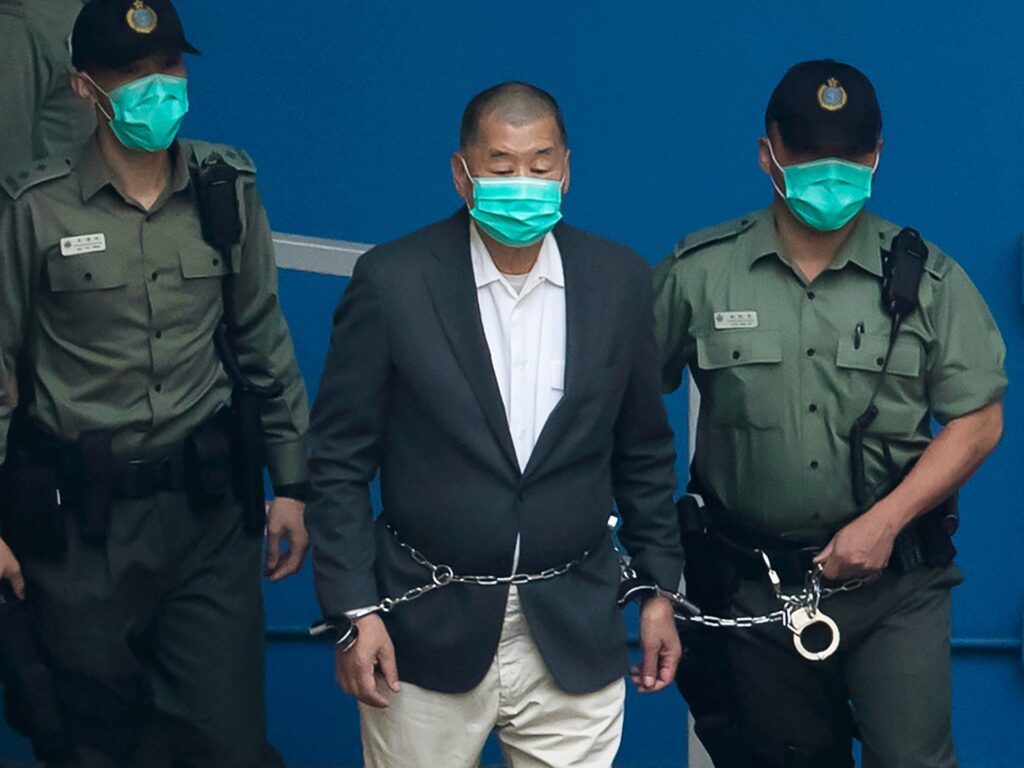
Jimmy Lai, a prominent Hong Kong media magnate and founder of the now-defunct Apple Daily newspaper, has been sentenced to 20 years in prison. The sentence was imposed under Beijing’s stringent national security law, which has been increasingly utilized against pro-democracy activists and critics of the Chinese government.
Lai, known for his outspoken criticism of Beijing, gained widespread attention as the leading figure behind Apple Daily, a media outlet that was a vocal supporter of Hong Kong’s pro-democracy movement. The publication served as a critical platform for dissenting views in the city.
The severe sentence reflects the continued crackdown on dissent and press freedom in Hong Kong, as authorities aim to stifle opposition voices following the 2019 pro-democracy protests and the implementation of the national security law in 2020.
Critics argue that the law and subsequent legal actions against figures like Lai undermine the autonomy and freedoms promised to Hong Kong under the “one country, two systems” framework agreed upon during the 1997 handover from Britain to China.
Supporters of the law claim it is necessary to restore stability in the city and prevent activities that threaten China’s sovereignty and national security.
Lai’s sentencing is seen by many international observers as a warning to other pro-democracy activists and independent media in Hong Kong, signaling a harsher environment for political dissent.
The Apple Daily was forced to shut down after its assets were frozen and multiple executives were arrested, crippling the newspaper’s operations and signaling a turning point for press freedom in the region.
The global community has expressed concern over the deterioration of freedoms in Hong Kong since the national security law’s enactment, which criminalizes acts deemed as secession, subversion, terrorism, and collusion with foreign forces.
Human rights organizations and foreign governments have condemned the arrest and sentencing of Lai, calling for his release and urging China and Hong Kong authorities to respect the city’s legal protections and civil liberties.
This high-profile case exemplifies the challenges faced by Hong Kong’s pro-democracy movement under increasing pressure from Beijing’s policies. The judiciary’s decision marks a significant moment in the ongoing struggle over Hong Kong’s political future and the preservation of its freedoms.