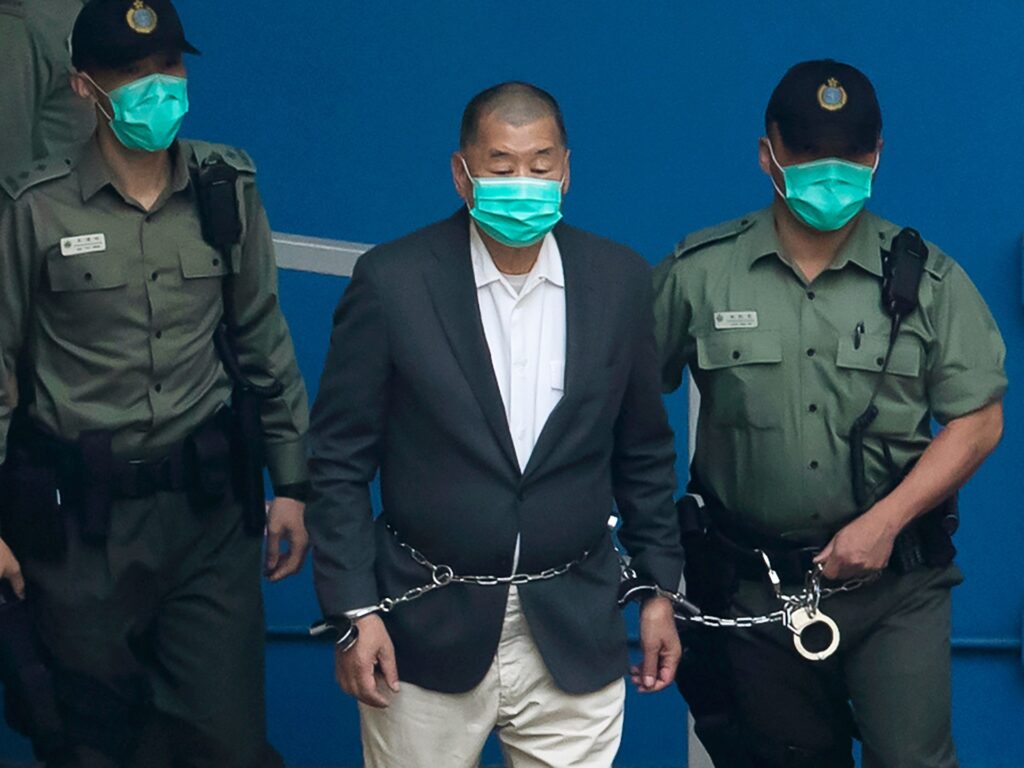
Jimmy Lai, the prominent Hong Kong media mogul and founder of the now-defunct Apple Daily newspaper, is set to face sentencing in a high-profile national security trial. Lai, a well-known figure in Hong Kong’s pro-democracy movement, stands accused of colluding with foreign forces, an offense that could result in a life sentence under the national security law.
Lai’s trial has drawn widespread international attention and condemnation, highlighting ongoing concerns about freedom of the press and political expression in Hong Kong since the implementation of the national security law in 2020. Apple Daily, once one of Hong Kong’s most vocal pro-democracy newspapers, ceased operations in 2021 after its assets were frozen and key executives arrested.
The charges against Lai center on his alleged collaboration with foreign entities to undermine China’s sovereignty and security over Hong Kong. Authorities accuse him of orchestrating protests and leveraging foreign support to promote unrest, charges Lai and his defenders vehemently deny.
Supporters argue that Lai’s prosecution is politically motivated, aimed at silencing dissent and enforcing Beijing’s tightening control over Hong Kong’s autonomy and freedoms. Human rights organizations and press freedom advocates have expressed alarm that Lai’s case could set a precedent for further crackdowns on independent journalism in the region.
Throughout the trial, Lai has remained defiant, reiterating his commitment to democratic values and press freedom. The case has also sparked debates within Hong Kong and around the world about the future of the city’s freedoms and its role as an international financial hub with a traditionally independent legal system.
Legal experts note that the national security law grants broad powers to prosecutors, complicating the defense’s ability to challenge charges or access evidence. Lai’s sentencing will be closely watched as a barometer of the law’s impact on Hong Kong’s legal and political landscape.
As the court prepares to deliver its verdict, the international community calls for fairness and transparency in the judicial process, underscoring the fragile balance between China’s sovereignty claims and Hong Kong’s promised autonomy under the ‘one country, two systems’ framework.
Jimmy Lai’s case symbolizes broader tensions in Hong Kong, where pro-democracy voices are increasingly marginalized amid China’s efforts to assert control. The outcome of this trial will not only affect Lai’s fate but could also shape the region’s media and political environment for years to come.