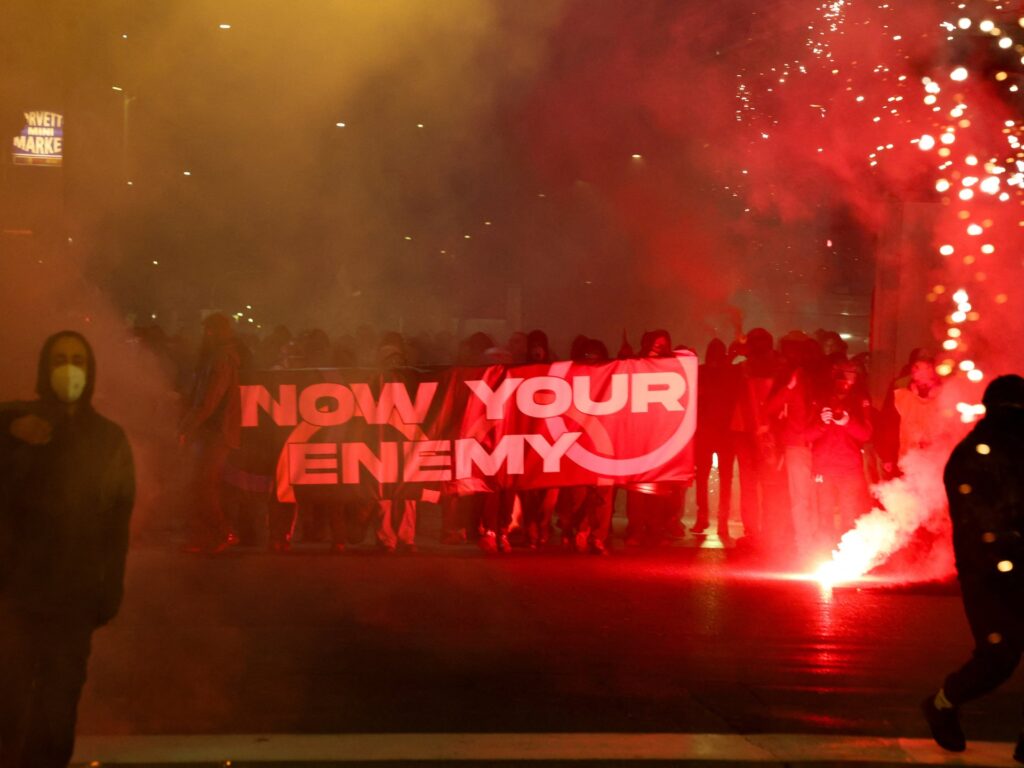
The Winter Olympics in Milan have become a focal point for significant protests, as demonstrators voiced strong opposition against the participation of Israel and the presence of U.S. Immigration and Customs Enforcement (ICE) agents. The demonstrations, which erupted throughout various Olympic venues and nearby locations, highlight the growing political tensions intertwined with this international sporting event.
Protesters in Italy raised concerns over Israel’s involvement in the Games, reflecting broader political disputes and human rights critiques. At the heart of the opposition are issues related to Israel’s policies, which some activists argue should not be overlooked or accepted within global events promoting unity and peace. This sentiment has galvanized diverse groups, ranging from human rights organizations to grassroots activists.
Simultaneously, the presence of ICE, a U.S. federal agency known for immigration enforcement and deportations, drew ire from protesters who perceived their deployment at an international sporting event as an extension of controversial immigration policies. Critics argue that ICE’s involvement contradicts the inclusive spirit of the Olympics and represents a militarization of security measures that disproportionately affect marginalized groups.
The protests have been largely peaceful but highly visible, featuring banners, chants, and public speeches aimed at raising awareness about these contentious issues. Organizers called for solidarity with oppressed communities and demanded accountability from both the Olympic committee and governments involved.
Local authorities and event security forces have monitored the situation closely to maintain order and ensure the safety of attendees, athletes, and visitors. While the disruptions have caused some logistical challenges, the protests underscore the intersection of sports and political activism in today’s global landscape.
The Milan Winter Olympics, traditionally a celebration of athletic achievement and international camaraderie, is now also a platform for voices calling for justice and reform. The unfolding events serve as a reminder that global sporting events do not exist in a vacuum, but are often stages where broader societal conflicts and issues come to the forefront.
As the Games continue, attention remains on the responses from the International Olympic Committee, Italian officials, and the broader international community to these protests. How these stakeholders address the concerns raised may influence the future dynamics of political activism in global sports.
Ultimately, the protests during the Milan Winter Olympics epitomize a complex dialogue between sport, politics, and human rights, highlighting the persistent challenges and opportunities faced by the international community in fostering not just competition, but also inclusivity and respect on the world stage.