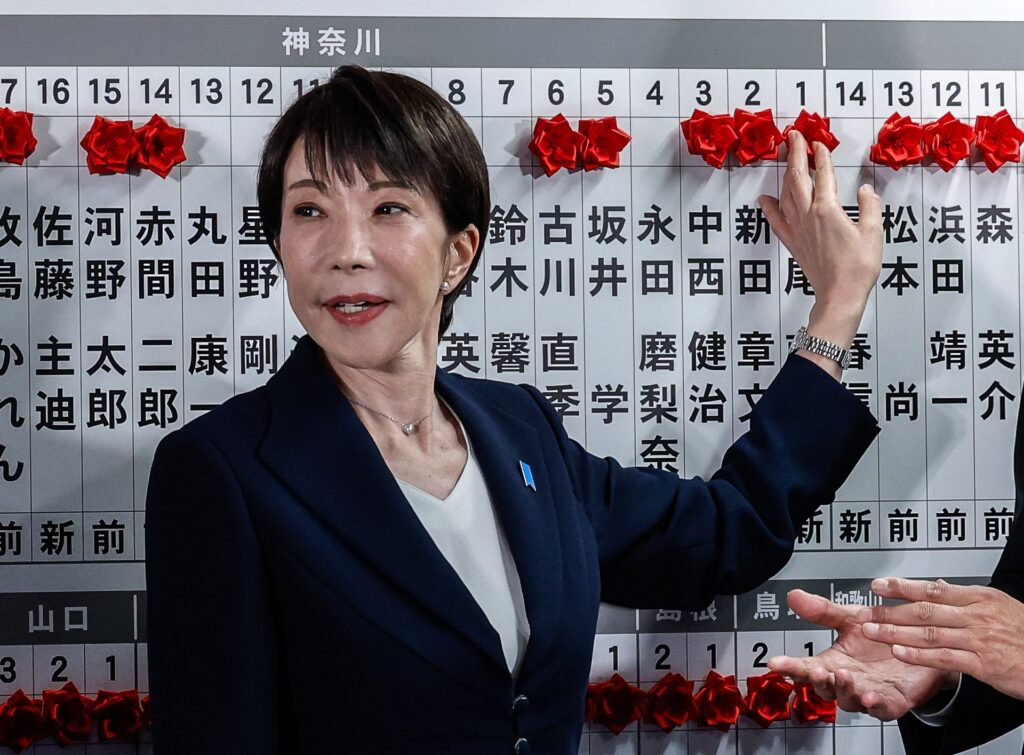
In a significant development in Japanese politics, Prime Minister Sanae Takaichi’s party is set to secure a majority in the upcoming parliamentary elections. Early projections indicate that her party, in coalition with the Ishin party, could win an impressive combined total of up to 366 out of 465 seats in the lower house of Japan’s National Diet. This potential majority would provide Takaichi’s bloc with a strong mandate to govern and implement their policy agenda.
The coalition between Takaichi’s party and Ishin has proven to be a formidable alliance, blending political strengths and appealing to a broad spectrum of voters. This partnership appears to have resonated well with the electorate, who are looking for stability and effective leadership amid various domestic and international challenges.
The parliamentary election is a crucial event in Japan’s democratic process, deciding the composition of the House of Representatives which holds significant power over legislation and government formation. A majority of 233 seats is needed to govern, and the coalition’s potential 366 seats exceed that threshold comfortably, indicating a very strong position in the legislature.
Takaichi’s rise to leadership marks a notable chapter in Japan’s political landscape, as she is known for her reformist agenda and emphasis on economic revitalization, security policies, and strengthening Japan’s global standing. Her leadership style and policy plans have attracted both support and scrutiny but have clearly mobilized voters in her favor.
The Ishin party brings to the coalition a reputation for advocating economic reforms, decentralization, and administrative efficiency, complementing Takaichi’s vision. Together, their combined seat count suggests an opportunity for decisive governance and ambitious policy implementation.
Analysts note that if this projected majority materializes, it would reflect voter confidence in Takaichi’s promises to address critical issues such as economic disparities, aging population challenges, and regional security dynamics.
While the election results are subject to final confirmation, the preliminary outlook is optimistic for the coalition. Opposition parties have faced difficulties in presenting a unified challenge, which has contributed to the coalition’s electoral advantage.
This election may also signify a shift in Japan’s political dynamics, with Takaichi’s leadership potentially marking a new era characterized by bold policy initiatives and governmental reforms. Observers worldwide are watching closely to see how this majority will influence Japan’s domestic policies and international relations.
In conclusion, the anticipated majority for PM Sanae Takaichi’s party and its coalition partner Ishin represents a pivotal moment for Japan’s political future. Their combined strength in the lower house is poised to deliver governance stability and a clear direction for the country’s policy and reform agenda in the years ahead.