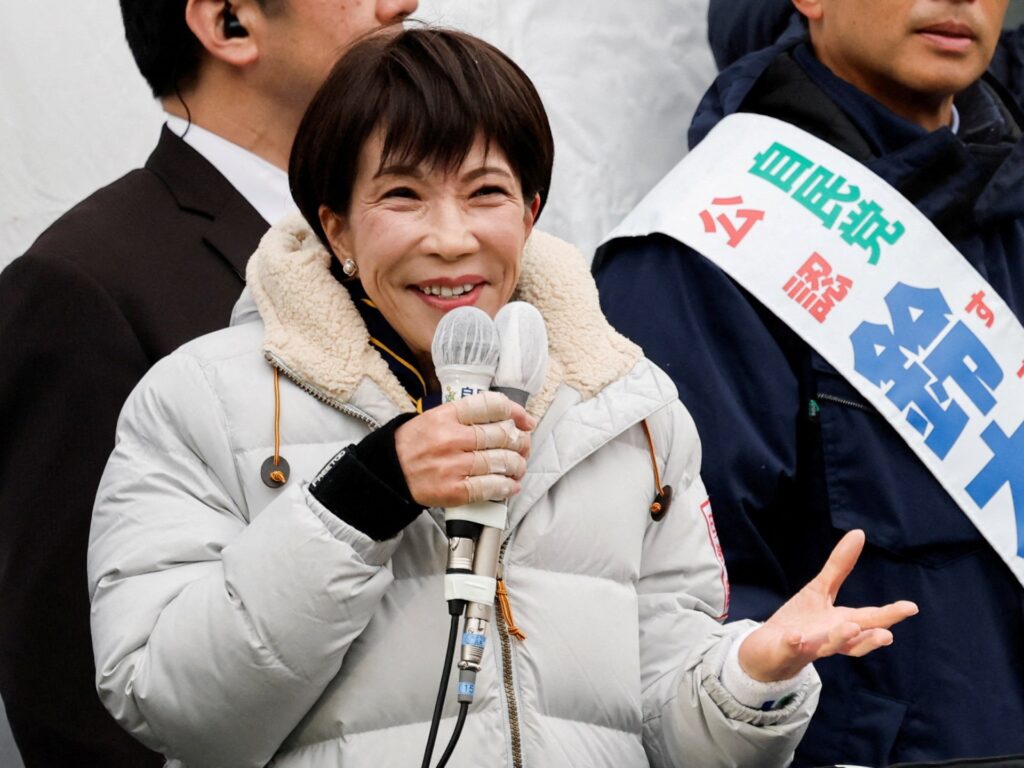
Japan is currently holding a significant election as Sanae Takaichi, a prominent conservative politician, seeks a mandate for her ambitious conservative agenda. This election is particularly noteworthy because opinion polls indicate that Takaichi’s conservative coalition could secure a substantial majority, potentially winning more than 300 of the 465 seats in the lower house of the Japanese parliament.
Sanae Takaichi, known for her staunch conservative views and close association with former Prime Minister Shinzo Abe, has campaigned on a platform that emphasizes traditional values, national security, economic revitalization, and constitutional reform. Her agenda also includes strengthening Japan’s defense capabilities, promoting cultural heritage, and addressing demographic challenges such as the aging population.
The lower house election carries significant weight in shaping Japan’s domestic and foreign policies for years to come. A victory for Takaichi’s coalition would consolidate conservative power and potentially lead to more assertive policies regarding Japan’s military posture in the region. This comes amid rising tensions in East Asia, with increasing assertiveness from neighboring countries.
Public sentiment in Japan appears to lean towards stability and continuity, as many voters express concerns about regional security threats and economic uncertainty. Takaichi’s promises to bolster Japan’s self-defense and economic management resonate with a broad segment of the electorate seeking strong leadership.
Her coalition’s predicted strong performance also suggests that more conservative voices might dominate parliamentary debates, possibly accelerating efforts toward revising Japan’s pacifist constitution, which has been a contentious issue for decades. The constitution, particularly Article 9, restricts Japan’s military activities to self-defense. Takaichi and her allies advocate for constitutional amendments to allow a more proactive defense strategy.
Political analysts note that while public support for constitutional reform is mixed, the current geopolitical climate has made security issues more prominent in voters’ minds. This shift has benefitted candidates like Takaichi who prioritize national defense.
Economically, Takaichi’s agenda promotes policies aimed at stimulating growth through deregulation, innovation, and support for small and medium enterprises. She also advocates for enhancing Japan’s global trade relationships to strengthen the economy.
However, there are concerns among opposition parties and some civil society groups about the implications of a conservative majority. Critics warn that Takaichi’s agenda might undermine democratic norms and civil liberties. They also caution against the potential for increased military engagement and the risks of exacerbating regional tensions.
International observers are closely watching the election, as Japan plays a crucial role in the Indo-Pacific region’s geopolitical landscape. The outcome will influence the country’s relations with allies like the United States and neighbors such as China and South Korea.
As the votes are tallied, the world awaits the confirmation of Japan’s political direction. A clear win for Sanae Takaichi’s coalition could mark a significant turning point in Japanese politics, with lasting impacts on both domestic affairs and international relations.
In summary, Japan’s current election is a critical moment that may solidify a conservative government under Sanae Takaichi’s leadership. With opinion polls forecasting a strong majority, her conservative coalition is poised to implement policies focused on national security, economic vitality, and constitutional reform, amidst both hopeful support and notable opposition within the country.