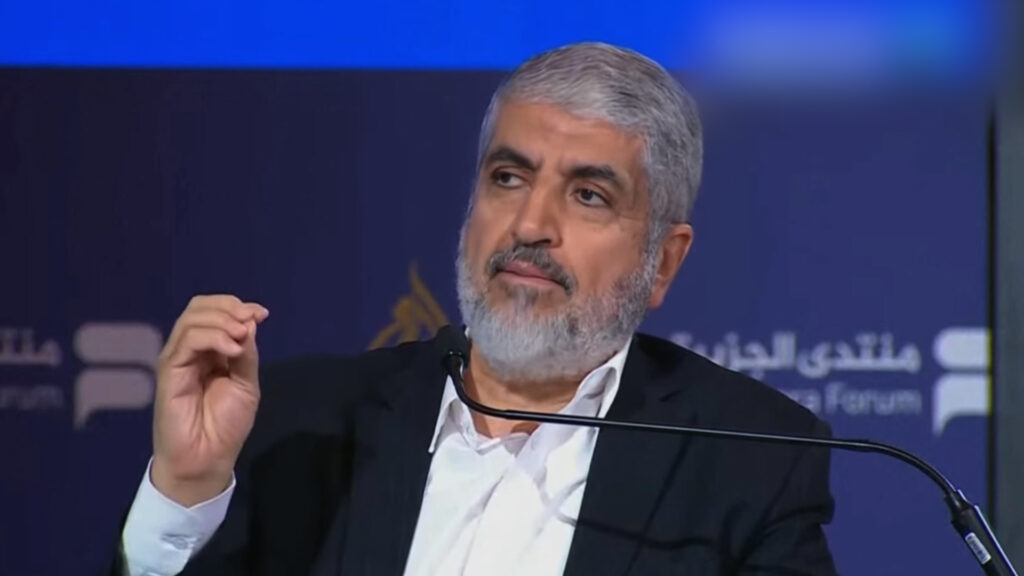
Khaled Meshaal, the head of Hamas abroad, recently addressed the Al Jazeera Forum where he emphasized the rights of Palestinians to resist occupation. Meshaal articulated that resistance is not merely a choice but a legitimate right for people living under occupation. His speech highlighted the ongoing struggles faced by Palestinians and framed their resistance within the broader context of global norms concerning occupied peoples.
During the forum, Meshaal underscored the persistent grievances of Palestinians resulting from decades of conflict and territorial disputes. He argued that international law and historical precedents support the right of occupied peoples to resist. This perspective is rooted in the experience of Palestinians who have endured displacement, restrictions, and violence.
Meshaal’s remarks come at a time of heightened tensions in the region, where political and military clashes have intensified. He called upon the international community to recognize the legitimacy of Palestinian resistance efforts and urged for greater awareness of their plight.
The head of Hamas abroad also addressed the ways in which Palestinians employ various means of resistance, including political activism, social mobilization, and at times, armed struggle. He argued that these actions arise from a desire for self-determination and freedom from occupation.
In his statement, Meshaal criticized the portrayal of Palestinian resistance in some international media and political arenas, which often label it as terrorism without acknowledging the underlying causes and the right to resist oppression.
He appealed for an impartial assessment of the situation and for support that aligns with principles of justice and human rights. The forum itself provided a platform for diverse voices discussing the complex and contentious Israeli-Palestinian conflict.
Meshaal’s stance reflects the broader position of Hamas, which views armed resistance as an integral strategy to challenge occupation and assert Palestinian rights. This position continues to shape political dynamics in the Middle East.
Experts note that such declarations reinforce the cyclical nature of the conflict, where claims and counterclaims about rights, resistance, and terrorism perpetuate tensions and hinder peace processes.
The international community remains divided on how to respond to Hamas’s characterization of resistance and the use of violence. Some governments emphasize negotiations and diplomacy, while others support tougher measures to curb militant activities.
Meanwhile, on the ground, Palestinians continue to navigate a difficult reality marked by military incursions, settlement expansions, and restrictions on movement.
Meshaal’s presence at the Al Jazeera Forum and his outspoken remarks have sparked reactions across the political spectrum. Supporters view his words as a reaffirmation of Palestinian agency, while critics warn that glorifying resistance may fuel further violence.
Overall, the event highlights the enduring and deeply rooted nature of the Israeli-Palestinian conflict and the challenges involved in achieving a resolution that satisfies all parties. Khaled Meshaal’s comments reiterate a contentious narrative that resistance is embedded in the pursuit of rights by an occupied people, a narrative central to understanding the ongoing regional strife.