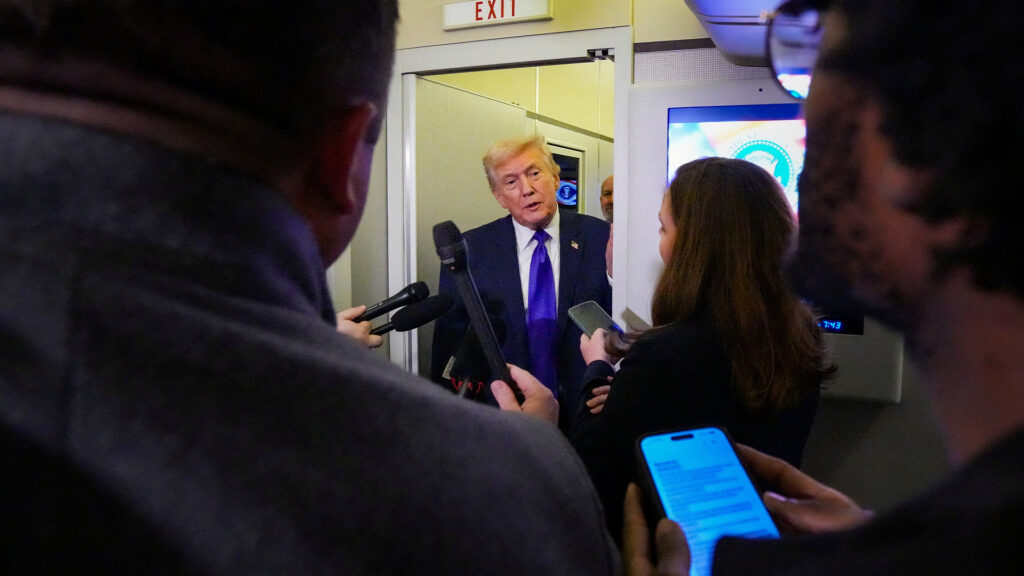
President Donald Trump announced that the United States had engaged in ‘very good’ discussions with Iran during meetings held in Oman on Friday. This development marks a noteworthy diplomatic engagement amid ongoing tensions between the two nations.
Despite the positive tone expressed about the talks, President Trump reaffirmed that the U.S. retains the option to consider military action if deemed necessary. This dual approach underscores the complexity of the U.S.-Iran relationship, blending diplomatic efforts with a clear warning of potential force.
The talks in Oman occurred amid a backdrop of strained relations over Iran’s nuclear program and regional activities. The U.S. has expressed concerns over Iran’s intentions and capabilities, leading to stringent sanctions and heightened military alertness in the region.
President Trump’s administration has been navigating a delicate balance of pursuing diplomatic solutions while preparing for possible escalations. The recent meeting signifies a potential opening for dialogue, but the continuation of military threats signals that the U.S. remains cautious.
Experts view the positive description of the talks as an encouraging sign, yet the sustained threat reflects the unpredictable nature of U.S.-Iran interactions. For now, both sides appear to be testing waters for possibly easing tensions.
The international community has been closely monitoring developments, with hopes that diplomacy could reduce risks of conflicts in the Middle East. However, the President’s remarks indicate that any progress will likely be accompanied by firm deterrence policies.
In summary, while the U.S. has made strides in engaging with Iran through talks in Oman, the President’s retention of military options highlights the fragile and complex state of affairs. The future of U.S.-Iran relations remains uncertain, with diplomacy and defense measures both playing critical roles.