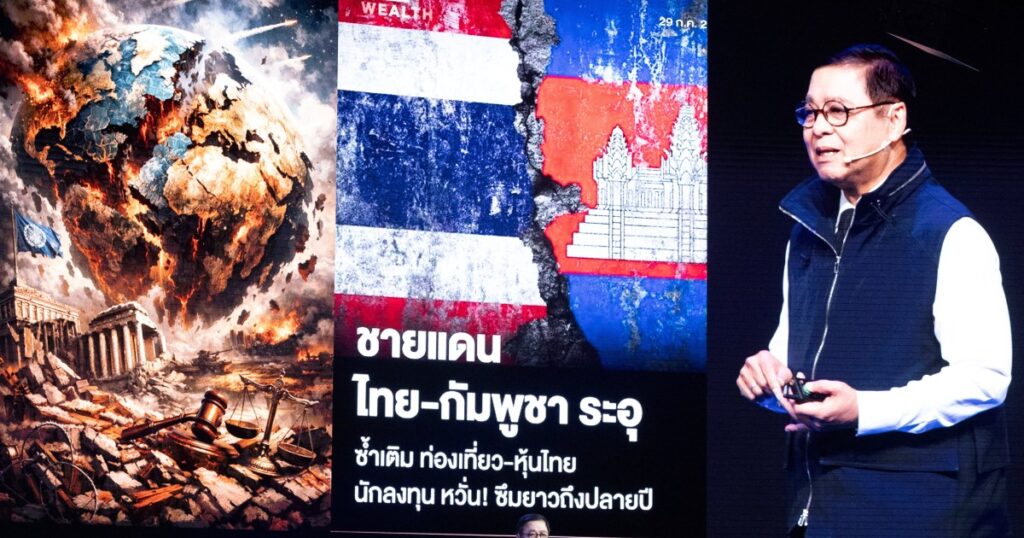
Thailand’s ongoing border conflict with Cambodia has profoundly influenced the political landscape, intensifying nationalistic sentiments and shaping the election campaign for 2023. This election cycle, the conversation has increasingly centered around security, sovereignty, and a robust military stance, aligning with the platform of the country’s “most hawkish” political party.
As tensions flare along the Thailand-Cambodia border, public opinion has gravitated toward calls for stronger national defense and assertive foreign policy—a fertile ground for the military-aligned party that promises to safeguard Thailand’s territorial integrity. This surge in nationalism is a key electoral strategy, tapping into collective anxieties over border disputes and national pride.
The pro-military party, leveraging its hawkish posture, emphasizes a disciplined, firm approach to national security and has portrayed itself as the defender of Thailand’s sovereignty against external threats. Their campaign rhetoric underscores a no-compromise attitude to territorial disputes, a pledge to support the armed forces with increased resources, and a commitment to restoring national dignity on the international stage.
Thailand’s historical intertwining of military influence and politics provides a backdrop where such a political shift seems plausible. The military has long played a significant role in the country’s governance and constitution-making, often positioning itself as the guardian of national unity and stability.
Critics warn that an overly aggressive stance in the border conflict could escalate tensions and hinder diplomatic solutions. Nonetheless, the electorate’s sentiment suggests a preference for strength and decisiveness over negotiation, particularly in the face of perceived external threats.
The election results could reshape the political dynamics in Thailand substantially. A victory for the hawkish pro-military party might lead to an increased military budget, stricter national security policies, and a more rigid approach to foreign relations, particularly with Cambodia. Furthermore, it could impact Thailand’s relations with regional allies and its participation in ASEAN initiatives anchored in peace and cooperation.
Economic concerns also play a role, as national security issues often dovetail with worries about stability, investor confidence, and tourism, all vital sectors for Thailand’s economy. The pro-military party promises that a stronger defense policy will ultimately secure the nation’s prosperity by deterring conflicts and maintaining order.
However, the focus on militarism raises questions about civil liberties and democratic governance. Observers caution that empowering the military politically risks sidelining civilian institutions and undermining democratic norms, an issue that voters will need to weigh alongside nationalist appeals.
As Thailand approaches its election day, the central question remains: will nationalist fervor and a call for military strength be enough to propel the nation’s most hawkish party into power? The answer will significantly influence Thailand’s future direction—politically, militarily, and diplomatically—in a region marked by complex geopolitical challenges and longstanding border disputes.