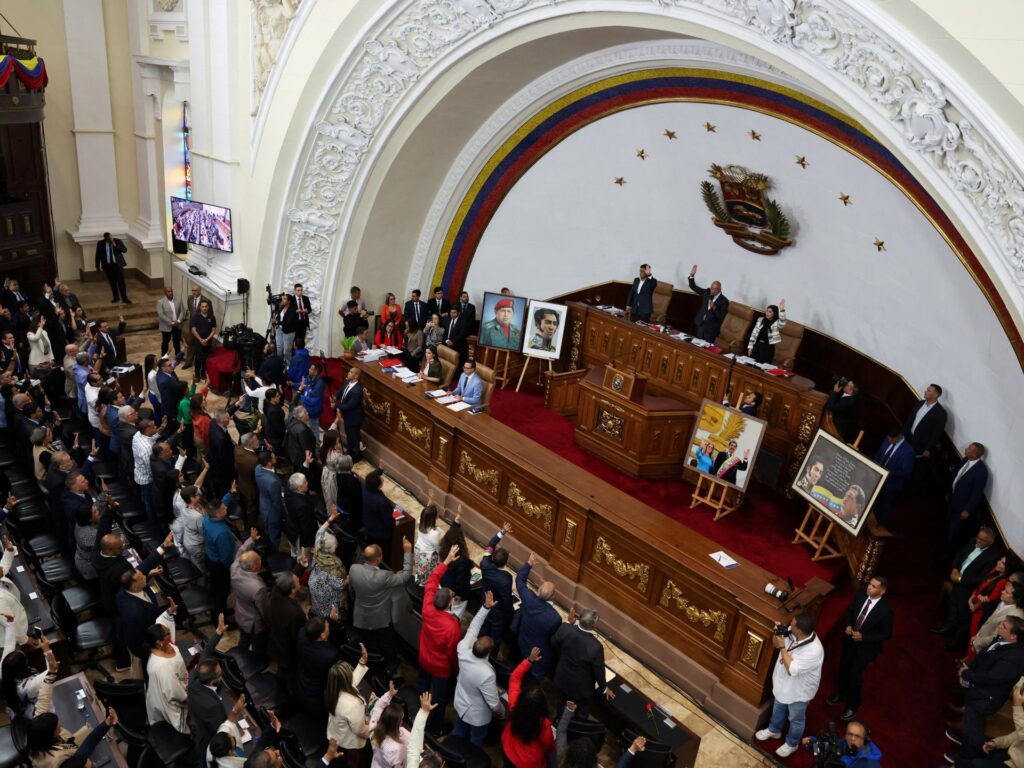
In a significant political development, Venezuela’s National Assembly has approved an amnesty bill in the first of two required votes. The legislation is designed to offer clemency to opposition members and protesters who have faced criminal charges under President Nicolás Maduro’s government.
The amnesty bill marks a critical moment in Venezuela’s ongoing political crisis, which has been characterized by widespread protests, political repression, and a deep divide between the government and opposition forces. The bill aims to address grievances relating to political prisoners and those who have been penalized for their participation in anti-government demonstrations.
Opposition leaders have welcomed the bill, viewing it as an essential step toward national reconciliation and political dialogue. Supporters argue that granting amnesty will help reduce tensions and pave the way for more inclusive political discussions.
However, the approval in the National Assembly is only the first step. The bill requires a second vote to be fully enacted, which will test the political landscape further and the willingness of Maduro’s loyalists to support the measure.
Critics of the bill express concerns that the amnesty could be used selectively and may not lead to genuine political reform. Some fear it might serve as a tactic to temporarily ease international pressure without addressing the underlying issues of governance and human rights.
The amnesty bill reflects the broader context of Venezuela’s fractured political environment, where the National Assembly, largely controlled by the opposition, operates parallel to the Maduro-aligned Constituent Assembly. This duality has complicated efforts to find a unified path forward.
Passing this bill could also influence negotiations with international stakeholders, including countries that have imposed sanctions on Venezuela in response to the government’s crackdown on dissent.
As the second vote approaches, all eyes remain on the National Assembly and President Maduro’s administration to see if a compromise can be reached that balances justice, reconciliation, and political stability.
The outcome of this legislative process will have far-reaching implications for Venezuela’s future, influencing not only domestic politics but also the country’s relationships on the global stage.
For now, the approval of the amnesty bill in the first vote is greeted with cautious optimism by many hoping for a turning point in Venezuela’s protracted crisis.