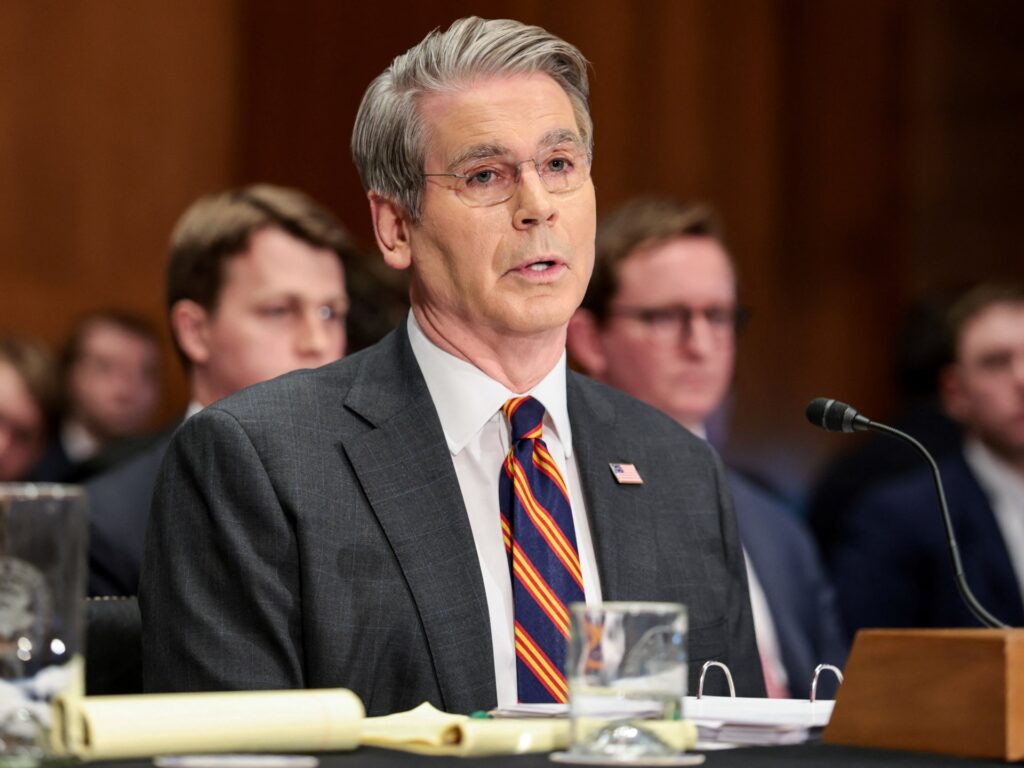
In a recent Senate appearance, US Treasury Secretary Scott Bessent made headlines by declining to rule out the possibility of future lawsuits against the Federal Reserve. This development signals ongoing tensions within the U.S. economic policy landscape, particularly concerning the relationship between the Treasury and the Federal Reserve.
During his testimony, Bessent carefully navigated questions about the Treasury’s stance on the Federal Reserve’s decision-making processes. While he stopped short of confirming any immediate legal action, his comments left the door open for potential future conflicts, especially as the government’s economic strategies evolve.
Bessent also took the opportunity to defend President Donald Trump’s campaign policies, which have focused heavily on slashing interest rates and raising tariffs. These moves have been polarizing, with supporters arguing they boost economic growth and protect American industries, while critics warn they could lead to higher inflation and trade tensions.
The Treasury Secretary emphasized the rationale behind lower interest rates, stating that such measures are aimed at promoting domestic investment and job growth. He also highlighted the administration’s tariff policy as a tool for negotiating better trade deals and supporting American manufacturing.
Economic analysts have noted that the Federal Reserve traditionally operates independently in setting monetary policy. However, the current administration’s approach, as defended by Bessent, suggests an increasing willingness by political leaders to challenge the Fed’s decisions.
This dynamic raises questions about the balance of power in U.S. economic governance and the potential for legal or political battles if disagreements escalate. The Treasury and the Federal Reserve both play crucial roles in managing the economy, but their coordination and sometimes conflicting objectives have been at the center of policy debates.
Bessent’s remarks came amid broader discussions in Congress about the future of monetary policy and the government’s role in economic regulation. Lawmakers expressed mixed reactions to the possibility of lawsuits against the Fed, reflecting divisions in how best to manage economic growth and stability.
The possibility of legal action against the Federal Reserve is unprecedented and would mark a significant shift in U.S. economic policy dynamics. While the full implications remain uncertain, this situation underscores the intense pressure on financial institutions amid rapidly changing economic conditions.
As this story develops, stakeholders in government, finance, and business sectors will be closely watching how the administration balances aggressive economic policies with the need for stable and predictable monetary governance. The coming months may reveal whether lawsuits or other confrontations between the Treasury and the Federal Reserve materialize or if a more collaborative approach can be maintained.
Overall, Secretary Bessent’s Senate appearance highlighted critical issues in U.S. economic policy, spotlighting the contentious relationship between political leadership and monetary authorities. It marks a pivotal moment as the nation navigates complex challenges from trade policy to interest rate management in an uncertain global economic environment.