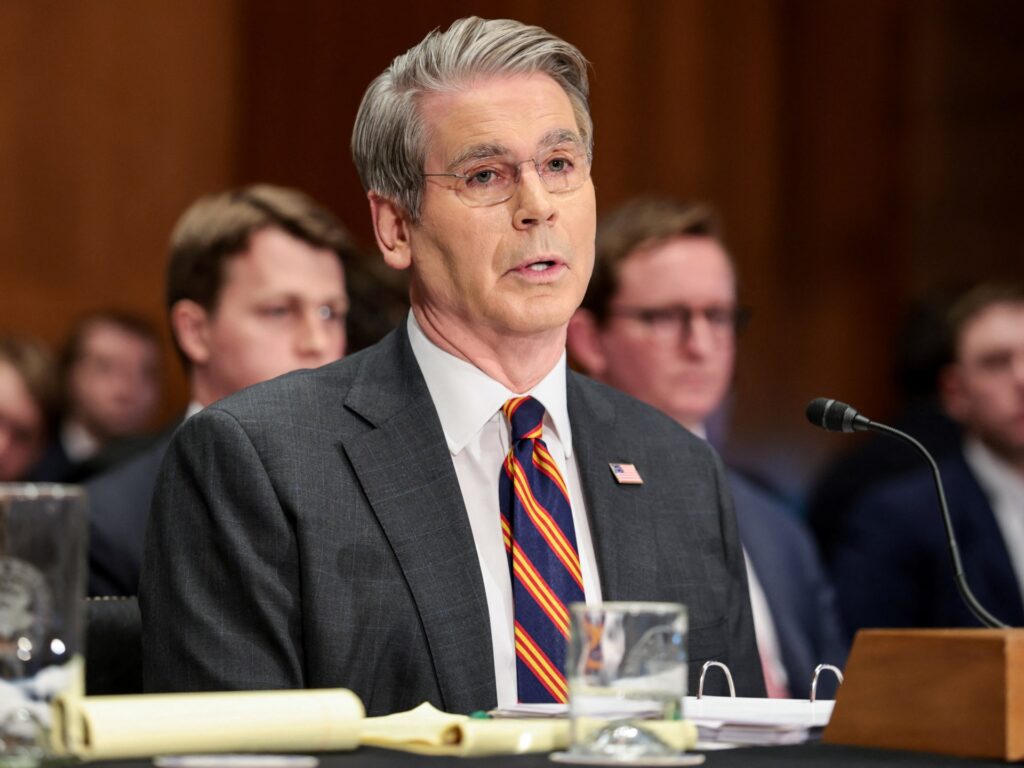
In a recent Senate appearance, US Treasury Secretary Scott Bessent refrained from ruling out the possibility of future lawsuits against the Federal Reserve. Bessent’s remarks come amid ongoing debates about the Fed’s role and policies, highlighting tensions between the Treasury and the central bank.
During his testimony, Bessent also defended President Donald Trump’s campaign strategies, notably the push to lower interest rates and increase tariffs as tools to stimulate the economy. He argued that these unconventional approaches were necessary to address current economic challenges and support American industries.
Bessent acknowledged the complex relationship between the Treasury and the Federal Reserve, emphasizing the importance of oversight and accountability while respecting the Fed’s independence in monetary policy decisions. However, his refusal to dismiss potential legal action against the Fed signals a more assertive stance from the Treasury on monetary policy.
President Trump’s campaign has consistently advocated for aggressive measures to reshape the economic landscape, promoting tariffs as a means to protect domestic manufacturing and reduce trade deficits. The administration believes that lowering interest rates can spur growth and job creation in an otherwise sluggish economy.
Critics have expressed concern over these policies, warning that increased tariffs may lead to trade wars and higher consumer prices, while cutting interest rates too aggressively could ignite inflation. Nonetheless, the administration’s resolve appears firm, as outlined in Bessent’s Senate testimony.
The Treasury Secretary’s comments suggest potential legal challenges could become a new dimension of the ongoing debate between the federal government and the Federal Reserve. This development may foreshadow heightened conflicts over monetary policy direction and institutional authority.
Economic analysts are closely watching these interactions, recognizing their implications for financial markets and the broader economy. The possibility of lawsuits against the Fed could introduce uncertainty about the central bank’s ability to effectively manage inflation and economic stability.
As the administration pursues its agenda, coordination between the Treasury and the Federal Reserve will remain critical to ensure balanced policy-making. The coming months may reveal how these tensions resolve and what impact they have on the US economic outlook.