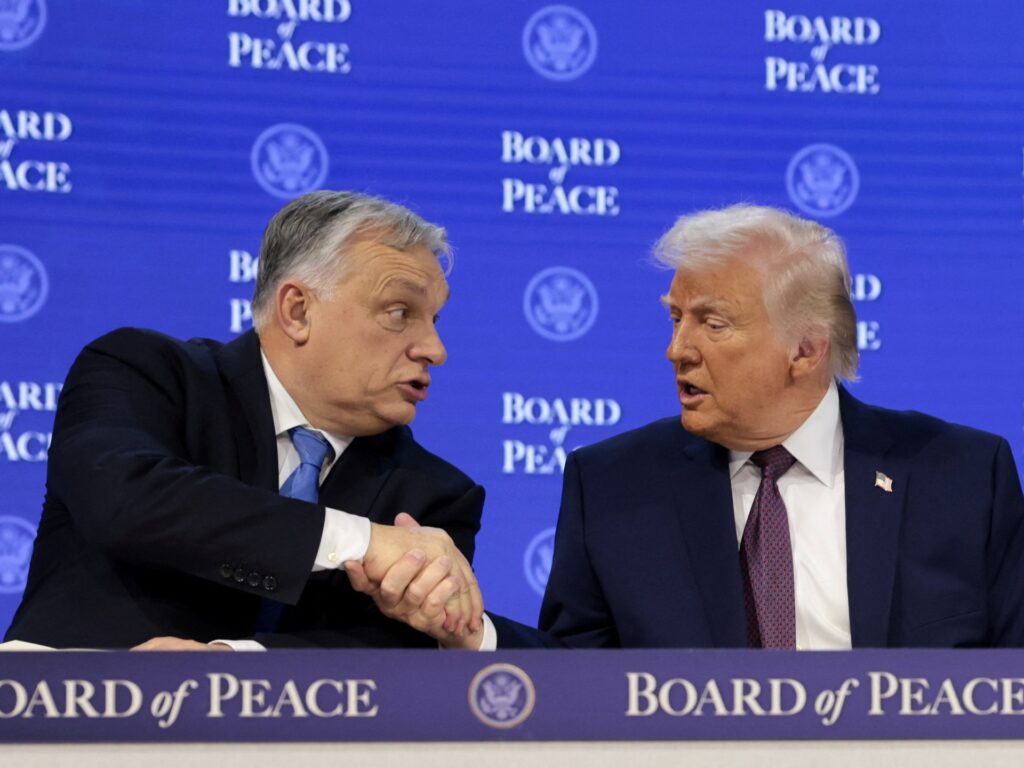
In a significant political development, former U.S. President Donald Trump has publicly endorsed Hungarian Prime Minister Viktor Orban for the upcoming parliamentary election scheduled for April. Trump praised Orban for his firm stance on immigration and nationalist policies, highlighting the alignment in their political ideologies.
Trump’s endorsement came during a press statement where he emphasized the importance of strong national borders and sovereignty, themes central to Orban’s platform. “Prime Minister Orban has shown remarkable leadership in protecting his nation’s interests,” Trump said, adding that Orban’s hardline approach to immigration has helped Hungary maintain its cultural identity and security.
Viktor Orban, who has been serving as Hungary’s Prime Minister since 2010, is known for his conservative and nationalist policies, often drawing criticism from the European Union and international observers. His government has focused on tightening immigration controls, promoting traditional family values, and reducing the influence of liberal institutions.
The upcoming election holds considerable weight for Hungary’s future direction, especially in the context of increasing European integration debates and regional security concerns. Orban’s Fidesz party is expected to campaign on a platform of continuing its sovereignty-first agenda, appealing to nationalist and conservative voters.
Trump’s backing is seen as a boost to Orban’s campaign, potentially bolstering his support among voters who resonate with nationalist rhetoric and skepticism toward globalization. It also signals ongoing transatlantic ties between certain right-wing populist movements despite broader geopolitical shifts.
Critics, however, warn that endorsing leaders with contentious human rights records and authoritarian tendencies could deepen divisions both domestically and within the broader European community. Orban’s policies have been under scrutiny for curbing press freedoms and undermining democratic institutions.
As the election approaches, the political discourse in Hungary is intensifying, with opposition parties challenging Orban’s dominance and rallying for democratic reforms. International observers will be closely watching the electoral process and its aftermath to assess the direction Hungary will take.
Trump’s endorsement underscores the global resonance of nationalist politics and the complex dynamics shaping electoral contests worldwide. It also highlights how U.S. political figures can influence elections abroad, adding another layer of international intrigue to Hungary’s pivotal election.
In summary, the endorsement marks a notable moment in both Hungarian and international politics, emphasizing the ideological affinities between Trump and Orban and setting the stage for a contested election in Hungary’s rapidly evolving political landscape.