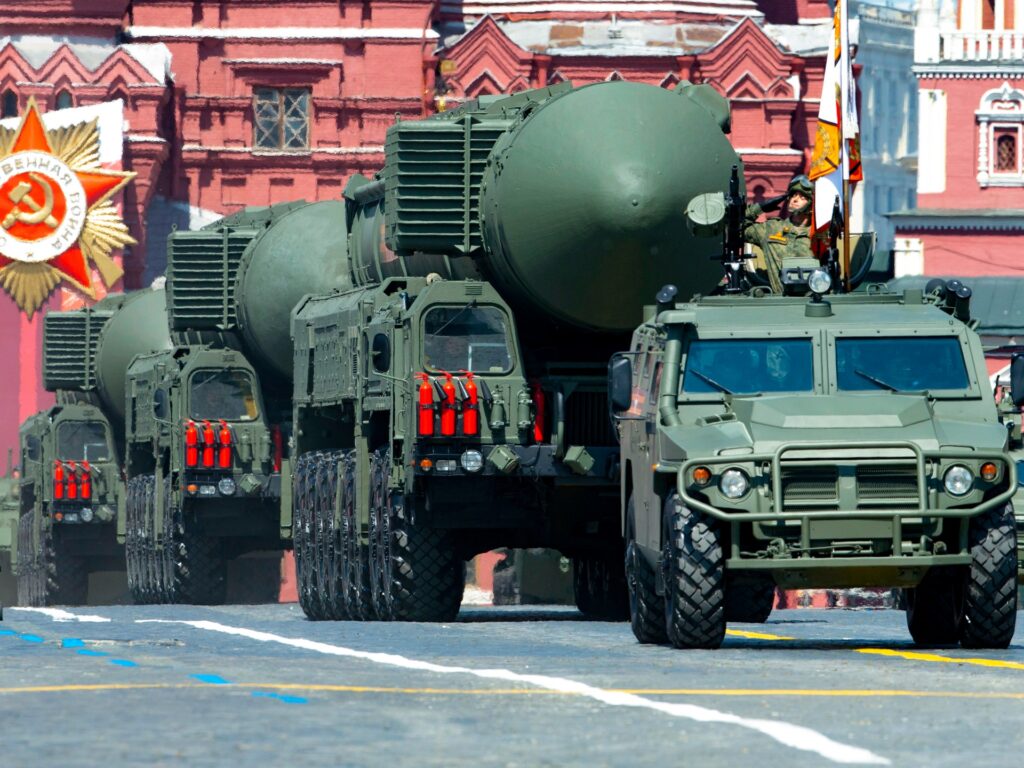
The expiration of the New START treaty, the last remaining nuclear arms control agreement between Russia and the United States, has raised concerns in global security circles. Announced officially, this treaty’s lapse marks a significant moment in the ongoing dynamics of nuclear disarmament and international stability. Both Moscow and Beijing have publicly expressed regret over the treaty’s expiry, emphasizing the importance they attach to arms control agreements for global peace.
The New START treaty, implemented in 2011, had been a cornerstone of nuclear arms control, setting limits on the number of deployed strategic nuclear warheads and delivery systems each side could maintain. The treaty’s expiration means that there are no longer legally binding restrictions on the nuclear arsenals of the two largest nuclear powers, sparking fears of a new arms race and increased geopolitical tension.
In response to the treaty’s expiry, Russia has declared its commitment to acting responsibly despite the absence of this formal agreement. Russian officials have highlighted their intent to maintain restraint and avoid actions that could destabilize the strategic environment. They stressed that Russia values the importance of strategic stability and continues to seek dialogue and cooperation with the United States on nuclear arms control issues.
This announcement comes amid broader strains in U.S.-Russia relations, involving disputes over regional conflicts, cybersecurity, and diplomacy. Despite these challenges, both parties acknowledge that nuclear weapons pose a threat that requires careful management to prevent escalation.
Meanwhile, China has also commented on the treaty’s expiration, aligning with Russia in expressing disappointment that the arms control framework is no longer in effect. Beijing’s stance reflects its growing role as a key player in global security, although it has not been a party to the New START treaty. China’s strategic policies increasingly focus on expanding and modernizing its nuclear forces, which factors into the broader context of nuclear arms control discussions.
Experts in international relations caution that the absence of the New START treaty could undermine transparency and predictability in nuclear postures, increasing risks of miscalculation. They call for renewed diplomatic efforts to establish new agreements that include more stakeholders, possibly including China, to address current and emerging nuclear security challenges.
The lapse of the New START treaty thus represents a pivotal moment that tests the resilience of global arms control architecture. The commitment by Russia to act responsibly offers a glimmer of hope for maintaining stability, but the situation underscores the urgent need for renewed dialogue and innovative approaches to nuclear risk reduction.
As the world watches closely, the next steps by the United States, Russia, and other major powers will be crucial in shaping the future of nuclear arms control and international security.