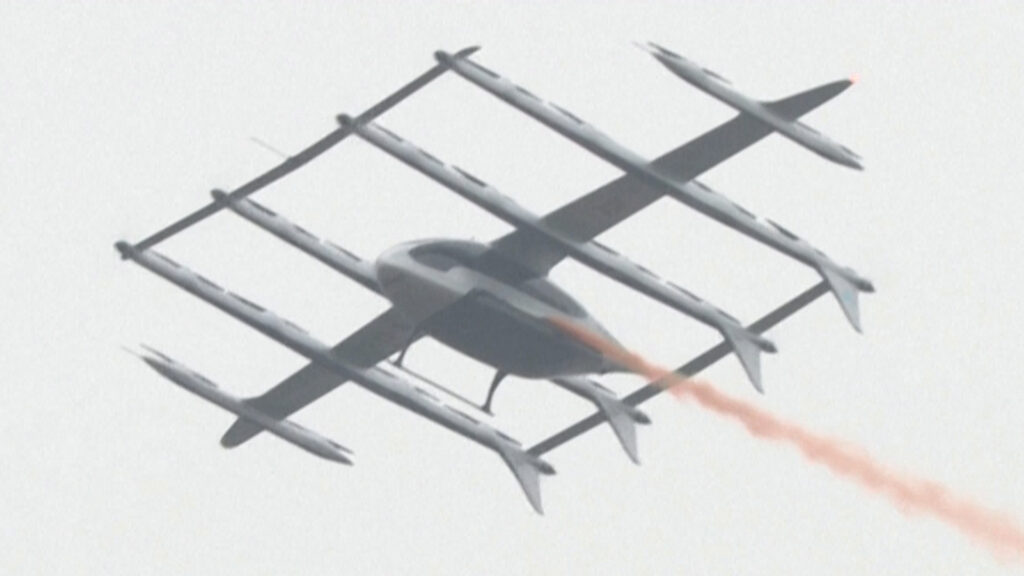
In a significant leap toward futuristic urban mobility, Chinese startup AutoFlight recently conducted a public flight demonstration of its flying car that can carry up to 10 people. The vehicle, named the V5000 Matrix, is a 5-tonne-class flying car designed to redefine how passengers travel in congested cities and beyond.
The V5000 Matrix represents an ambitious endeavor in the aviation and automotive industries, blending vertical take-off and landing technologies with state-of-the-art electric propulsion systems. This flying car is engineered to support up to 10 passengers, which is a considerable capacity for this emerging vehicle class. The design targets urban air mobility solutions, aiming to alleviate ground traffic congestion by lifting transportation into the airspace.
AutoFlight’s public flight demonstration showcased the technical capabilities of the V5000 Matrix, including stable take-off, hover, and landing maneuvers. The vehicle’s 5-tonne weight class suggests a robust build and sufficient power to carry multiple passengers along with their cargo safely and efficiently.
Flying cars like the V5000 Matrix are part of a growing trend in the transportation industry focused on innovative solutions for last-mile connectivity and reducing commute times. AutoFlight joins other global players in this race, pushing the boundaries of what is possible with electric vertical takeoff and landing (eVTOL) aircraft.
The company highlighted that the V5000 Matrix is equipped with advanced navigation systems, redundancy features for safety, and an electric engine designed for reduced emissions, aligning with global sustainability goals. With urban populations increasing rapidly, such flying vehicles could revolutionize mass transit and emergency response operations in densely populated areas.
AutoFlight’s flying car project also illustrates the burgeoning startup ecosystem in China, specifically in cutting-edge technologies like autonomous vehicles, aviation, and new modes of urban transport. This progress positions China as a key contender in the global urban air mobility market.
Experts believe that the successful demonstration of the V5000 Matrix could accelerate regulatory discussions, infrastructure development, and public acceptance of flying cars. While challenges remain, including air traffic management and safety standards, AutoFlight’s efforts demonstrate promising progress toward a future where flying cars become a common sight.
In summary, the V5000 Matrix test flight confirms AutoFlight’s commitment to pioneering flying car technology capable of carrying substantial passenger loads. As the company advances this technology, it contributes to shaping the next generation of urban transportation, potentially transforming how millions will move in the near future.