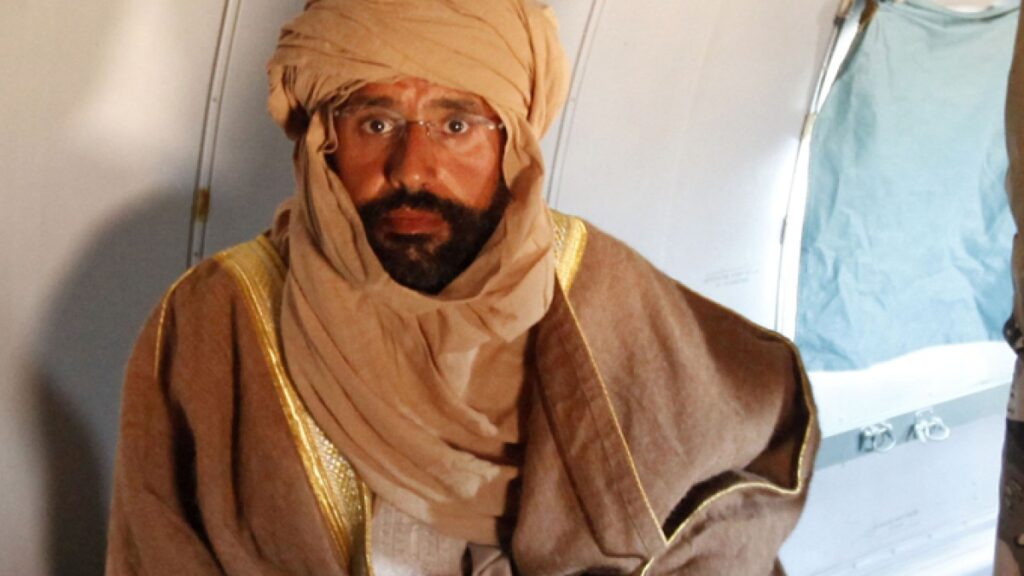
Saif al-Islam Gaddafi, the son of former Libyan leader Muammar Gaddafi, was long regarded as the potential future leader of Libya. Born into the Gaddafi family, he was groomed amid the complexities of Libya’s political landscape as the country experienced significant transformation and turmoil. Celebrated and criticized in equal measure, Saif al-Islam’s life and legacy embody much of Libya’s recent history.
Educated abroad, Saif al-Islam was seen as a more moderate face of the Gaddafi regime. He was involved in efforts to reform Libya’s international relations and attempted to position himself as a modernizer capable of steering Libya towards a more open and integrated future. His education and outlook contrasted with the more rigid and authoritarian aspects associated with his father’s rule.
However, the 2011 Libyan civil war dramatically altered Saif al-Islam’s trajectory. As the country descended into conflict and Muammar Gaddafi’s regime was challenged and eventually overthrown, Saif al-Islam became a controversial figure. He remained loyal to his father’s regime and was heavily involved in the defense against rebel forces. His role in the conflict and alleged war crimes led to his indictment by the International Criminal Court.
After the fall of Tripoli and the death of Muammar Gaddafi, Saif al-Islam was captured by rebel forces and detained for several years. His fate became symbolic of the broader struggles facing Libya: fragmentation, power struggles, and the ongoing battle for national stability. Despite his detention, Saif al-Islam maintained a following among certain factions, with some considering him a possible key player in Libya’s fractured political scene.
His recent reported death in western Libya marks the end of a turbulent chapter, closing the book on one of the most contentious and complex figures in Libyan history. Saif al-Islam’s life story reflects Libya’s journey from a state under hardline authoritarian rule to a country striving for peace and democratic governance amidst chaos.
As Libya continues to grapple with its future, the legacy of Saif al-Islam Gaddafi will likely be debated and reassessed in terms of his potential as a reformer, his loyalty to a fallen regime, and the impact of his actions during the civil war. His death serves as a significant marker in the ongoing saga of Libya’s quest for identity and political stability.