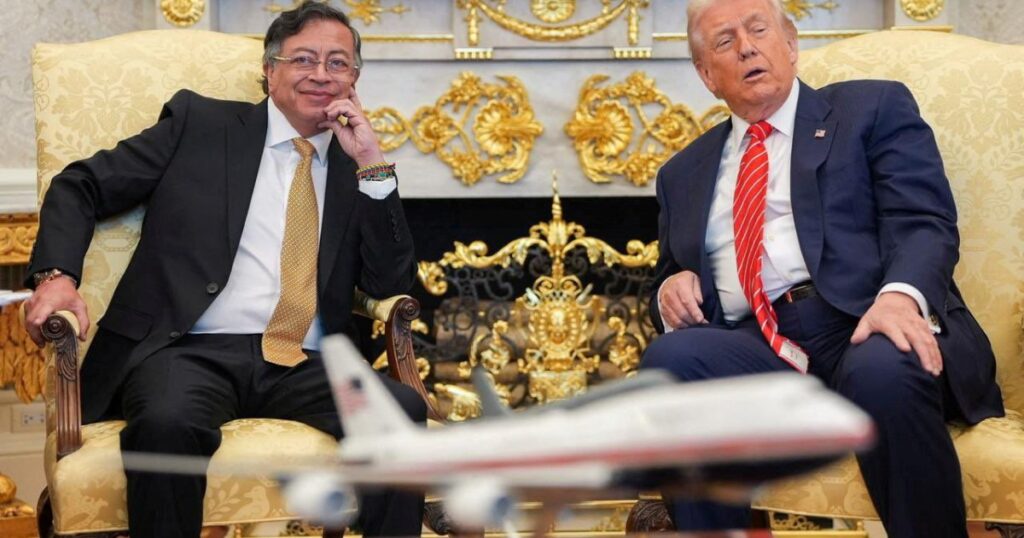
In a surprising yet positive turn of events, former U.S. President Donald Trump and Colombia’s President Gustavo Petro recently held a meeting that was described as ‘terrific’ by both leaders. This meeting carries significant weight given the backdrop of tension and disagreements that had previously characterized the relationship between the two countries, particularly over issues like U.S. military interventions and drug trafficking.
For months, the relationship between the United States and Colombia had been strained due to disputes on military policies and drug trade enforcement. The U.S. administration’s decisions on military attacks near Colombia had been met with criticism from the Colombian government, while drug trafficking remained a persistent challenge affecting both nations.
Despite these uphill challenges, Trump and Petro’s meeting was marked by mutual respect and a willingness to find common ground. Trump described the encounter as a ‘great honor,’ signaling a diplomatic openness that could pave the way for more collaborative efforts moving forward.
One of the key takeaways from the meeting was the acknowledgement of shared goals between the U.S. and Colombia, especially regarding regional security and economic development. Both leaders emphasized the importance of tackling drug trafficking through cooperative strategies rather than unilateral actions that could escalate tensions.
Additionally, the discussion touched on enhancing trade relations. Colombia is a crucial partner in the Americas, and both leaders seemed keen on exploring new avenues to boost bilateral trade, which could provide economic benefits and stability in the region.
Environmental concerns and sustainable development were also part of the conversation. With Colombia’s vast natural resources and the U.S.’s technological capabilities, the two countries highlighted the potential for joint initiatives that support conservation efforts while promoting economic growth.
The meeting also hinted at a possible shift in diplomatic tone, moving away from confrontational rhetoric towards a more constructive and solutions-oriented dialogue. This approach could help resolve lingering disagreements and lay the foundation for long-term partnerships.
In conclusion, the meeting between Trump and Petro, despite prior discord, emerges as a hopeful chapter in U.S.-Colombia relations. The willingness to engage in open dialogue and address complex issues collaboratively signals a positive step toward strengthening ties.
This development is particularly relevant in a geopolitical landscape where regional alliances and cooperation are crucial for addressing challenges such as drug trafficking, security threats, and economic instability. The leaders’ commitment to working together bodes well for future diplomatic and economic interactions between the two nations.
Overall, the meeting can be seen as a testament to the power of diplomacy and dialogue, showing that even amidst significant differences, progress is possible through respectful engagement and shared objectives.