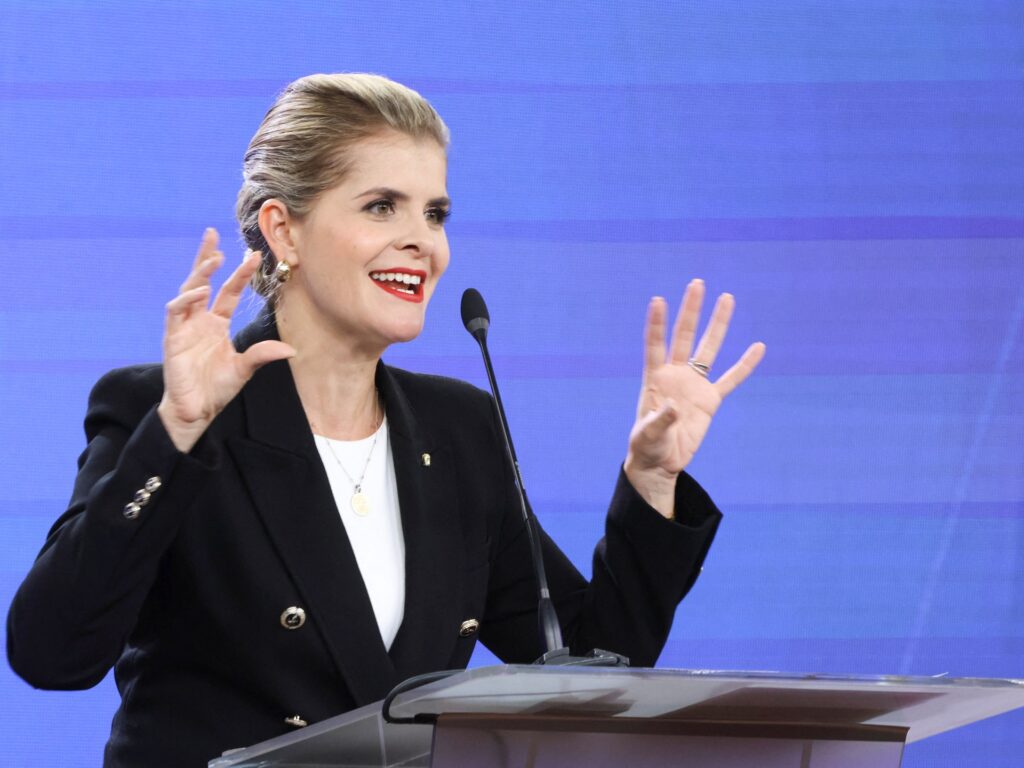
As Costa Rica heads to the polls, the spotlight is on the centre-right populist camp seeking to extend their political mandate. Laura Fernandez, a prominent figure closely associated with President Chaves, currently serves as his protege and former chief of staff. She has emerged as the frontrunner in the presidential race, positioned strongly enough to potentially avoid a run-off slated for April 5.
Fernandez’s campaign reflects a continuation of the policies and leadership style of President Chaves, whose administration has been characterized by a blend of populist rhetoric and centre-right governance. This political stance has resonated with a significant portion of the Costa Rican electorate, especially amid ongoing economic and social challenges.
The voting process marks a critical juncture for Costa Rica, as citizens evaluate the performance and promises of the current administration against the backdrop of regional and global uncertainties. Fernandez’s candidacy represents both continuity and a test of public confidence in the centre-right populist agenda.
Observers note that the absence of a crowded field in the race increases Fernandez’s chances of securing a decisive victory in the first round. Her political acumen, bolstered by her experience as chief of staff, positions her as a candidate capable of navigating the complex dynamics of Costa Rican politics.
The elections are also being viewed as a referendum on the current government’s policies, encompassing economic reforms, social welfare programs, and international relations. Fernandez’s ability to maintain the coalition supporting President Chaves could prove pivotal in shaping the country’s direction over the next term.
Political analysts suggest that a win by Fernandez would solidify the centre-right populist hold on Costa Rica’s government, continuing a trend that has seen increased advocacy for nationalistic and populist policies in Latin America. Conversely, a failure to secure an outright victory could lead to a competitive run-off, extending political uncertainty.
As polls close and votes start to be counted, the eyes of the nation—and indeed the wider region—are fixed on Costa Rica. The outcome will have significant implications not only domestically but also for the geopolitical landscape of Central America.
The election’s results are expected to unfold throughout the night, with a clear victor potentially emerging before the scheduled April 5 run-off. For now, Fernandez’s status as the frontrunner marks a moment of political anticipation and potential continuity in Costa Rican leadership.