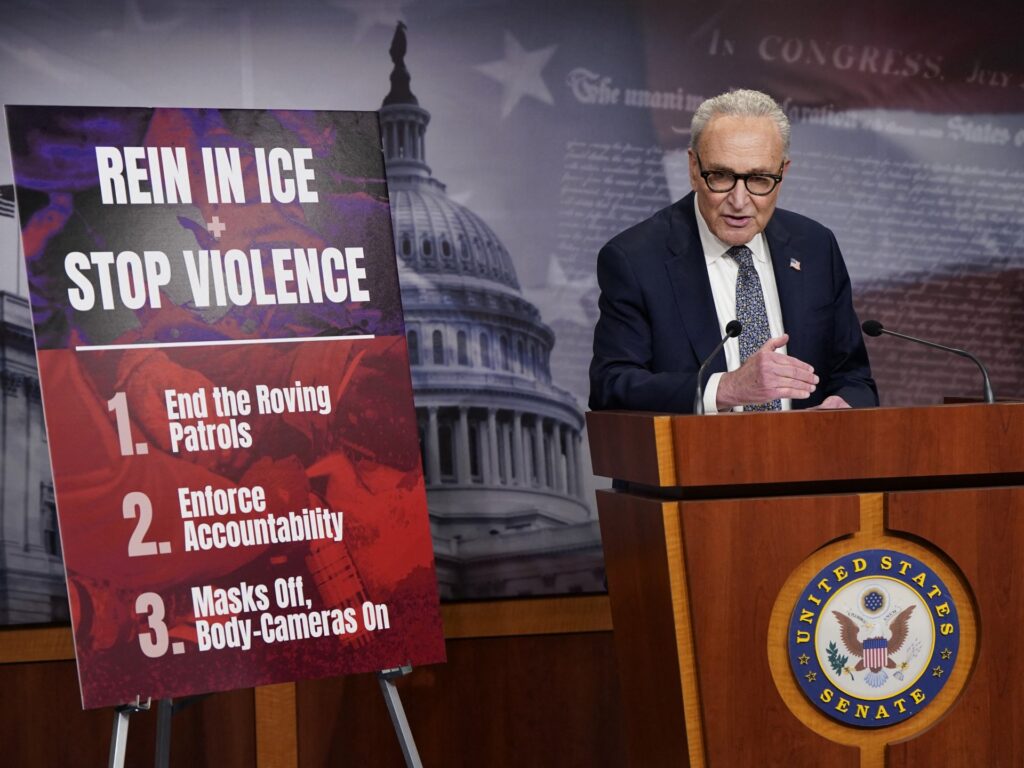
The US Senate recently passed a crucial spending package aimed at funding government operations. However, despite this legislative progress, a short-term government shutdown appears likely due to ongoing political disagreements. The central issue igniting the impasse is Democratic lawmakers’ anger over the deaths of two individuals caused by federal agents during a crackdown on immigration.
The spending package, essential for keeping the government functioning, was approved by the Senate following intense debates and negotiation sessions. Though this action typically signals a move to prevent a shutdown, the situation remains complex due to unresolved tensions between key political factions.
Democrats are strongly demanding accountability and increased oversight of federal enforcement actions, particularly those related to immigration enforcement protocols. The tragic deaths have heightened scrutiny on the government’s approach and prompted calls for reforms within federal agencies tasked with immigration control.
Republican lawmakers, responsible for much of the legislative negotiation, are pushing for the speedy passage of the funding bill to avoid the damaging consequences of a prolonged government shutdown. However, they face challenges reconciling demands from their Democratic counterparts with their own political priorities.
The potential shutdown, although expected to be brief, underscores the deep divisions within Washington on issues related to immigration policy and federal law enforcement practices. It highlights the complexity of balancing enforcement with humane treatment and accountability.
Government shutdowns, even short ones, can disrupt numerous federal services and affect millions of Americans, from federal employees to beneficiaries of government programs. This pending shutdown might result in temporary furloughs, delays in federal processing, and other service interruptions.
Political analysts note that this episode reflects broader social and political challenges facing the United States, especially regarding immigration and civil rights. The deaths in the federal crackdown have served as a catalyst for increased political pressure and public awareness.
As discussions continue, both parties face mounting pressure from their constituencies to find a resolution that ensures government functionality while addressing the serious concerns raised by recent events. The resolution of this impasse will be closely watched by citizens and stakeholders alike, given its implications for governance, immigration policy, and federal accountability.
In conclusion, while the US Senate’s approval of the spending package is a positive step forward, the likelihood of a short government shutdown remains high due to unresolved political differences. The situation underscores the urgent need for bipartisan cooperation and comprehensive approaches to immigration enforcement and government funding.