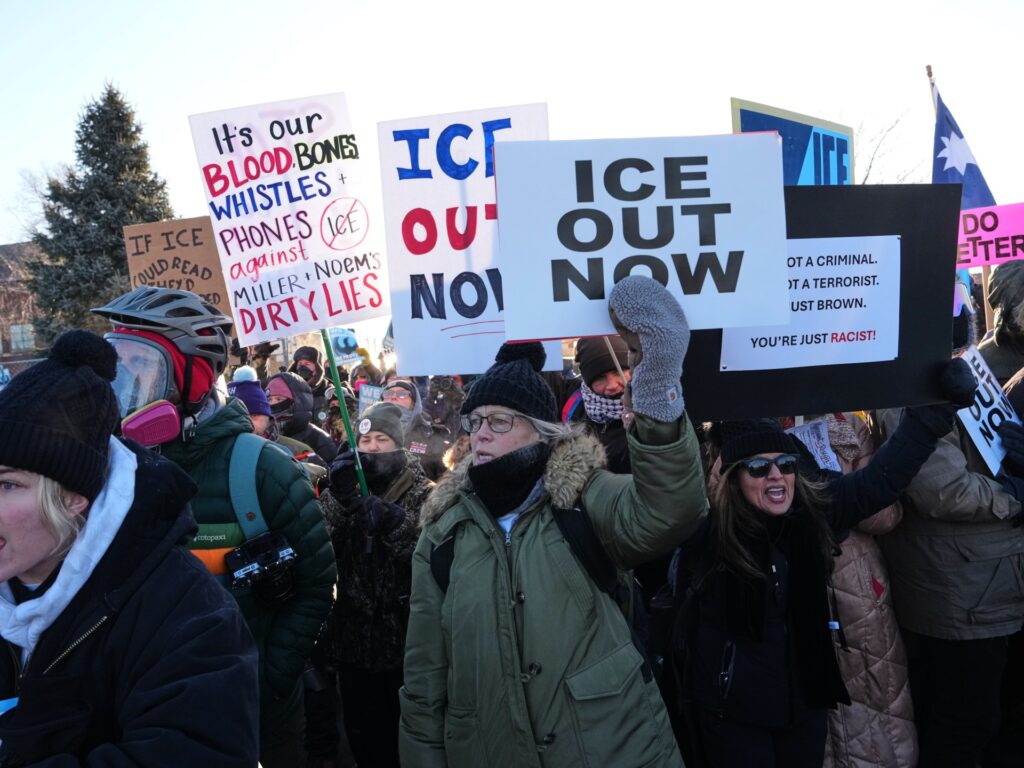
In a powerful display of dissent, protesters across the United States have launched a nationwide strike protesting the recent immigration enforcement policies under the Trump administration. This mobilization coincides with the Department of Justice’s (DOJ) announcement that it is opening an investigation into the killing of Pretti, a case that has ignited public outrage and intensified the calls for change.
The widespread strike, characterized by the slogan ‘no work, no school, no shopping,’ aims to disrupt normal activities to demonstrate the public’s deep frustration and demand immediate action against the harsh immigration crackdown. This movement has garnered widespread participation, encompassing workers, students, and consumers from various sectors of society.
These protests are a direct response to the Trump administration’s aggressive stance on immigration enforcement, which many view as overly punitive and detrimental to immigrant communities. Protesters argue that the policies have resulted in unnecessary suffering and loss of life, with Pretti’s case becoming a symbol of the administration’s heavy-handed tactics.
The DOJ’s investigation into the killing is seen as a critical step towards accountability, signaling a willingness to scrutinize law enforcement actions and immigration enforcement practices more closely. Activists hope that this investigation will lead to reforms that protect the rights and lives of immigrants and hold officials responsible for any misconduct.
The nationwide strike has brought to light the deep divisions and tensions within American society regarding immigration policy. Supporters of the strike emphasize the need for compassion, justice, and meaningful dialogue to address the root causes of migration and the consequences of enforcement policies.
As cities across the country experience disruptions due to the strike, business owners, educators, and officials are grappling with the immediate impacts while also acknowledging the broader social issues at stake. The strike has sparked conversations about the role of civic engagement and protest in shaping national policy and public awareness.
The movement’s demands extend beyond the immediate investigation into Pretti’s death; they call for comprehensive immigration reform, the cessation of aggressive enforcement tactics, and the establishment of fair and humane treatment for all individuals regardless of their immigration status.
This nationwide strike represents a pivotal moment in the ongoing debate over immigration enforcement in the United States. It highlights the power of collective action and the critical role of public pressure in prompting government accountability and social change.
As the DOJ continues its probe and strikes persist, all eyes remain on the unfolding developments and the potential for this moment to lead to substantial policy shifts and a renewed focus on human rights and justice in immigration enforcement.