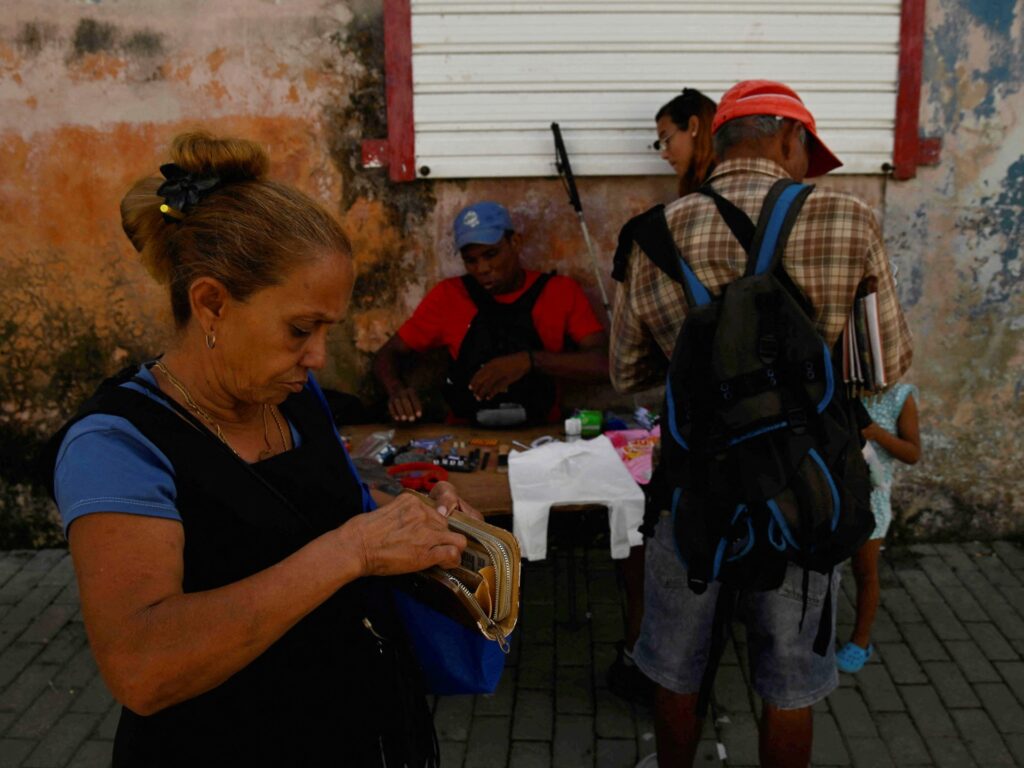
Cuban President Miguel Diaz-Canel has vehemently criticized former U.S. President Donald Trump’s actions aimed at crippling Cuba’s economy, labeling the approach as ‘fascist, criminal, and genocidal.’
The confrontation stems from Trump’s administration’s threat to impose tariffs on countries that continue to supply oil to Cuba, a move intended to cut off vital energy resources to the island nation. This policy has been widely viewed by Cuban officials as a strategic attempt to ‘suffocate’ the country’s economy and undermine its sovereignty.
President Diaz-Canel’s remarks highlight a deepening rift between Cuba and the United States following decades of tension and economic sanctions. President Diaz-Canel condemned the tariff threats, stating that such measures inflict severe suffering on the Cuban people, intensifying the hardships caused by the ongoing U.S. embargo.
The U.S. policy aims to pressure third-party countries into compliance through sanctions, effectively targeting Cuba’s international allies and limiting the flow of essential goods, particularly oil. Cuba’s economy, already struggling under sanctions and external pressures, faces significant shortages that threaten essential services, transportation, and energy availability.
In his address, President Diaz-Canel characterized the U.S. strategy as an assault on Cuba’s right to self-sufficiency and survival, calling it an act of economic warfare that disregards humanitarian concerns. He emphasized Cuba’s resilience and determination to continue standing strong against what he described as imperialistic aggression.
Experts note that the tensions are part of a broader context of U.S. foreign policy in the region, which has historically included embargoes, trade restrictions, and diplomatic isolation aimed at pressuring the Cuban government.
This latest move by the Trump administration, prior to the end of his term, signals a continuation and intensification of efforts to isolate Cuba economically and diplomatically. The tariff threat reflects an aggressive approach to choke off Cuba’s energy lifelines by penalizing partner countries that refuse to sever oil supplies.
Cuban officials argue that such tactics severely impact everyday life, with consequences for electricity usage, public transportation, and the operation of hospitals and other critical infrastructure. The Cuban government claims that these measures amount to collective punishment of the Cuban population.
International reactions are mixed, with some allies condemning the U.S. sanctions as unjust and counterproductive, while others align with Washington’s stance on trying to apply pressure for political change in Cuba.
The longstanding U.S. embargo on Cuba, initiated in the early 1960s, has been a subject of international debate and criticism, with frequent calls for its end to relieve humanitarian suffering. President Diaz-Canel’s denunciation brings renewed attention to these ongoing geopolitical conflicts.
In conclusion, President Diaz-Canel’s strong condemnation of Trump’s tariff threat underscores the severe implications for Cuba’s economy and people, emphasizing the island’s resistance to external economic coercion amid a challenging political climate.