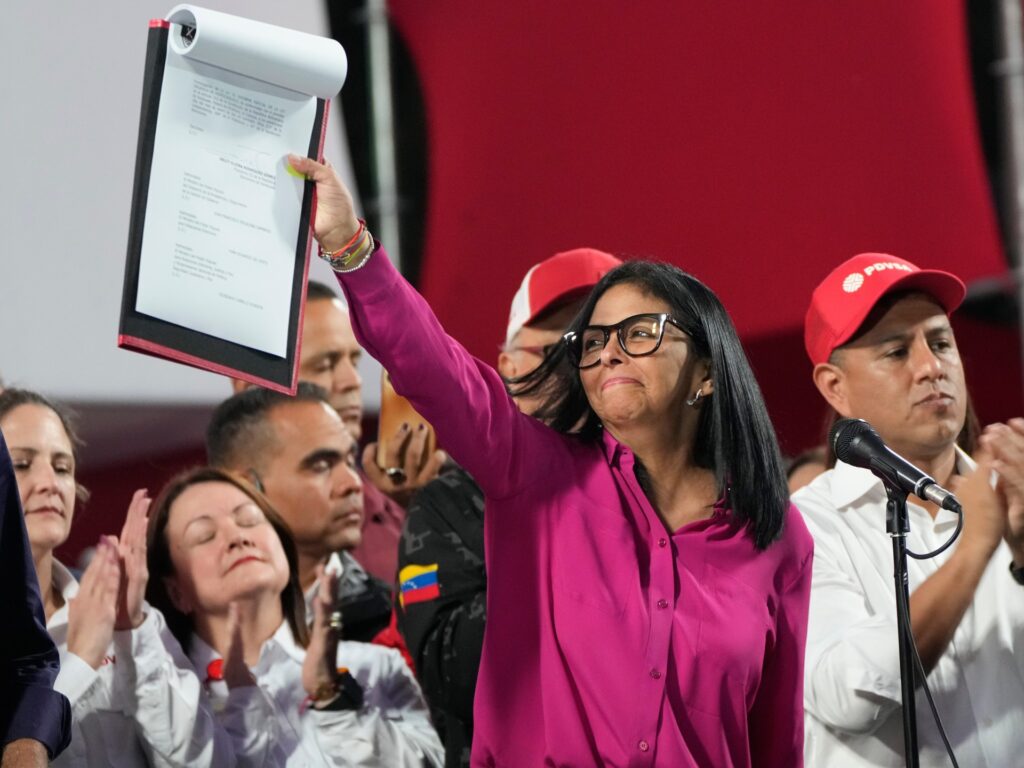
In a significant political and economic development, Venezuela’s President Nicolás Maduro, through his deputy Economy Minister Tareck El Aissami, announced the signing of a new oil reform law by the National Assembly President Diosdado Cabello-Rodriguez. This move coincides with recent easing of sanctions by the United States, marking a notable shift in Venezuela’s approach to managing its vast oil reserves and international relations.
The Trump administration had applied considerable pressure on Venezuela to open its oil industry to foreign investments, aiming to increase production and stabilize the country’s economy amidst a deepening crisis. The new oil reform law, signed by Rodriguez, is designed to facilitate increased foreign participation by providing a regulatory framework that encourages foreign companies to invest and operate in Venezuela’s oil sector.
Venezuela, home to some of the world’s largest oil reserves, has struggled with declining production rates due to years of political turmoil, economic mismanagement, and international sanctions. The reform aims to revitalize the oil sector, which is critical for the country’s economy, accounting for a large portion of government revenue and export earnings.
The easing of sanctions by the US signals a willingness to engage with Venezuela through diplomatic and economic channels, potentially paving the way for further negotiations and cooperation. The shift may also reflect the Trump administration’s strategy to exert pressure on the Venezuelan government while simultaneously offering avenues for economic concessions.
The oil reform law includes provisions that allow foreign companies to enter into joint ventures with the state-owned oil company, Petróleos de Venezuela, S.A. (PDVSA). This represents a significant departure from previous policies where foreign involvement was heavily restricted.
Experts believe that if implemented effectively, the reforms could attract the necessary capital and technological expertise to boost production and bring much-needed relief to Venezuela’s struggling economy. However, challenges remain, including ensuring political stability and rebuilding investor confidence.
Opposition groups and some international observers have expressed skepticism about the law, questioning whether the reforms will be genuinely implemented or if they are primarily a political maneuver to gain favor with foreign governments.
Nevertheless, the signing of the oil reform law stands as a critical step in Venezuela’s attempt to navigate through economic hardships and reposition itself within the global oil market. As the US continues to adjust its policy stance, the outcomes of this reform will be closely watched by international investors, neighboring countries, and the global energy sector.
In conclusion, Venezuela’s oil reform law, spearheaded by Rodriguez’s signing amidst easing US sanctions, marks a pivotal moment in the country’s economic and political landscape. Whether this will translate into tangible improvements in oil production and economic stability remains to be seen, but it undeniably opens a new chapter in Venezuela’s resource management and foreign relations.