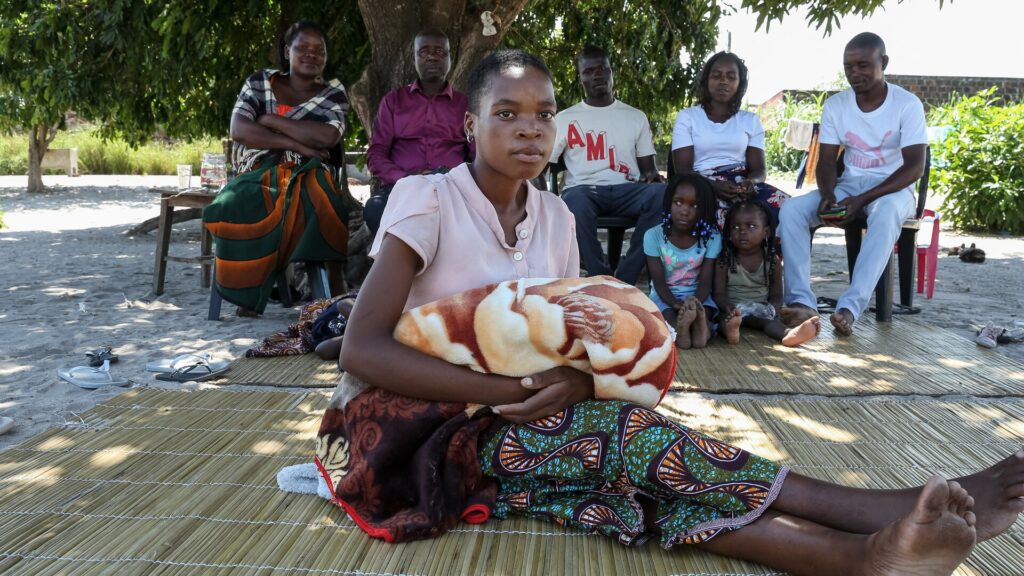
Erica Raimundo Mimbir, 17, holds her baby, Rosita, while posing for a photograph at an emergency shelter in the town of 3 De Fevereiro on January 27, 2026. At 17, Erica Raimundo Mimbir delivered her first baby on a school desk on January 19, the lone patch of dry ground she found after days marooned in her flooded home in southern Mozambique. Evacuated by boat the next day, Mimbir is now staying with relatives. Her baby, born premature at 1.5 kilos, has been named Rosita after Rosita Salvador, whose mother gave birth while clinging to a tree during the catastrophic 2000 floods that killed 800 people. (Photo by Emidio JOZINE / AFP)
Mozambique is grappling with the aftermath of severe flooding that has displaced thousands of people and left communities in crisis. The floods have caused widespread damage, uprooting families from their homes and leading to dire humanitarian conditions.
Among the hardest hit are pregnant women, including a determined mother who was forced to give birth amid the chaos of the flooding. Her story highlights the extreme challenges facing those affected as they struggle to maintain basic health and safety during the disaster.
Emergency responders and aid organizations are racing against time to provide shelter, food, and medical assistance to survivors. The displaced populations are facing exhaustion and trauma, with many having lost personal belongings and access to essential services.
The flooding has been described as one of the worst natural disasters in the region’s recent history. Heavy rains caused rivers to overflow, leading to flash floods and widespread destruction of infrastructure.
Local authorities and international aid groups are coordinating relief efforts, but the scale of the devastation has overwhelmed existing resources. Relief camps have been set up, but conditions remain challenging with limited access to clean water and sanitation.
Authorities are urging for global support to address both immediate needs and long-term recovery plans. The community’s resilience is strong, but the emotional and physical toll of the floods continues to mount.
This tragedy shines a spotlight on the vulnerability of populations in flood-prone regions and underscores the urgent need for improved disaster preparedness and climate resilience measures to mitigate future impacts.
As Mozambique works to rebuild, the focus remains on protecting the most vulnerable, including women, children, and the elderly, while fostering solidarity and recovery amid this devastating crisis.