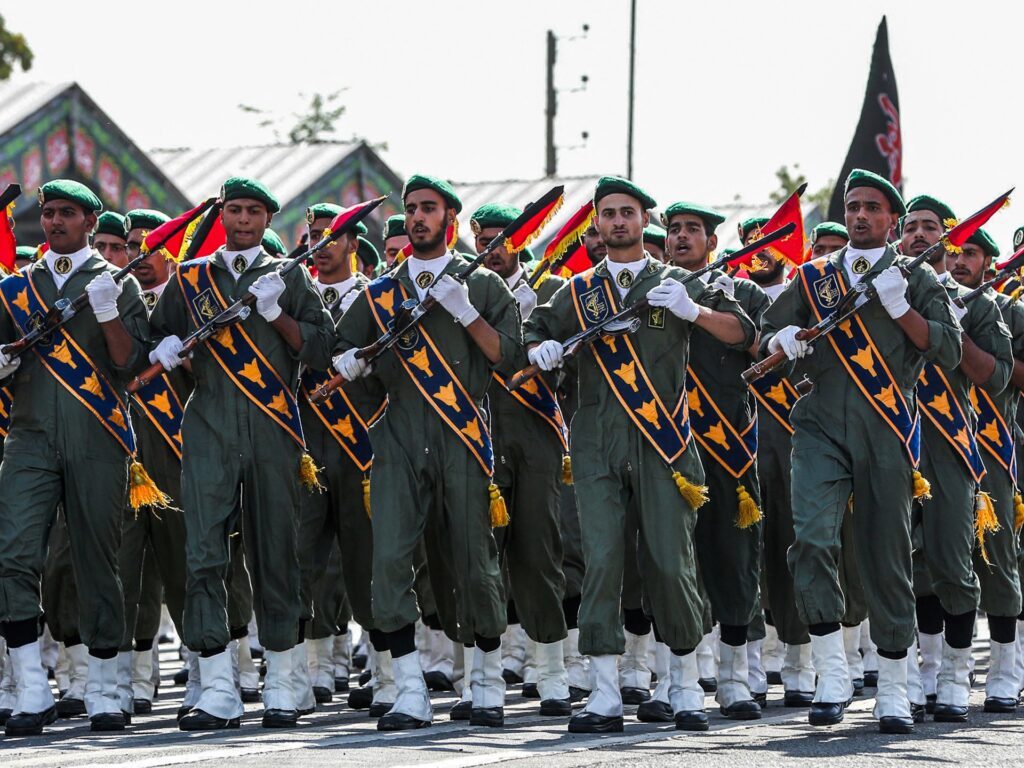
In a recent move that has stirred international tensions, the European Union (EU) designated Iran’s Islamic Revolutionary Guard Corps (IRGC) as a terrorist organization, prompting a sharp response from Iranian officials. Tehran vehemently condemned the EU’s action, branding the blacklisting as ‘illogical and irresponsible’ and accusing the bloc of selective outrage.
The EU’s decision to label the IRGC—a powerful branch of Iran’s military established after the 1979 revolution and instrumental in Iranian military and political affairs—as a terrorist entity marks a significant escalation in diplomatic strain between Iran and Europe. This designation aligns the EU with the United States and other nations that have previously blacklisted the IRGC, citing its alleged involvement in various regional conflicts and support for proxy groups.
Iranian authorities argued that the EU’s decision lacks a sound basis and undermines regional stability. Speaking on the issue, Iranian officials described the move as a politically motivated act that targets Iran unjustly and hinders efforts to foster constructive dialogue and cooperation. They stressed that the IRGC is a legitimate military institution tasked with defending Iran’s sovereignty and combating terrorism, countering the EU’s claims.
The term ‘selective outrage’ was used by Iranian representatives to highlight what they perceive as a double standard in how the EU addresses terrorism and militant organizations worldwide. They pointed to recent actions and silence in the face of other groups and states allegedly involved in violence, arguing that the EU’s stance selectively targets Iran while overlooking comparable behavior from other actors.
This development complicates the already delicate relationship between Iran and the European Union, particularly at a time when talks surrounding Iran’s nuclear program and regional security are ongoing. Observers note that the EU’s blacklisting may impact diplomatic efforts, economic relations, and negotiations aimed at reducing tensions in the Middle East.
Analysts suggest that the EU’s designation of the IRGC as a terrorist organization could also have broader geopolitical implications. It signals a firmer position by European countries in response to Iran’s regional interventions and missile programs, a stance that could provoke retaliatory measures from Tehran. Moreover, it may influence the dynamics of international negotiations and alliances involving Iran, the EU, and global powers.
Despite the EU’s position, Iran reiterated its commitment to protecting its national interests and maintaining stability in the region through various means, including the role of the IRGC. Tehran called on the European bloc to reconsider what it sees as an unwarranted classification that could escalate hostilities rather than promote peace.
In summary, the EU’s designation of the Islamic Revolutionary Guard Corps as a terrorist organization has been met with strong condemnation from Iran, articulating concerns over selective judgment and political bias. This disagreement adds another layer of complexity to the already fraught relations between Iran and Europe and underscores the challenges in addressing security issues and regional conflicts effectively. As both sides navigate these tensions, the international community watches closely, aware that the outcomes could significantly affect regional and global stability.