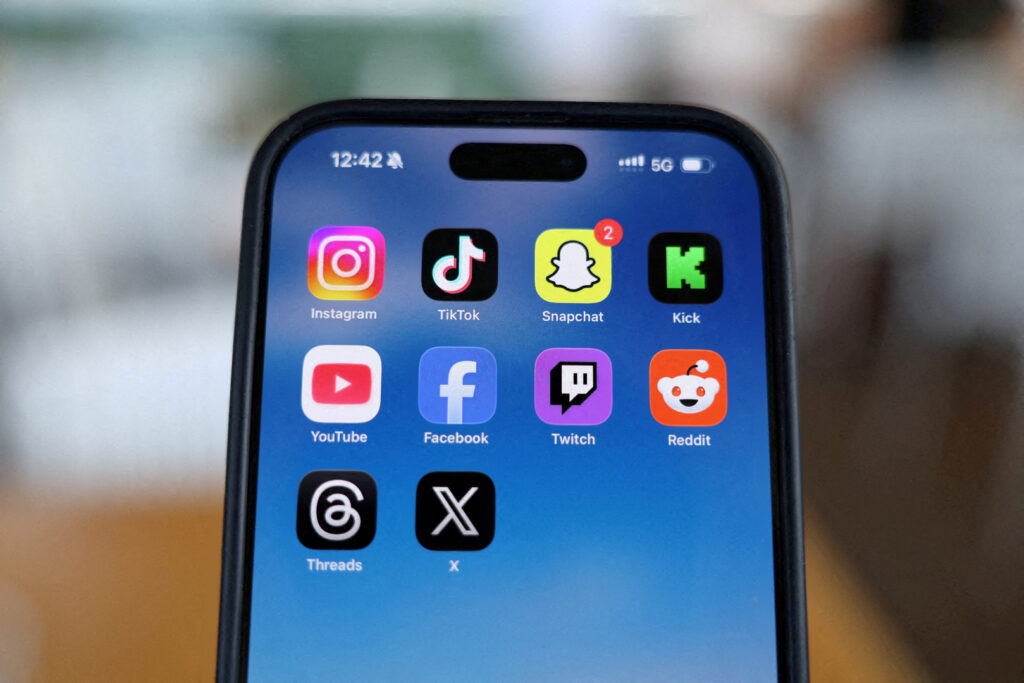
FILE PHOTO: Instagram, TikTok, Snapchat, Kick, YouTube, Facebook, Twitch, Reddit, Threads and X applications are displayed on a mobile phone ahead of new law banning social media for users under 16 in Australia, in this picture illustration taken on December 9, 2025. REUTERS/Hollie Adams/Illustration//File Photo
In a significant move aimed at protecting the mental health of young people, France is advancing legislation to ban social media access for users under the age of 15. This comes amid rising concerns about the negative impact that social media platforms can have on the mental well-being of children and early teens.
Officials in France have highlighted increasing studies and reports that link extensive social media use with anxiety, depression, and other mental health issues among young users. The initiative seeks to enforce stricter age restrictions to shield vulnerable youth from potential harm.
The proposed ban would prevent individuals under 15 from creating accounts or using platforms such as Instagram, TikTok, Snapchat, and others.
Supporters of the ban argue that social media addiction and exposure to harmful content put children at risk, disrupting sleep, self-esteem, and academic performance.
Critics, however, warn that such a ban might drive young users to unregulated platforms or lead to difficulties in social integration.
France’s government is weighing these concerns carefully, stressing that the well-being and safety of children remain the top priority.
If enacted, France would be among the first countries to impose a nationwide ban of this kind, setting a precedent for other nations tackling the digital age’s impact on youth.
Public health experts have welcomed the move, urging other countries to consider similar protections for young users.
Meanwhile, social media companies have yet to release official statements but are expected to engage in dialogues regarding the implications of such legal measures.
The debate highlights the growing global challenge of balancing technological advancement with the safeguarding of mental health, especially for the younger generations immersed in digital life.
Actions like the French initiative open important conversations about digital literacy, parental control, and responsible platform management.
As France approaches potential implementation, parents, educators, and policymakers alike watch closely, seeking solutions that prioritize healthy development in an increasingly digital world.