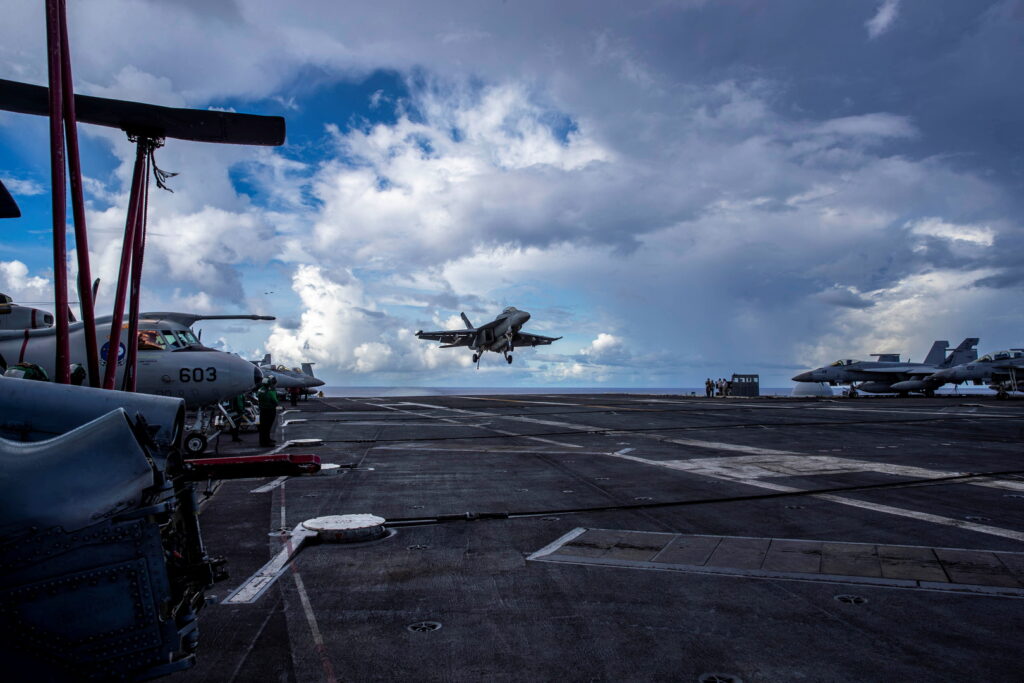
An F/A-18F Super Hornet, assigned to Strike Fighter Squadron (VFA) 41, prepares to make an arrested landing on the flight deck of the U.S. Navy Nimitz-class aircraft carrier USS Abraham Lincoln in the Pacific Ocean August 10, 2024. U.S. Navy/Mass Communication Specialist Seaman Apprentice Daniel Kimmelman/Handout via REUTERS THIS IMAGE HAS BEEN SUPPLIED BY A THIRD PARTY
Amid rising tensions between the United States and Iran, diplomatic channels are working overtime to prevent what could potentially spiral into a full-scale military conflict. The current geopolitical climate has seen heightened activities near the Persian Gulf, where both nations have demonstrated increased military posturing. These developments have alarmed the international community, prompting urgent calls for dialogue and negotiation.
In recent weeks, various international actors, including the United Nations and European Union, have stepped up their engagement with both the US and Iran to facilitate talks. The aim is to de-escalate the situation by addressing core issues such as Iran’s nuclear program, regional influence, and economic sanctions that have significantly impacted the Iranian economy.
Diplomats from key world powers are pushing for a negotiated settlement, emphasizing that military conflict would have devastating consequences not only for the region but also for global security and economic stability. Efforts include back-channel communications and public diplomatic gestures designed to build trust and reduce misunderstandings.
Iranian officials have expressed willingness to engage in talks but maintain their stance on sovereignty and resistance to foreign pressure. Meanwhile, the US administration underlines its focus on protecting its interests and allies in the region while expressing a preference for peaceful resolution.
Experts warn that despite these efforts, the situation remains precarious. Any miscalculation or unintended incident could escalate tensions rapidly. Therefore, the international community remains vigilant, prioritizing diplomatic initiatives and conflict prevention strategies.
This intensification of diplomatic efforts underscores the urgent need for sustained dialogue and cooperation to avert war. Both the US and Iran face a critical juncture where diplomacy could make the difference between peace and conflict, marking a defining moment in international relations.