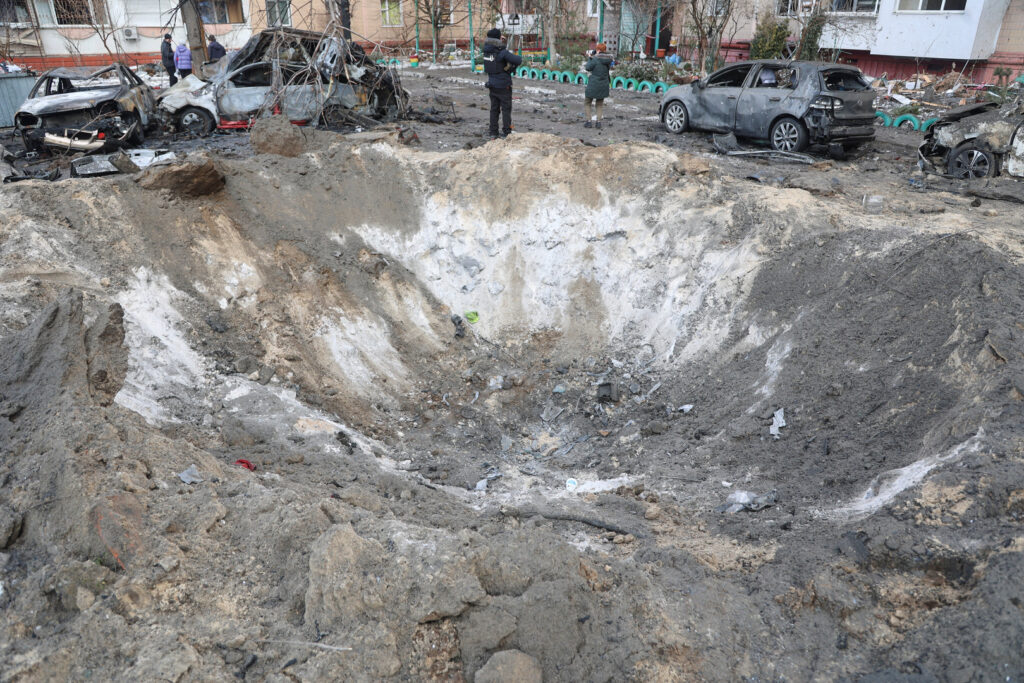
Residents stand next to a crater that appeared in front of an apartment building during overnight Russian drone and missile strikes, amid Russia's attack on Ukraine, in Zaporizhzhia, Ukraine January 28, 2026. REUTERS/Serhii Chalyi
The conflict in Ukraine has introduced a significant shift in modern warfare, showcasing how drone technology is reshaping battlefields and strategies. A striking example lies in Lyman, once a picturesque resort town, now scarred and transformed by the relentless impact of drone warfare. As the war progresses, the use of drones has become central, influencing not only tactical engagements but also the broader nature of combat and control in contested zones.
Drones, both armed and surveillance types, have altered the dynamics of fighting significantly. These unmanned aerial vehicles provide real-time intelligence and precision strikes without risking human pilots, enabling forces to conduct operations with enhanced efficiency and reduced casualties. In Ukraine, drones have been instrumental in gaining aerial supremacy over enemy forces by providing detailed reconnaissance, targeting coordinates, and supporting artillery and infantry actions.
The remnants of Lyman, with spools of fibre-optic cables entangled amid destruction, symbolize the technological frontline. These cables facilitate robust communication networks essential for coordinating drone swarms and transmitting critical data across vast distances. Such infrastructure underscores the emerging role of integrated systems combining physical combat with advanced communication and cyber capabilities.
This new warfare paradigm extends beyond mere technology; it transforms military strategy, logistics, and the psychological landscape of conflict. The constant presence of drones in the skies instills vigilance and disrupts the movements and plans of opposing forces, forcing adaptations in tactics and sheltering methods. Moreover, drone strikes can be executed with unprecedented speed and precision, minimizing collateral damage and enabling targeted neutralization of key assets.
International military observers note that Ukraine’s effective use of drones, often adapted from commercial or improvised designs, reflects ingenuity and adaptability under pressure. The conflict has accelerated the development and deployment of drone technology, setting precedents for future wars worldwide. It also raises ethical, legal, and humanitarian questions around automated warfare and the implications of remote-controlled lethal engagements.
As Ukraine continues to face aggression, drone warfare remains a pivotal element in its defense and opposition strategies. The evidence on the ground — towns like Lyman turned into battlegrounds marked by drone activity — reveals the profound and lasting transformation this technology imposes on war and society. The fusion of drones, digital communications, and traditional combat crafts a new era of warfare characterized by speed, precision, and an evolving battlefield landscape.