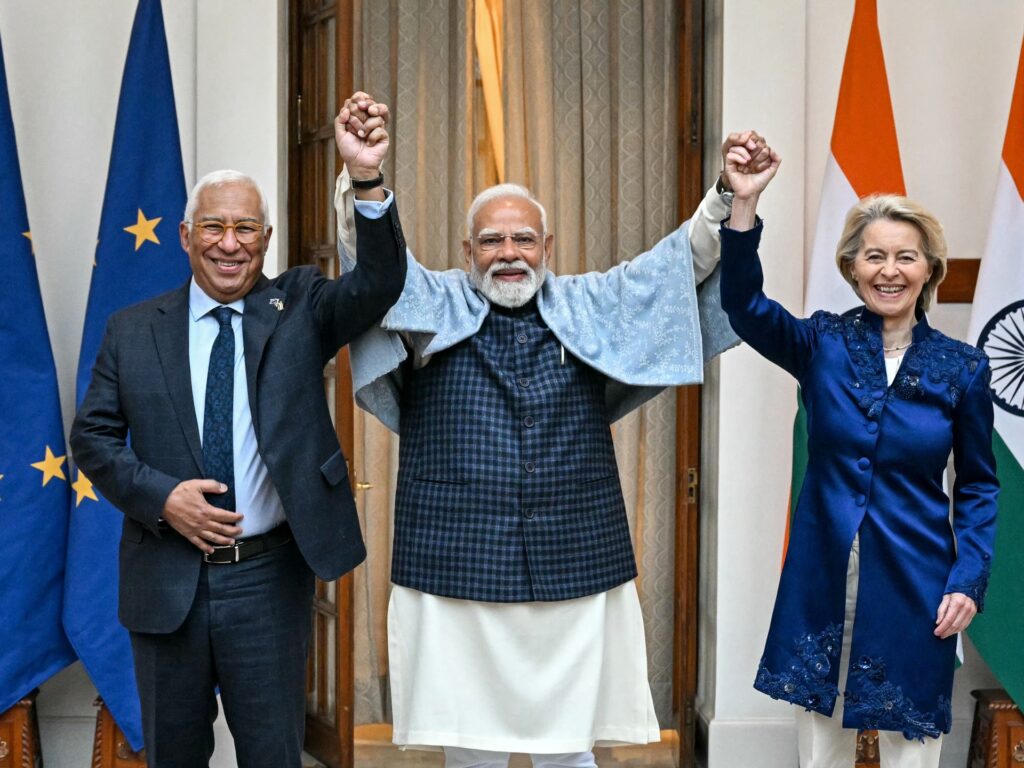
India and the European Union have reached a historic trade agreement after nearly twenty years of negotiations, marking a significant milestone in global trade relations. This landmark deal is being hailed as the ‘Mother of all deals’ due to its scale and the extensive market it covers. Together, India and the EU will now create a massive trading bloc with a population of approximately 1.7 billion people and combined economic output surpassing several major economies worldwide.
The agreement aims to reduce tariffs, simplify customs procedures, and open up markets for goods and services, fostering stronger commercial ties between India and the European Union’s 27 member states. This development is expected to enhance bilateral investments, improve supply chain efficiencies, and provide consumers with greater variety and better prices.
Negotiations for this agreement have been ongoing for over two decades, reflecting the complexities involved in harmonizing regulatory standards and addressing the diverse economic interests of both India and the EU. Despite numerous challenges, the successful culmination of talks signifies a mutual commitment to deepen economic cooperation and reinforce political and strategic partnerships.
Key highlights of the deal include significant tariff cuts on both sides for products ranging from automobiles and pharmaceuticals to textiles and agricultural goods. Additionally, the agreement promises enhanced protection for intellectual property rights and increased cooperation on sustainability and digital trade.
Industry leaders and economic analysts have applauded the deal, citing it as a win-win for both parties. India’s exporters gain greater access to high-value markets in the EU, potentially boosting exports and domestic manufacturing. Conversely, EU companies stand to benefit from access to India’s rapidly growing consumer base and its extensive network of trade agreements across Asia.
The impact of this deal extends beyond economics. It symbolizes a strengthening of geopolitical ties, with both India and the European Union aiming to counterbalance other global powers and assert their influence on the world stage.
The agreement will now undergo ratification processes by member states of the European Union and the Indian Parliament before it can be fully implemented. Experts suggest that once in force, this pact could serve as a blueprint for future trade deals between major economies.
This historic deal signals a new era in Indo-EU relations, promising not only economic growth and job creation but also fostering closer cultural and political connections. It stands as a testament to the persistence of diplomacy and the shared vision of a more interconnected and prosperous global economy.