In a troubling escalation of tensions in the occupied West Bank, Israeli settlers have carried out arson attacks on three villages located in Masafer Yatta. The incidents represent a significant act of violence against Palestinian communities living in this region, which has been a flashpoint of conflict and disputed control.
Masafer Yatta, an area situated in the southern parts of the West Bank, is home to a number of Palestinian villages. These villages, often described as vulnerable due to their precarious legal and political status under Israeli occupation, have faced various forms of pressure including demolitions, restrictions, and sporadic violence.
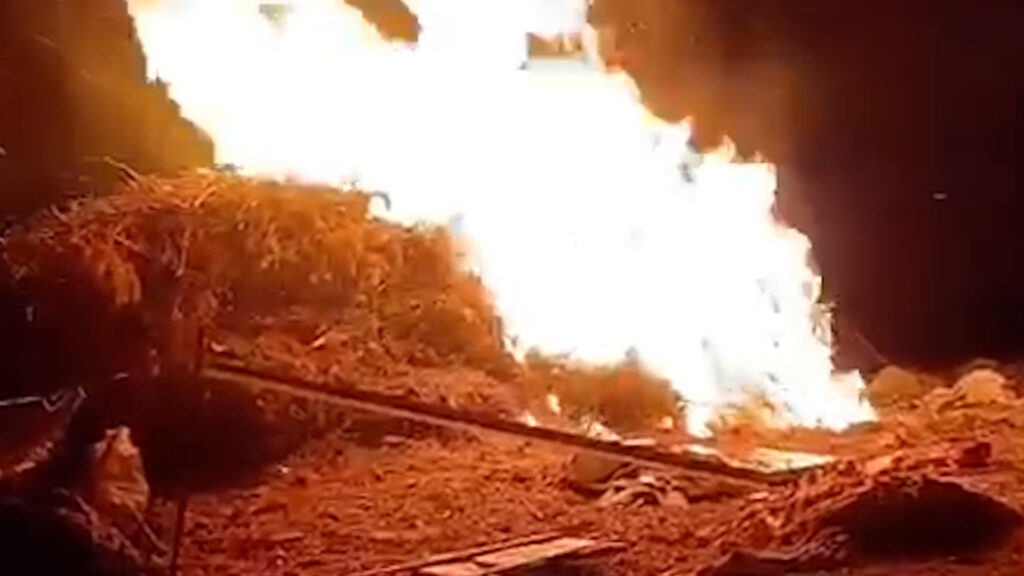
The recent series of arson attacks involved deliberate setting of fires to residential areas and agricultural lands, causing widespread damage. Eyewitnesses reported that the fires were started deliberately by Israeli settlers, highlighting a disturbing pattern of settler violence against Palestinians in this contested area.
Local Palestinian residents have condemned the attacks, viewing them as part of a broader campaign of intimidation and dispossession. Many villagers are now facing the devastating consequences of the fires, which have destroyed homes, livestock, and vital resources required for their daily livelihoods.
Israeli settlers are individuals living in settlements established in the West Bank, territory captured by Israel during the 1967 Six-Day War. The international community generally considers these settlements illegal under international law, though Israel disputes this characterization. Settler violence has increasingly become a point of concern in the Israeli-Palestinian conflict, often exacerbating tensions and leading to confrontations.
Human rights organizations monitoring the situation have reported a rise in settler attacks targeting Palestinian civilians and property in recent years. These incidents often occur with limited intervention by Israeli security forces, raising questions about accountability and protection for vulnerable communities.
The Palestinian Authority has condemned the arson attacks and called for international intervention to safeguard Palestinian residents and their properties in Masafer Yatta. They stress the urgency of addressing the settler violence that undermines peace efforts and deepens mistrust between the two sides.
Meanwhile, Israeli officials have at times condemned violence from all parties but have also faced criticism for inadequate measures to prevent settler attacks and hold perpetrators accountable. The complex security dynamics and political sensitivities in the West Bank complicate law enforcement and conflict resolution.
The arson attacks in Masafer Yatta come against a backdrop of ongoing disputes over land ownership, military orders to restrict Palestinian presence in certain areas, and legal battles over demolition orders. Masafer Yatta’s future remains uncertain amid competing claims and the broader context of the Israeli-Palestinian conflict.
International observers have expressed concern about the implications of such violence on the prospects for peace and stability in the region. The attacks contribute to an atmosphere of fear and insecurity for Palestinian villagers, hindering their ability to live peacefully and maintain their homes.
As tensions escalate, the situation in Masafer Yatta underscores the urgent need for renewed dialogue, increased protection of civilian populations, and a concerted effort to address the underlying causes of conflict. Without meaningful intervention, the cycle of violence and retaliation is likely to continue, perpetuating suffering and instability in the West Bank.
This incident is part of a broader pattern of increasing settler aggression reported in various parts of the occupied West Bank, highlighting the fragility of the current situation and the risks of further escalation. It serves as a stark reminder of the challenges faced by Palestinian communities living under occupation and the complex realities that complicate peacebuilding in the region.