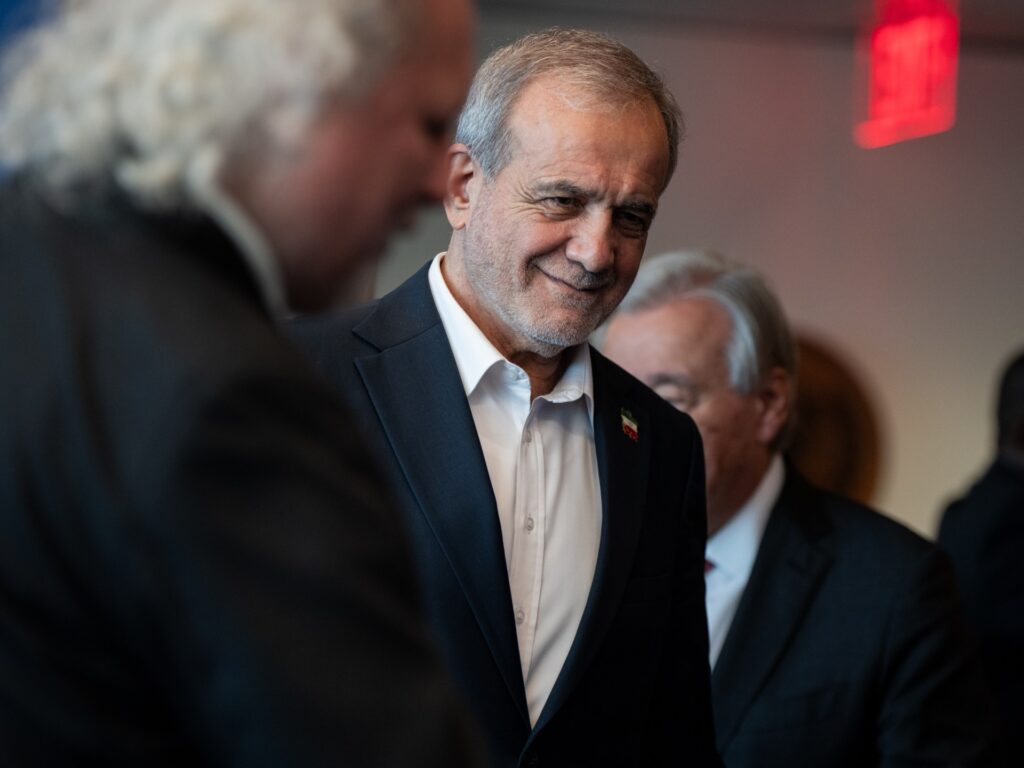
In a recent conversation with the Saudi Crown Prince, Iranian President Masoud Pezeshkian underscored the adverse effects of external threats, particularly those from the United States, on the stability of the Middle East region. Pezeshkian articulated that such threats contribute significantly to regional instability, a state that ultimately benefits no party involved.
The dialogue between the two leaders comes at a time when tensions in the Middle East continue to be influenced by international powers’ policies, especially those emanating from the US. Pezeshkian’s remarks suggest a call for collaborative efforts to diminish external interventions that escalate conflicts and disrupt peace.
According to Pezeshkian, the persistent instability fueled by these threats undermines progress and development across the region. He advocated for a diplomatic approach over coercive tactics, emphasizing the necessity of dialogue and mutual understanding among neighboring countries to foster lasting peace.
The Iranian president’s message reflects growing concerns within the region about the ripple effects of foreign threats and their role in prolonging discord. Additionally, Pezeshkian’s outreach to Saudi Arabia indicates a willingness to engage directly with regional players to address shared challenges, suggesting a potential pathway to de-escalate tensions.
Saudi Arabia, a key player in Middle East geopolitics, has historically had a complex relationship with Iran, marked by rivalry but also periods of cautious engagement. The call between Pezeshkian and the Saudi Crown Prince could signify a strategic move towards recalibrating diplomatic ties in response to common threats.
Analysts interpret this interaction as indicative of a broader regional desire to reduce reliance on external powers and solve conflicts through regional consensus. Both leaders seem to acknowledge that external threats do not only destabilize bilateral relations but also affect the wider area, encompassing economic and humanitarian dimensions.
This emphasis on regional solutions aligns with increasing initiatives across Middle Eastern nations aiming to promote security cooperation and conflict resolution from within. Iran’s president has pointed out that no single state benefits from the ongoing instability, highlighting the collective adverse impact on all involved parties.
Moreover, Pezeshkian’s statement could be viewed as a message to international actors urging reconsideration of policies perceived as provocative or destabilizing. His call for stability reflects a regional yearning for sustained peace and development without external interference.
In conclusion, the dialogue between Iran’s President Masoud Pezeshkian and the Saudi Crown Prince marks a significant moment in the ongoing discourse on Middle East stability. By pinpointing US threats as a major destabilizing factor, Pezeshkian has shed light on the imperative for diplomacy, regional cooperation, and a unified stance against external pressures that jeopardize peace in the region.