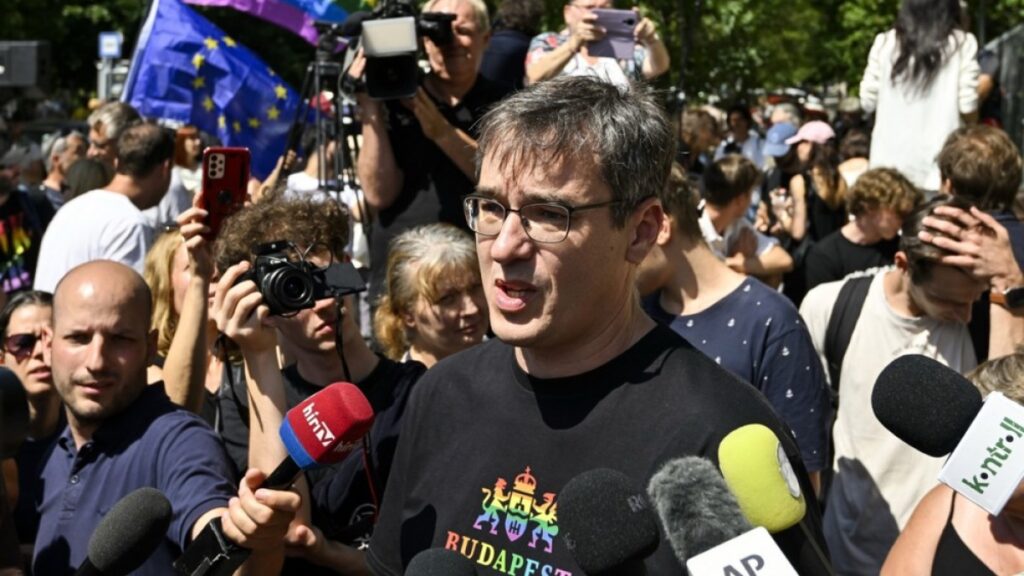
In a contentious development in Hungary, Budapest’s Mayor Gergely Karacsony has been charged by prosecutors for allowing a Pride march that was officially banned by the authorities. The legal action against Mayor Karacsony represents a significant escalation in the ongoing tensions between the city’s administration and the national government, which has taken a hard line on LGBTQ+ events.
The prosecutors are seeking to impose a fine on the mayor without holding a formal trial, a move that has sparked concerns about due process and the political motivations behind the charge. The case centers on the permission granted by Mayor Karacsony for a Pride march to take place in Budapest, despite an official ban issued by higher authorities.
Mayor Karacsony, a vocal supporter of LGBTQ+ rights, has faced increasing pressure as Hungary’s political climate has shifted towards conservative policies under the ruling government. The ban on the Pride march was part of broader measures aimed at restricting public LGBT events and expression.
The controversy has drawn international attention, with human rights advocates criticizing the Hungarian government’s stance on LGBTQ+ issues. They argue that the charges against the mayor are part of a pattern of targeting officials and activists who support minority rights.
The mayor’s decision to allow the Pride march was deemed an act of defiance against the central government’s restrictive policies. Supporters praise Karacsony for standing up for the community and upholding principles of inclusivity and freedom of expression.
However, the prosecutors argue that by permitting a banned event, the mayor violated legal procedures and public order regulations. Their push for a fine ‘without a trial’ raises legal debates about the fairness and transparency of the judicial process in Hungary.
The Pride march itself, despite the ban, proceeded with a significant turnout, reflecting strong grassroots support for LGBTQ+ rights in Budapest. The event highlighted the city’s more liberal stance relative to national policies.
This incident underscores the ongoing polarization in Hungary over human rights and the role of government in regulating public demonstrations. As the case unfolds, it will likely have implications for political freedoms and minority rights advocacy in the country.
International observers and European bodies are closely monitoring the situation, concerned about Hungary’s adherence to democratic norms and its treatment of marginalized communities.
In summary, the charging of Budapest’s mayor for allowing a banned Pride march is a focal point in Hungary’s current political and social conflict. It raises critical questions about legality, governance, and the protection of fundamental rights in an increasingly divided society.