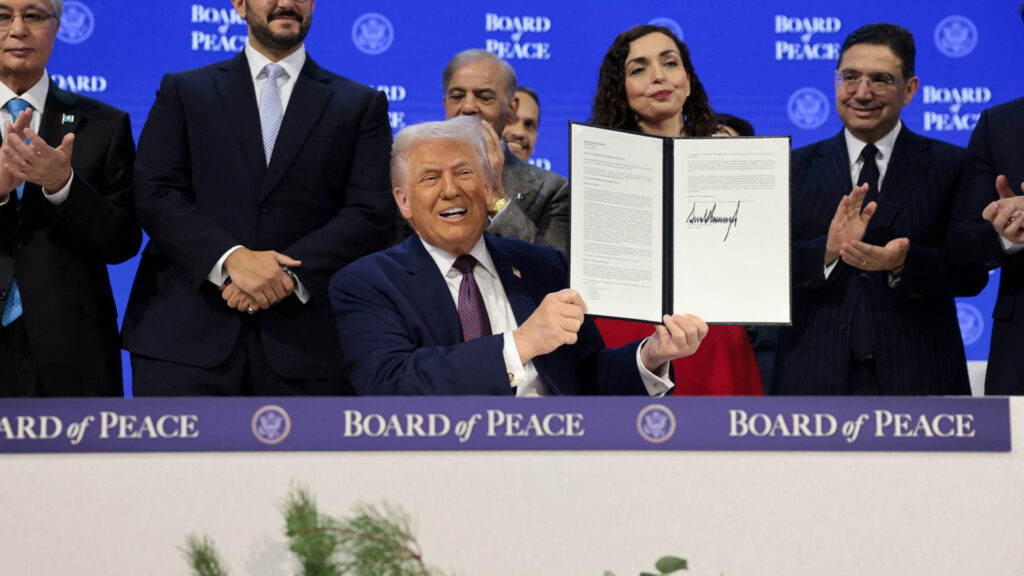
The introduction of former President Donald Trump’s ‘Board of Peace’ has sparked widespread discussions and debates regarding its implications for global diplomacy and the established international order. Originally conceived as a project focused on the reconstruction of Gaza, this initiative has evolved in its narrative and ambitions, now being promoted as a broader conflict-resolution entity on the global stage.
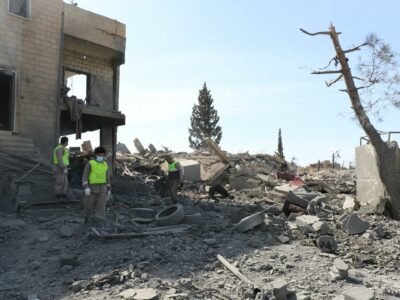
Initially, the ‘Board of Peace’ was intended to mobilize resources and strategic plans specifically aimed at rebuilding Gaza, a region long plagued by conflict and humanitarian crises. Trump’s administration proposed this board as a means of bypassing traditional diplomatic mechanisms, which some viewed as slow or ineffective, with the hope of accelerating reconstruction and fostering stability in a key geopolitical hotspot.
However, in recent times, the board’s mission has expanded beyond Gaza. It now claims a global mandate to resolve conflicts, positioning itself as a parallel or alternative platform to the United Nations (UN), which has long been the cornerstone of international peacekeeping and conflict resolution.
This shift has raised significant concerns among international policymakers, diplomats, and scholars. The United Nations operates on a principle of multilateralism and collective decision-making, which, despite its flaws, is widely accepted as the foundation for maintaining international peace and security. The emergence of a unilateral or semi-unilateral board spearheaded by a former US president threatens to undermine this system.
Critics argue that Trump’s ‘Board of Peace’ could erode the authority and effectiveness of the UN by offering a competing forum for conflict resolution, lacking the broad international legitimacy and inclusiveness of the UN. This development might lead to fragmentation in diplomatic efforts, duplicating initiatives, and potentially conflicting agendas in sensitive conflict zones.
Moreover, there is apprehension about the political motivations behind the board. Given Trump’s polarized image and controversial policies during his presidency, the board might be viewed not purely as a peace-promoting entity but as a tool to project American unilateral influence and reshape international norms in ways favorable to specific interests.
Supporters of the board argue that existing international institutions like the UN have often been bogged down by bureaucracy and political stalemates, limiting their ability to effectively manage crises. They see the ‘Board of Peace’ as an innovative approach that could introduce new strategies, flexibility, and faster decision-making to global diplomacy.
The question remains whether this initiative will cooperate with existing bodies like the UN or operate independently, potentially causing jurisdictional disputes and diplomatic tensions.
Historically, alternative peace mechanisms or conflict-resolution entities have faced difficulties in gaining universal acceptance. Without broad multilateral support, any such board risks being marginalized or viewed as a partisan project.
In conclusion, while Trump’s ‘Board of Peace’ started as a targeted initiative for Gaza’s reconstruction, its promotion as a global conflict-resolver introduces complex questions about the future of international diplomacy. It challenges the established roles and influence of the United Nations, potentially altering how global peace and security are managed. The international community’s response in navigating this development will be crucial in determining whether it eclipses, complements, or complicates the United Nations’ enduring mission.