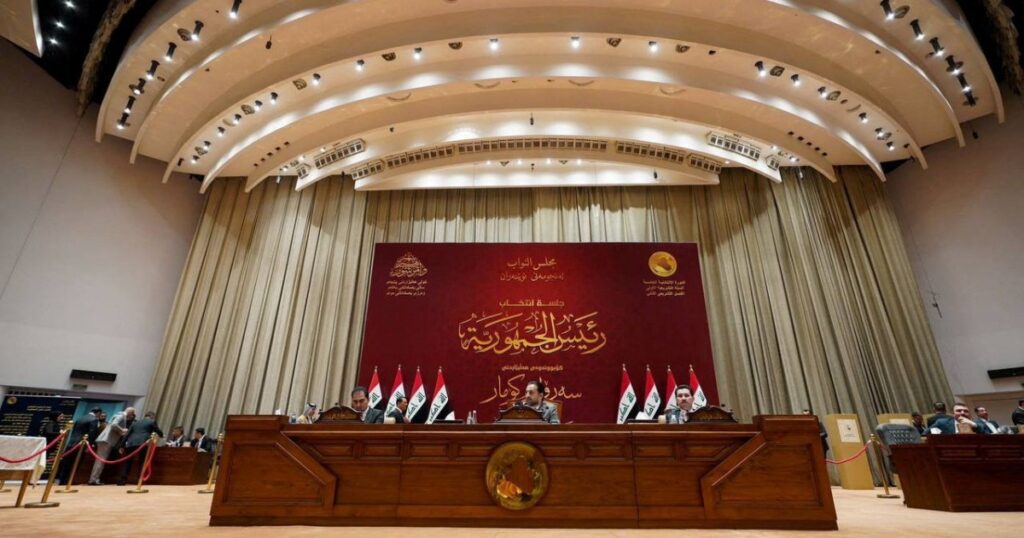
The presidential vote in Iraq has been delayed as Kurdish political blocs continue to grapple with selecting a consensus candidate. This development underscores the complexities within Iraq’s intricate political landscape, where power-sharing dynamics among ethnic and sectarian groups play a crucial role.
Two main Kurdish parties, the Kurdistan Democratic Party (KDP) and the Patriotic Union of Kurdistan (PUK), are at the center of this deadlock. Both factions are striving to agree upon a candidate to put forward for the presidency. However, the impasse within these Kurdish blocs has made progress slow and uncertain.
In Iraq’s political system, the presidency is typically reserved for a Kurdish candidate, reflecting the country’s informal ethno-sectarian power-sharing arrangement. Still, a Kurdish nominee must obtain the approval of both the Shia and Sunni blocs in the Iraqi parliament, emphasizing the need for wider political consensus beyond Kurdish ranks.
This requirement often results in prolonged negotiations and delays, as approval by Shia and Sunni members is contingent on their perception of a candidate’s political alignment, vision, and ability to maintain stability.
The delay carries multiple implications. On a symbolic level, the presidency serves as a unifying position in Iraq, tasked mainly with representing the nation and endorsing legislation passed by parliament. Delays in confirming the president can reflect or exacerbate political fragmentation and uncertainty.
Experts also highlight that the ongoing stalemate complicates efforts to address pressing national issues. Iraq faces persistent economic challenges, security threats, and the need for institutional reforms. An unconfirmed presidency can impede the government’s ability to effectively coordinate and implement policies.
The Kurdish political impasse stems from broader tensions between the KDP and PUK, despite both parties being longstanding partners in the Kurdistan Regional Government and the federal Iraqi political system. These parties often contest over influence, priorities, and candidate selections.
Additionally, intra-Kurdish divisions have political and regional dimensions. The KDP, led by the Barzani family, holds sway primarily in Erbil and Dohuk provinces, while the PUK, historically led by the Talabani family, maintains influence in Sulaymaniyah and surrounding areas.
The disagreement is not only about the person but also about policy direction and control over key political appointments. Both Kurdish blocs seek a candidate who can protect Kurdish rights within Iraq and promote the region’s interests.
Meanwhile, the Shia and Sunni blocs that must approve the Kurdish nominee are themselves navigating their own political calculations and negotiations. Each bloc aims to ensure that the presidency supports broader alliance-building and maintains Iraq’s fragile balance.
Political analysts warn that further delays in the presidential vote risk deepening political fissures. Such fissures could fuel public dissatisfaction and complicate governance.
Several attempts have been made to break the deadlock, including mediation efforts by Iraqi parliament leaders and regional actors. However, no breakthrough has been achieved so far.
The broader Iraqi political context remains challenging, shaped by complex sectarian, ethnic, and party dynamics. The Kurdish presidential nomination process exemplifies the delicate balancing act among Iraq’s key political players.
The international community continues to monitor the situation closely, given Iraq’s strategic position and the importance of stable governance for regional security.
As the Kurdish blocs continue their negotiations, all eyes remain on the upcoming parliamentary sessions, which will ultimately confirm the presidential election timeline once a nominee is agreed upon and gains parliamentary approval.
The outcome of this process will be pivotal not only for Kurdish representation but for Iraq’s future political landscape and stability.
In sum, the delayed presidential vote in Iraq highlights the intra-Kurdish competition and the wider requirement for cross-sectarian consensus necessary to appoint the country’s head of state. Navigating these challenges is essential to maintain Iraq’s fragile political equilibrium and address the pressing needs of its people.