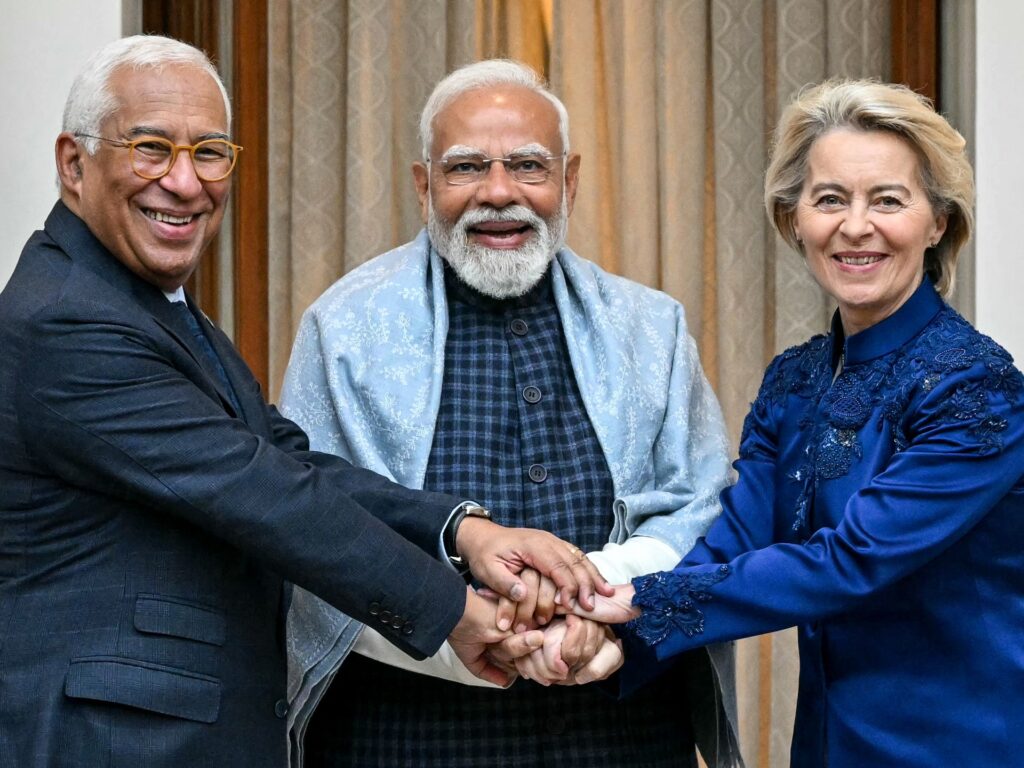
In a landmark agreement, India and the European Union have finalized what is being hailed as the ‘mother of all’ trade deals. This monumental accord is poised to cover a quarter of the global GDP and establish a free trade zone encompassing a population of two billion people.
The deal signifies a major step forward in economic cooperation between the world’s fifth-largest economy and one of its biggest trading blocs. It aims to systematically reduce tariffs, ease market access, and foster greater collaboration across multiple sectors including manufacturing, technology, agriculture, and services.
Negotiations have been ongoing for years, reflecting both sides’ determination to surmount challenges and reach a comprehensive understanding. The agreement is expected to boost trade volumes significantly, deepen investment ties, and provide a robust framework for sustainable growth.
By eliminating or lowering barriers to trade, businesses in both India and EU member countries will gain increased competitiveness and greater opportunities for expansion. Consumers are also expected to benefit from a wider variety of goods and services often at lower prices.
The deal is projected to enhance supply chain efficiencies, encourage innovation, and pave the way for closer regulatory cooperation. Such initiatives are anticipated to improve product standards, ensure quality, and streamline customs procedures.
With a combined economic output that accounts for approximately 25% of the world’s GDP, this free trade zone has the potential to reshape global trade dynamics. It represents a strategic alignment that also bolsters geopolitical relations, promoting stability and shared prosperity.
Observers note that strengthening India-EU economic ties will have positive ripple effects beyond the two parties involved. Emerging markets and developing countries connected through various trade networks may see increased integration and opportunities.
The agreement can also be viewed as a counterbalance in global trade politics, emphasizing cooperative multilateralism over protectionism. It underscores a mutual commitment to open, rules-based trade systems amidst an evolving geopolitical landscape.
Industry leaders from sectors such as automotive, pharmaceuticals, technology, and agriculture have expressed optimism about the new possibilities this deal unlocks. Enhanced intellectual property protections included in the agreement may further spur innovation and research collaborations.
Environmental and labor protections are also integral parts of the deal, signaling a commitment to sustainable development goals. Both India and the EU plan to collaborate on issues such as climate change mitigation, clean energy transition, and social equity.
Ultimately, the ‘mother of all’ trade deals is expected to generate substantial economic dividends for businesses, consumers, and governments alike. It opens a new chapter in India-EU relations and sets a precedent for future international trade agreements.