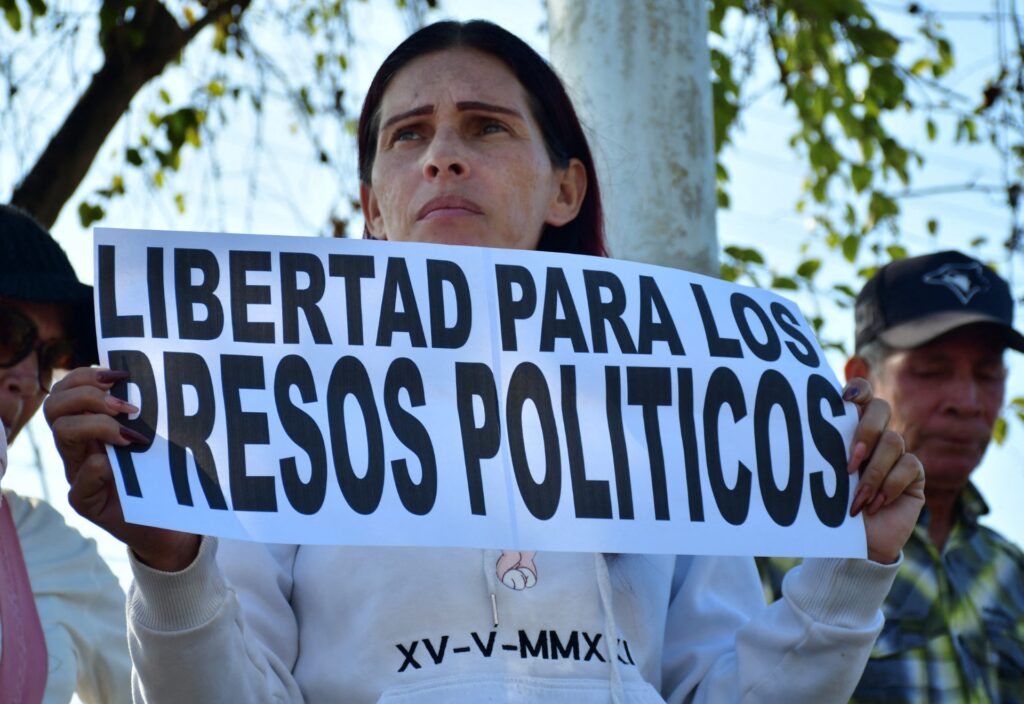
(FILES) A woman shows a sign that reads "Freedom for political prisoners" during a demonstration to demand the freedom of Venezuelan political prisoners in front of Tocuyito prison in Tocuyito, near Valencia, Venezuela on January 20, 2026. At least 80 political prisoners were freed on January 25, 2026 in Venezuela, where detainees are slowly being released under pressure from the United States, the non-governmental organization Foro Penal said. (Photo by Jacinto OLIVEROS / AFP)
In a significant development concerning human rights in Venezuela, the Caracas-based human rights organization Foro Penal has reported the release of 104 political prisoners. Among those freed are notable figures, including a human rights lawyer and a communications student, highlighting the diverse backgrounds of individuals affected by the country’s ongoing political turmoil.
This mass release indicates a possible shift in the Venezuelan government’s stance on political dissent and detention. For years, Venezuela has faced international criticism for its treatment of political opponents and activists, with numerous reports documenting harsh prison conditions and prolonged detentions without fair trials.
The release took place amid growing calls from global human rights advocates and international organizations demanding the liberation of political prisoners and urging the Venezuelan government to respect civil liberties. Foro Penal, which regularly monitors and advocates for prisoners of conscience and political detainees, has been pivotal in bringing worldwide attention to these cases.
The human rights lawyer who was among those freed has been a vocal critic of the government, often representing individuals detained for their political beliefs. The communications student, whose age and circumstances symbolize the younger generation’s involvement in activism, also underscores the widespread impact of political repression on Venezuelan society.
Analysts view this release as part of a broader strategy by the Venezuelan authorities to improve their international image amid increasing diplomatic pressure and economic challenges. It also reflects a potential, albeit cautious, easing of the government’s crackdown on dissenting voices.
However, human rights groups remain vigilant, stressing that the release of these prisoners should be the beginning of more comprehensive reforms rather than an isolated act. They continue to call for transparency in the legal processes for all detainees and for the cessation of politically motivated prosecutions.
The situation in Venezuela remains complex, with ongoing political, economic, and social crises affecting millions. The freeing of these 104 individuals is a hopeful sign for many, yet it also highlights the persistent challenges in achieving justice and respect for human rights in the country.
Foro Penal has pledged to continue its work monitoring the rights of detainees and supporting those still imprisoned. The organization also aims to keep international attention focused on Venezuela’s human rights situation to ensure further progress.
This event marks a notable moment in Venezuela’s recent history, drawing attention to the power of advocacy and the crucial role of civil society in promoting human rights. It serves as a reminder of the importance of ongoing efforts to secure freedom and justice for all individuals regardless of political affiliation.