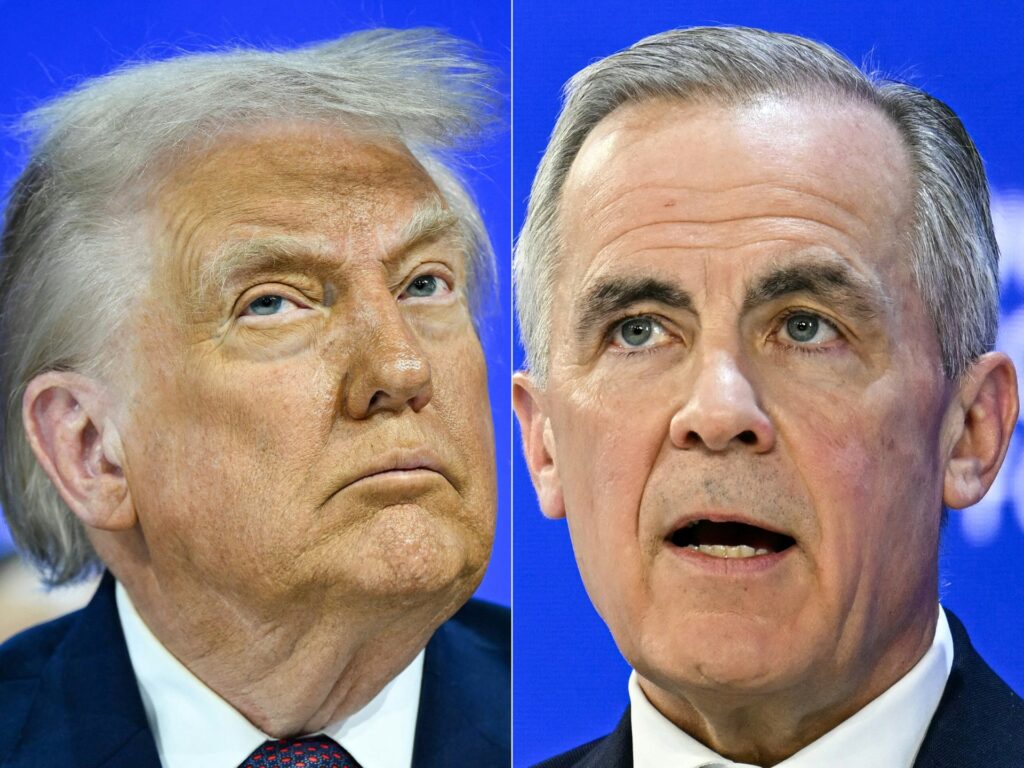
In a recent development escalating trade tensions, former U.S. President Donald Trump has issued a stern warning to Canada, threatening to impose a 100 percent tariff on Canadian goods. This threat comes in response to Canada’s newly reached trade deal with China, finalized last week, which covers key sectors including agricultural products and electric vehicles.
The announcement marks a significant intensification in the ongoing trade dynamics between the U.S., Canada, and China. Canada’s agreement with China aims to enhance bilateral trade by facilitating easier access and exchange in agriculture and the burgeoning electric vehicle market—two sectors pivotal for Canada’s export economy.
Donald Trump’s threat underscores the heightened sensitivity of trade relations involving China, as the U.S. has persistently scrutinized and challenged China’s trade policies and its global economic strategy. Trump’s proposal to implement a tariff as steep as 100 percent signifies an aggressive approach aimed at deterring Canadian collaboration with China that might undermine U.S. economic interests.
This move could potentially disrupt the longstanding trade partnership between the United States and Canada, which has been characterized by mutual cooperation under agreements like the USMCA (United States-Mexico-Canada Agreement). The proposed tariffs, if enacted, would place Canadian exporters at a significant disadvantage, inflating costs for American consumers and businesses relying on Canadian products.
Economic analysts suggest that Trump’s tariff threat could spark retaliatory measures from Canada, leading to a possible trade war that could affect global markets. Such a confrontation between these two allied nations might also complicate diplomatic relations and freight movement across North America.
The sectors targeted by Canada’s deal with China are strategically vital. Agricultural exports to China have been a significant growth area for Canada, providing farmers with new opportunities amid global market fluctuations. Similarly, the electric vehicle sector represents a forward-looking industry where Canada is keen to capitalize, aligning with global trends toward sustainable transportation.
Trump’s position reflects broader U.S. concerns about China’s expanding influence in global trade networks and the role of its allies and partners in this economic landscape. The tariff threat might be seen as a pressure tactic designed to signal Washington’s unwillingness to accept economic arrangements perceived as counter to U.S. interests.
Canadian officials have yet to respond publicly in detail to Trump’s tariff threat. However, analysts expect Canada to seek diplomatic channels to resolve the dispute while preparing contingency plans to mitigate potential economic fallout.
This episode highlights the complex nature of modern trade diplomacy, where economic agreements between third countries can trigger significant intergovernmental conflicts, even among allies. The eventual outcome will likely influence future trade policies and international relations in the North American region and beyond.
As the situation develops, businesses and stakeholders in the agricultural and electric vehicle sectors are watching closely, aware that any escalation could impact production, supply chains, and international market access. The global community, too, remains attentive, recognizing that such trade confrontations between major economic players can have wide-reaching consequences.
In summary, Donald Trump’s threat to impose a 100 percent tariff on Canada over its China trade deal represents a notable chapter in the ongoing trade tensions involving the U.S., Canada, and China. The economic, diplomatic, and political ramifications of this stance will unfold in the coming weeks, as all parties navigate the challenging terrain of international trade relations.